



















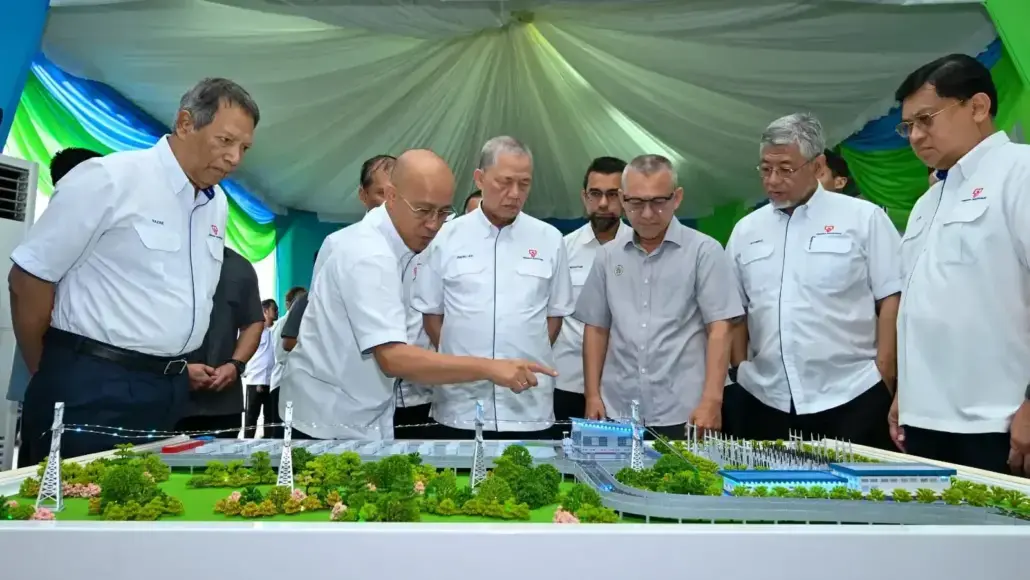
Tenaga Nasional Bhd (TNB) has officially inaugurated the Santong Battery Energy Storage System (BESS) in Paka, Dungun, marking a significant leap in the country’s power infrastructure. The facility, boasting a capacity of 100MW/400MWh, represents Malaysia’s first grid-connected BESS. This strategic development is positioned to significantly bolster the stability and reliability of the nation’s electricity supply, with a primary focus on the East Coast region.
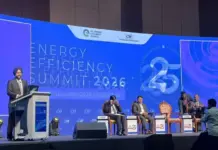
The launch ceremony was officiated by Deputy Prime Minister and Minister of Energy Transition and Water Transformation, Datuk Seri Fadillah Yusof. Also in attendance were Terengganu Deputy Chief Minister Datuk Razali Idris, TNB Chairman Tan Sri Abdul Razak Abdul Majid, and TNB President and Chief Executive Officer Datuk Shamsul Ahmad. The project is situated at the main intake substation (PMU) 132/33kV BESS Santong and serves as a critical component in the broader renewable energy integration strategy for the country.
During the launch of Malaysia’s first grid-connected BESS Santong, TNB Chairman Tan Sri Abdul Razak Abdul Majid highlighted that the battery energy storage system is vital for maintaining national grid stability.
“Bess Santong plays an important role in ensuring grid stability through its rapid response capability to the imbalance of electricity supply and demand,” he said.
He further added, “Bess Santong functions as a smart energy bank that stores electricity from RE sources such as large-scale solar farms and hybrid hydro-floating solar systems before being fed back into the grid when needed.”
The project, Malaysia’s first grid-connected BESS, was developed on a 1.2-hectare site and reached operational status on April 16. Remarkably, the project was completed within 309 days from its commencement, showcasing TNB’s efficiency in delivering complex energy infrastructure. According to Razak , the system is capable of supporting the electricity needs of approximately 40,000 households on the East Coast, depending on current consumption patterns.
A technical highlight of the Santong facility is its use of liquid-cooling technology and grid-forming capabilities. These features are essential for Malaysia’s energy transition as they allow for the integration of renewable energy on a significantly larger scale. By utilizing a 100MW 400MWh battery, the system balances real-time fluctuations, thereby reducing physical pressure on the grid and enhancing overall operational efficiency.
“The system supports peak load management and the integration of solar energy on a larger scale through grid-forming capabilities,” TNB Chief Executive Officer Datuk Shamsul Ahmad added.
The development of the Santong BESS is closely aligned with the aspirations of the National Energy Transition Roadmap (NETR). This roadmap emphasizes the necessity of strengthening grid infrastructure to accommodate a greener energy mix.
“The analytical and digital approach in forecasting energy demand, optimising supply distribution, and real-time asset monitoring also strengthens the operational efficiency of the national grid,” Ahmad said.