



The global energy landscape is dynamic, often shaped by unforeseen events and evolving geopolitical currents. For decades, nuclear power navigated a complex terrain of fervent advocacy and staunch opposition, its future often debated with a passion matched only by the scale of its potential. Yet, as the world grapples with unprecedented challenges, from climate change exigencies to geopolitical instabilities that disrupt traditional energy supplies, a distinct and unmistakable trend of nuclear comeback in Europe and Asia is arising. Power Gen Advancement notes that this resurgence is not merely a nostalgic glance backward but a forward-looking strategic realignment, fundamentally driven by the urgent need for enhanced energy security.
A Shifting Geopolitical and Environmental Imperative
The events of recent years following the 2022 gas supply crisis and the ongoing crisis in the Middle East, have served as a stark awakening for many nations. The vulnerability inherent in over-reliance on external energy sources, especially fossil fuels subject to price volatility and geopolitical leverage, became glaringly apparent. For countries accustomed to stable and affordable energy, the sudden spike in prices and the threat of supply interruptions underscored a critical weakness in their national infrastructures. It is within this context that the narrative around nuclear energy has dramatically shifted. What was once seen by some as an expensive, politically charged, and potentially hazardous option, is now increasingly viewed as a robust, indigenous, and reliable source of clean baseload power, a veritable shield against market fluctuations and geopolitical pressures.
European Pivot From Phase-Outs to Renewed Commitments
Europe, in particular, has witnessed a remarkable recalibration of its Europe nuclear policy. For years, some of its most influential members, notably Germany, were steadfast in their commitment to phasing out nuclear power, driven by public sentiment and environmental concerns. However, the recent energy crisis compelled a profound re-evaluation. While Germany’s nuclear phase-out largely proceeded as planned, the broader European sentiment has undeniably pivoted.
France’s Strategic Reassertion
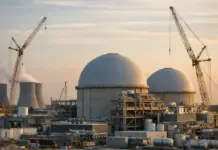
France, a long-standing advocate for nuclear energy, has reasserted its commitment with renewed vigor. President Macron announced plans for the construction of at least six new generation EPR reactors, with an option for eight more, alongside extending the lifespan of existing plants. This strategic decision is a testament to nuclear power’s pivotal role in France’s energy independence and its ambitious decarbonization goals. It exemplifies a nation leveraging its historical expertise to secure its future energy supply.
The Nordic and Central European Embrace
Beyond France, other European nations are also either extending the operational lives of their existing fleets or embarking on new reactor construction projects. Finland, with its Olkiluoto 3 reactor now operational, stands as a testament to the continent’s commitment. Sweden, once contemplating a nuclear phase-out, is now exploring options for new reactors, recognizing the irreplaceable role of nuclear power in its low-carbon power mix. Countries like Poland and the Czech Republic, acutely aware of their historical reliance on coal and gas imports, are actively pursuing substantial nuclear build programs. They see nuclear energy not just as a means to reduce emissions but as a cornerstone of their national energy security strategies, providing a stable foundation for their economic growth and industrial competitiveness. The UK, post-Brexit, has similarly outlined ambitious plans for new nuclear plants, viewing them as essential for both energy independence and achieving its net-zero targets. This widespread reconsideration marks a pivotal moment, affirming the strategic necessity of a diversified and resilient energy portfolio across the continent.
Asia’s Unwavering and Accelerating Ambition
While Europe’s shift represents a notable reversal for some, Asia’s approach to nuclear energy has largely been one of sustained, and often accelerating, ambition. Many Asian nations, facing rapidly expanding populations and burgeoning industrial bases, have long recognized nuclear power as a pragmatic solution to meet surging electricity demand while simultaneously addressing environmental concerns. The nuclear comeback in Europe and Asia is, in many ways, an acceleration of an already established trajectory in the East.
China and India Powering Economic Growth
China, for instance, is one of the global leaders in reactor construction, with numerous new plants coming online annually and many more in various stages of development. Its rationale is straightforward – to power its immense economic growth, uplift its citizens, and dramatically reduce its reliance on coal, thereby tackling severe air pollution and contributing to global climate goals. India, another economic powerhouse, is following a similar path, steadily expanding its nuclear fleet to meet its vast energy requirements and enhance its energy security posture. These nations view nuclear energy as an indispensable component of their long-term energy strategies, offering both scale and reliability.
Japan and South Korea Reassessing and Re-engaging Nuclear Energy
Even Japan, which experienced the devastating Fukushima accident in 2011 and subsequently idled much of its nuclear fleet, is now cautiously but steadily moving towards restarting more reactors. The imperative of energy security in an import-dependent nation, coupled with global decarbonization pressures, has forced a pragmatic re-evaluation. South Korea, too, under new leadership, has reversed previous plans for a nuclear phase-out, choosing instead to invest in expanding its domestic nuclear industry and resuming reactor construction. For these advanced industrial economies, the consistent, clean baseload power offered by nuclear power is critical for maintaining industrial competitiveness and grid stability. This collective movement in Asia underscores a strategic foresight: diversifying away from volatile fossil fuel markets is not just an option, but a national imperative.
The Core Drivers of Nuclear Comeback
While the contribution of nuclear energy to low-carbon power generation is undeniable and increasingly vital for meeting climate targets, the primary driver behind the current nuclear comeback in Europe and Asia extends beyond environmental concerns. It is intrinsically linked to the concept of resilience and sovereignty in energy supply.
Fortifying National Grids Against Volatility
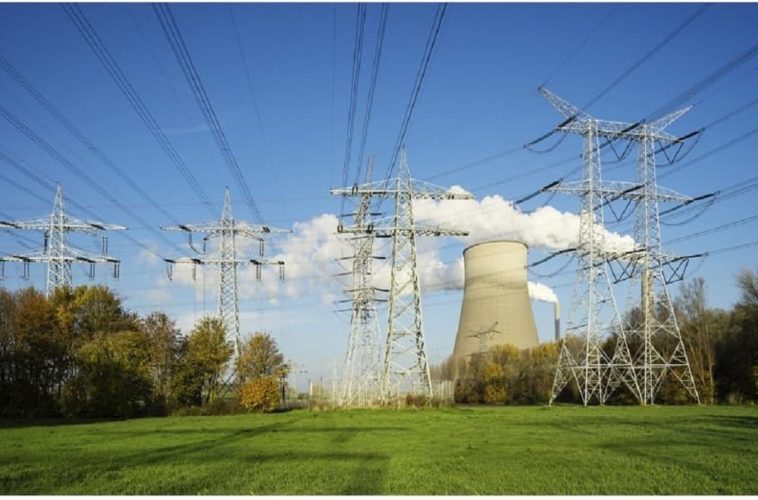
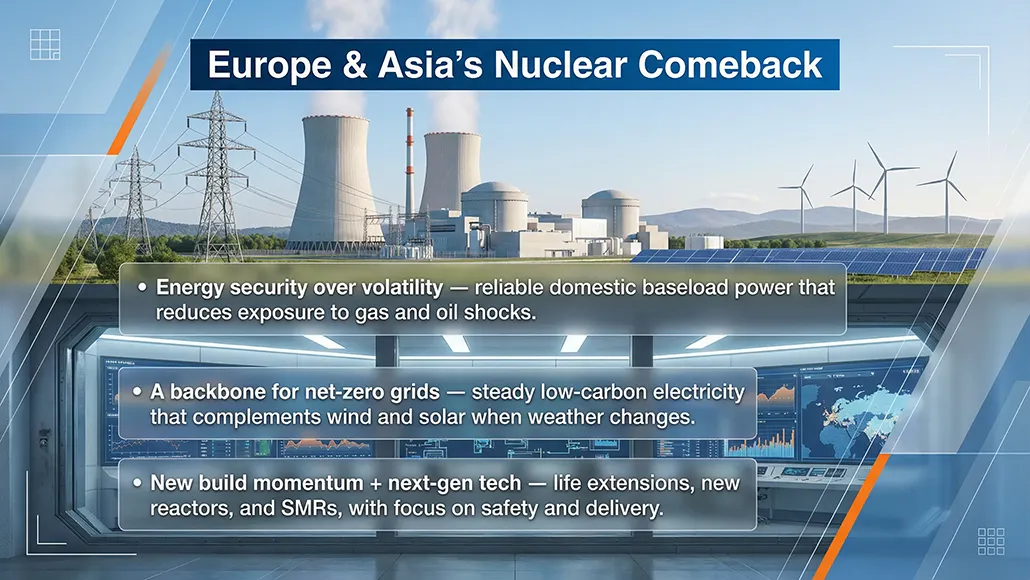
The ability to generate electricity reliably, independently, and affordably, irrespective of international market fluctuations or geopolitical machinations, has become a top priority. Nuclear power plants, once built, operate for decades, producing electricity without relying on continuous fuel imports from potentially unstable regions. Their high capacity factors mean they run almost constantly, providing the stable, clean baseload power that industrial economies depend on. This inherent stability and predictability are invaluable assets in a world characterized by increasing uncertainty. The 2022 gas supply crisis and the ongoing oil crisis due to the conflicts in the Middle East are examples of the economic and social havoc that can be wrought by unstable energy supplies. Consequently, Europe’s nuclear policy and analogous strategies in Asia are now heavily weighted towards options that reduce external dependencies and bolster domestic energy production capabilities, positioning nuclear energy as a cornerstone of true energy security.
Beyond the immediate crisis, the long-term vision also plays a crucial role. As renewable energy sources like solar and wind expand, the need for robust baseload power that can operate irrespective of weather conditions becomes even more critical. Nuclear power complements renewables perfectly, providing the necessary stability and reliability to balance intermittent generation and ensure grid integrity. This synergistic relationship strengthens the overall low-carbon power ecosystem, making the transition away from fossil fuels more feasible and less disruptive.
Challenges and Opportunities of the Nuclear Comeback
While the nuclear comeback in Europe and Asia is robust, it is not without its challenges. High upfront capital costs, lengthy construction timelines, and public perception concerns, particularly regarding safety and waste management, remain significant hurdles. The industry is actively addressing these through technological advancements, regulatory harmonization, and enhanced communication strategies.
The advent of Small Modular Reactors (SMRs) and advanced reactor designs, for instance, offers the promise of lower capital costs, shorter construction times, and enhanced safety features, potentially making nuclear power more accessible and acceptable. These innovations are critical for sustaining the momentum of reactor construction and ensuring that nuclear energy remains competitive in the evolving energy mix. Furthermore, proactive engagement with communities and transparent communication about safety protocols and waste disposal solutions are essential to build and maintain public trust. As the world gains further experience with these advanced designs, and as the urgency of energy security and climate action intensifies, public opinion may continue to shift in favor of nuclear energy as a pragmatic and responsible choice. The ongoing discussions and policy shifts within Europe nuclear policy reflect this continuous balancing act between public acceptance, economic viability, and strategic necessity.
The Enduring Significance of Nuclear Power
The narrative of nuclear power has always been one of immense potential and complex challenges. Yet, the current global climate, marked by an unprecedented confluence of climate imperatives, geopolitical tensions, and economic pressures, has undeniably thrust nuclear energy back into the spotlight as an indispensable solution. The nuclear comeback in Europe and Asia, driven by an acute awareness of energy security, the need for low-carbon power, and the inherent reliability of clean baseload power, is more than a fleeting trend. Power Gen Advancement believes this trend represents a fundamental re-evaluation of energy priorities, a strategic investment in long-term resilience, and a testament to nuclear power’s enduring capacity to shape a more stable and sustainable future for nations across the globe. As reactor construction picks up pace and new policies solidify, nuclear power is firmly establishing itself as a pivotal pillar in the global energy transition, proving its critical role in navigating the uncertainties of the 21st century.