






















Key Takeaways
- Thermal Management as a Core Constraint
In modern high-power electronics, the ability to dissipate heat is as important as the ability to convert electricity. Thermal management solutions are essential for maintaining the junction temperature of power devices within safe limits, ensuring that the system operates reliably and at peak efficiency. - Advanced Cooling for High Density
Traditional air cooling is increasingly being replaced by liquid cooling and two-phase systems in high-power applications. These advanced techniques provide the necessary heat removal capacity for the extreme power densities found in electric vehicles and industrial power systems, allowing for smaller and more powerful designs. - Reliability and Long-Term Performance
By reducing thermal stress and preventing thermal runaway, effective cooling systems significantly extend the life of electronic components. Thermal stability ensures predictable electrical performance and reduces the mechanical fatigue that leads to device failure, making it a critical factor in the overall cost and success of electronic products.
In the field of power electronics, where high currents and high voltages are converted with increasing frequency, heat is the ultimate adversary. As we push for higher power densities and smaller footprints in our electronic systems, the challenge of managing the waste heat generated during the conversion process has become a major engineering hurdle. Thermal management solutions in power electronics are no longer a secondary consideration; they are a primary design constraint that determines the ultimate performance, reliability, and lifespan of the entire system. Whether in an electric vehicle’s powertrain or a server farm’s power supply, the ability to effectively dissipate heat is what allows modern electronics to operate at their full potential.
The fundamental goal of thermal management is to keep the junction temperature of the power semiconductor devices the diodes, MOSFETs, and IGBTs within their safe operating limits. When these components exceed their rated temperatures, their electrical characteristics degrade, leading to increased losses and, eventually, catastrophic failure. Moreover, repeated thermal cycling the heating and cooling that occurs as the device is turned on and off can cause mechanical stress on the package and the internal wire bonds, leading to premature fatigue. Therefore, a comprehensive thermal management strategy must address both the peak temperature and the thermal gradients across the entire assembly.
The Physics of Heat Dissipation in Power Devices
To understand the importance of thermal management solutions in power electronics, one must first understand how heat is generated and transferred within these systems. In any power semiconductor, heat is produced by two main mechanisms: conduction losses and switching losses. Conduction losses occur when the device is “on” and current is flowing through its internal resistance. Switching losses occur during the transitions between “on” and “off” states, when both voltage and current are simultaneously present across the device. Together, these losses represent a small percentage of the total power being handled, but in high-power applications, even a 1% loss can translate to hundreds or thousands of watts of heat that must be removed from a very small area.
Thermal Resistance and Heat Flow Paths
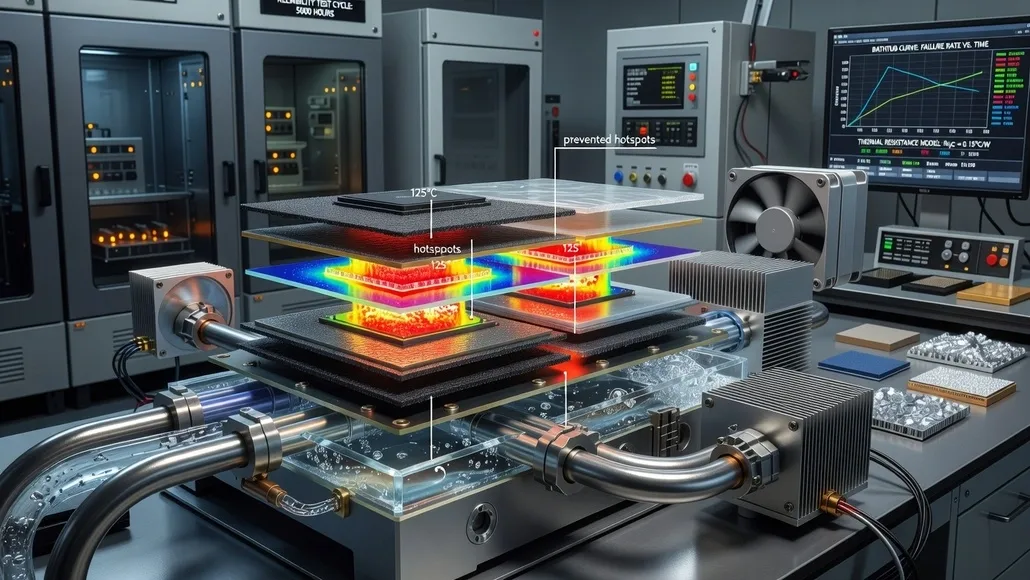
Heat transfer in power electronics follows a path from the semiconductor junction, through the device package, into a thermal interface material (TIM), and finally into a heat sink or cooling medium. Each of these stages presents a certain amount of thermal resistance, which acts as a barrier to heat flow. The total thermal resistance of the system determines how much the junction temperature will rise for a given amount of dissipated power. Advanced thermal management solutions in power electronics focus on minimizing the resistance at each stage of this path. This can involve using materials with higher thermal conductivity, optimizing the geometry of the heat sink, or improving the contact between the components.
The Role of Thermal Interface Materials (TIMs)
One of the most critical yet often overlooked components in the thermal path is the thermal interface material (TIM). Because no two surfaces are perfectly flat, microscopic air gaps exist between the power device and the heat sink. Air is a very poor conductor of heat, so these gaps create a high thermal resistance. TIMs which can include thermal greases, pads, or phase-change materials are designed to fill these gaps and provide a low-resistance path for heat flow. The latest generation of TIMs, including those based on graphite or carbon nanotubes, offers significantly higher thermal conductivity than traditional silicone-based greases, allowing for more efficient heat transfer in high-density power modules.
Advanced Cooling Techniques for High-Power Applications
While traditional air cooling using a metal heat sink and a fan is sufficient for many low-to-medium power applications, it is often inadequate for the high power densities found in modern power electronics. As we pack more power into smaller volumes, engineers are turning to more advanced thermal management solutions in power electronics, such as liquid cooling and phase-change systems.
Liquid Cooling and Cold Plates
Liquid cooling is increasingly becoming the standard for high-performance applications like electric vehicle inverters and high-power industrial drives. In a liquid-cooled system, a coolant typically a mixture of water and ethylene glycol is circulated through a “cold plate” that is in direct thermal contact with the power modules. Because liquids have a much higher heat capacity and thermal conductivity than air, they can remove heat much more efficiently. This allows for a significant reduction in the size of the cooling system and enables the power electronics to operate at higher power levels without overheating. Furthermore, liquid cooling provides more uniform temperature distribution across the power module, reducing the risk of localized “hot spots” that can lead to failure.
Two-Phase Cooling and Heat Pipes
For applications with extreme heat fluxes, such as high-end data centers or aerospace electronics, two-phase cooling techniques are often employed. These systems use a refrigerant that boils at the heat source and condenses at a remote heat sink, utilizing the latent heat of vaporization to transfer massive amounts of energy. Heat pipes and thermosyphons are passive versions of this technology that are widely used in electronics cooling. They can transport heat over long distances with very little temperature drop, acting as “thermal superconductors.” These passive thermal management solutions in power electronics are particularly valuable in applications where reliability and lack of moving parts are paramount.
Impact on Device Reliability and Lifecycle
The ultimate goal of all thermal management solutions in power electronics is to enhance the reliability and lifecycle of the system. Reliability in power electronics is often defined by the “bathtub curve,” where failures are most common early in the device’s life (infant mortality) and at the end of its intended service life (wear-out). Thermal stress is the primary driver of both types of failures. By maintaining a stable and low operating temperature, thermal management systems reduce the mechanical stresses that lead to wire bond lifting, solder joint fatigue, and dielectric breakdown.
Enhancing Performance through Thermal Stability
Thermal stability is also a key factor in the electrical performance of power devices. Many semiconductor properties, such as the on-state resistance (RDS(on)) of a MOSFET, are temperature-dependent. As the temperature increases, the resistance rises, leading to even higher conduction losses and a further increase in temperature a phenomenon known as thermal runaway. Effective thermal management prevents this by keeping the device in a stable operating regime where its performance is predictable and optimized. This is especially important in high-frequency switching applications, where even a slight change in the switching characteristics can lead to increased EMI (electromagnetic interference) and reduced efficiency.
Thermal Design as a Competitive Advantage
In today’s market, where “power density” is a key metric of success, thermal management has become a competitive advantage. The company that can design a smaller, lighter, and more reliable power inverter will win the contract. This has led to a surge in innovation in thermal simulation and modeling tools, allowing engineers to predict the thermal behavior of their designs long before a physical prototype is built. By integrating thermal management into the earliest stages of the electronics design process, manufacturers can create products that are not only more powerful but also more robust and cost-effective.
The Future of Thermal Management in Power Electronics
Looking ahead, the demand for even higher power densities will continue to drive the development of new thermal management solutions in power electronics. We are seeing the emergence of “integrated cooling,” where the cooling channels are built directly into the semiconductor substrate or the power module’s baseplate. This eliminates several layers of thermal resistance and allows the coolant to be as close to the heat source as possible. Additionally, the use of wide bandgap semiconductors like SiC and GaN, while more efficient, still requires sophisticated thermal management due to their extremely high power densities and the small size of the chips.
Innovation in Material Science
Material science will play a pivotal role in the future of thermal management. New materials with “engineered” thermal properties, such as aluminum silicon carbide (AlSiC) for baseplates or diamond-filled substrates, are being developed to provide both high thermal conductivity and a matched coefficient of thermal expansion (CTE) with the semiconductor. This matching of CTE is crucial for reducing the mechanical stress on the solder joints during thermal cycling. As these advanced materials become more affordable, they will be integrated into a wider range of high-power electronics.
Sustainability and Energy Efficiency
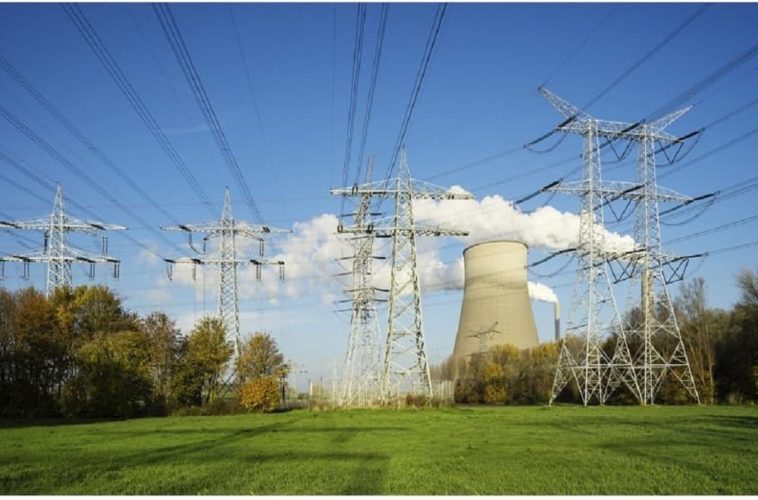
Finally, thermal management is also a sustainability issue. The energy required to cool massive data centers and industrial facilities represents a significant portion of global electricity consumption. By improving the efficiency of thermal management solutions in power electronics, we can reduce this energy burden. More efficient cooling means smaller fans, smaller pumps, and less energy wasted in the cooling process itself. In this way, thermal management is not just about protecting the electronics; it is about building a more energy-efficient and sustainable world.