
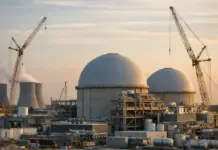




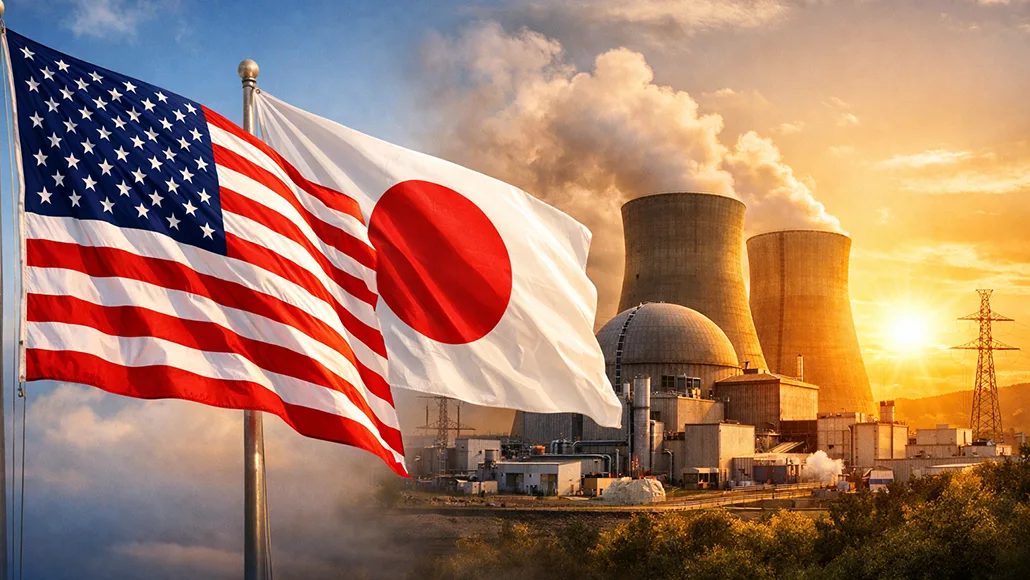
According to sources, Japan and the United States are exploring a major nuclear power initiative within the second round of agreements tied to Japan’s $550-billion investment package. The proposed U.S.-Japan Nuclear Project is expected to feature Westinghouse and is aimed at reinforcing the energy supply chains of both nations. This is crucial at a time when conflicts in the Middle East have revived anxieties over energy security. Discussions around several potential agreements are ongoing and could culminate in announcements when Japanese Prime Minister Sanae Takaichi meets U.S. President Donald Trump in Washington on 19th March, 2026.
As part of commitments linked to a U.S. tariff agreement, Tokyo is accelerating efforts to assemble qualifying investments. So far, three initiatives worth $36 billion have been unveiled, which include a natural gas power plant in Ohio.
Further engagement is planned, with Japan’s Trade Minister Ryosei Akazawa set to travel to the United States from 3rd March 2026 for talks with U.S. Commerce Secretary Howard Lutnick.
Westinghouse was named among roughly 20 companies in a joint fact sheet issued by the two governments in October identifying firms that had expressed interest in projects financed by Tokyo. The company, owned by Cameco and Brookfield, is assessing opportunities to construct pressurised water reactors and small modular reactors with a combined potential value of up to $100 billion, the fact sheet said. Japanese industrial groups including Mitsubishi Heavy Industries, Toshiba and Ishikawajima-Harima Heavy Industries Co., Ltd (IHI) could also play roles, it noted.
The U.S.-Japan Nuclear Project would build on momentum generated last year, when the U.S. government reached a partnership worth at least $80 billion with Westinghouse to construct nuclear reactors, reflecting Trump’s push to expand domestic energy output amid rising demand from artificial intelligence data centres.