























The management of a continental-scale electrical grid is an immense and daunting task, requiring constant vigilance and a high level of situational awareness. For decades, grid operators relied on Supervisory Control and Data Acquisition (SCADA) systems that provided data at a relatively slow sampling rate of one measurement every few seconds. While this was sufficient for many years when the grid was dominated by large, centralized power plants, the increasing complexity of the modern grid has created a need for a much more detailed and high-speed view of the system. This need has led to the development and widespread adoption of wide area monitoring systems (WAMS), which are transforming how we see, analyze, and manage the flow of power across vast distances and international borders.
A WAMS is a sophisticated network of high-speed sensors, robust communication links, and advanced data analytics that provides a synchronized, real-time view of the grid’s operational state. Unlike traditional SCADA, which provides “snapshots” that can miss rapid transient events, wide area monitoring systems provide a continuous stream of high-resolution data that can capture the rapid dynamics of power swings, voltage oscillations, and frequency deviations as they happen. This visibility is essential for detecting the subtle precursors to major system disturbances, allowing operators to take corrective action such as re-dispatching generation or shedding load before a localized issue can escalate into a widespread and costly blackout. By providing a global view of the grid’s health, WAMS is a key component of the modern smart grid.
The Power of Synchrophasors and Phasor Measurement Units
At the heart of any wide area monitoring systems is a network of Phasor Measurement Units (PMUs). These high-speed digital sensors measure the magnitude and phase angle of voltage and current at specific locations on the grid, typically at a rate of 30 to 60 samples per second, and in some advanced cases, even higher. What makes PMU data truly unique and transformative is that every measurement is precisely time-stamped with a microsecond-level signal from the Global Positioning System (GPS). This synchronization allows for the comparison of phase angles across thousands of miles, providing a direct measurement of the “stress” on the power system. This stress, often represented by the angular difference between distant buses, is invisible to traditional SCADA systems but is a critical indicator of impending instability.
The integration of synchrophasor technology into wide area monitoring systems has provided grid operators with an unprecedented level of visibility that was previously the stuff of science fiction. By visualizing the phase angle differences between distant parts of the grid in real-time, operators can identify areas where power flows are approaching their theoretical stability limits. This information is vital for managing the increasing amount of renewable energy being integrated into the grid, as wind and solar generation can cause rapid and unpredictable changes in power flow patterns. With WAMS, operators can see these changes as they happen, allowing them to adjust generator outputs or reconfigure the network to maintain a safe operating margin, thereby maximizing the utilization of existing transmission assets without compromising safety.
Real-Time Analytics and Oscillation Detection
One of the most powerful and life-saving applications of wide area monitoring systems is the detection and mitigation of low-frequency power oscillations. These oscillations occur when groups of generators in different parts of the grid begin to swing against one another, much like two weights connected by a spring. If left unchecked and if the system has poor damping, these oscillations can grow in magnitude until they cause protective relays to trip, leading to a cascading failure of the entire system. Traditional SCADA systems are far too slow to detect these oscillations, but a WAMS can identify them in real-time. By analyzing the high-speed PMU data using modal analysis techniques, the system can determine the frequency and damping of these oscillations, providing operators with early warnings of potential instability.
Furthermore, advanced analytics within wide area monitoring systems can identify the exact source or “driver” of these oscillations. For example, if a specific generator’s excitation system is malfunctioning or if a power system stabilizer is incorrectly tuned, the WAMS can pinpoint the problem and alert the operators to take corrective action, such as removing the offending generator from the grid. This proactive approach to grid management is a significant improvement over the traditional “reactive” method, where operators were often forced to make split-second decisions with limited and potentially outdated information. By providing a clear and detailed view of the grid’s hidden dynamics, WAMS allows for a more informed and effective response to disturbances, significantly reducing the risk of a major blackout and the massive economic losses that follow.
Voltage Stability and Voltage Collapse Prevention
Voltage stability is another critical area where wide area monitoring systems provide essential insights. A voltage collapse can happen very quickly when the grid is heavily loaded and lacks sufficient reactive power support. WAMS monitors the “Voltage Stability Margin” in real-time by analyzing the relationship between voltage and power at various points in the network. If the margin drops below a safe threshold, the system can trigger automated alerts or control actions to prevent a collapse.
This real-time monitoring is especially important in regions with high concentrations of induction motors or other loads that can trigger a “fault-induced delayed voltage recovery” (FIDVR) event. By seeing the voltage profile of the entire region simultaneously, operators can distinguish between a local voltage problem and a systemic threat. This global perspective is what makes wide area monitoring systems so valuable for maintaining the reliability of modern, highly-stressed power networks.
Enhancing Situational Awareness and Grid Security
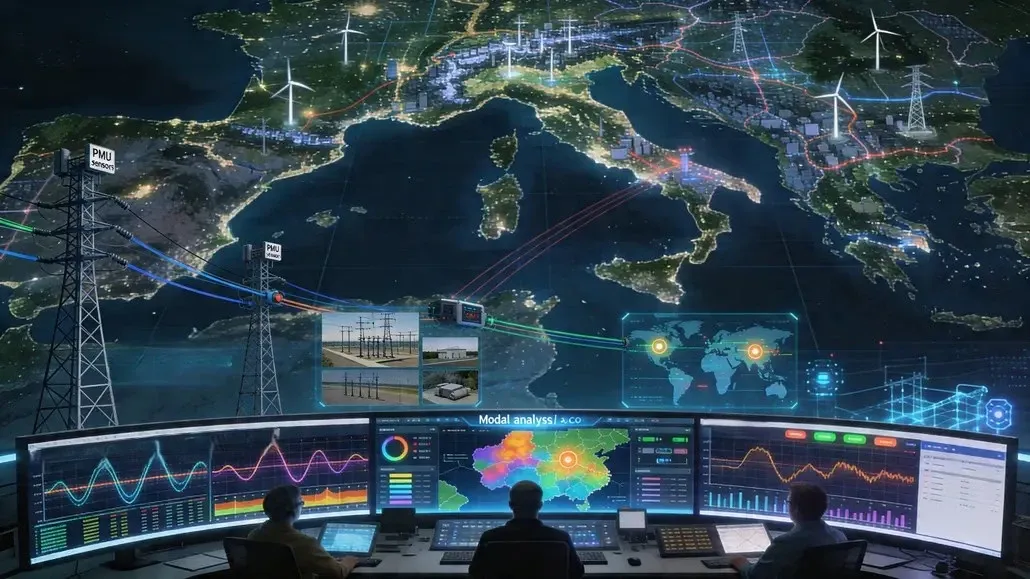
The ultimate goal of wide area monitoring systems is to provide operators with a high level of situational awareness a concept borrowed from military and aviation contexts. This means not only seeing what is happening on the grid but also understanding why it is happening, what its implications are, and what is likely to happen in the near future. By integrating WAMS data with advanced visualization tools, such as geographic information system (GIS) maps and “dashboard” style displays, operators can see a real-time “heat map” of the grid’s health, identifying areas of high stress, low voltage, or potential instability at a glance. This visibility is essential for managing the increasingly complex and interconnected power networks of the 21st century.
WAMS also plays a vital role in enhancing the security of the grid against both physical and cyber threats. By monitoring the real-time state of the system with high precision, wide area monitoring systems can detect the subtle signs of a cyber-attack or a physical intrusion that might be intended to destabilize the grid. For example, if a cyber-attacker were to remotely manipulate a circuit breaker or a generator controller, the resulting power swing or frequency deviation would be immediately visible on the WAMS, even if the SCADA system was being spoofed with false data. This real-time detection allows for a rapid response and recovery, minimizing the potential impact of an attack and ensuring that the grid remains secure.
Disturbance Analysis and Post-Mortem Investigations
In the event of a major system disturbance or a blackout, the data provided by wide area monitoring systems is invaluable for post-mortem analysis and forensic investigation. By replaying the high-resolution, time-synchronized PMU data, engineers can determine the exact sequence of events that led to the disturbance, identifying the initial “trigger” and the effectiveness of the protection and control systems. This information is vital for learning from past events and for developing new strategies, settings, and procedures to prevent similar issues in the future. In many cases, the insights gained from WAMS data have led to significant changes in grid operating rules and investment priorities.
Post-mortem investigations also play a vital role in regulatory compliance and in the development of new international industry standards. By providing a clear and objective record of a disturbance, wide area monitoring systems can help to resolve disputes between different utilities or grid participants and to ensure that all parties are held accountable for their actions or equipment performance. This transparency is essential for maintaining public trust in the energy industry and for ensuring that our power networks are operated in a safe, reliable, and fair manner. As we continue to push the limits of our energy infrastructure, the role of WAMS in providing a detailed and accurate “black box” record of the grid’s performance will remain a critical part of our efforts.
The Future of Wide Area Monitoring Systems
Looking ahead, the role of wide area monitoring systems will continue to evolve and expand as we move toward a more intelligent, automated, and self-healing grid. One of the most exciting areas of research and deployment is the development of wide-area protection and control (WAPC) schemes. These systems use the real-time WAMS data to automatically execute complex and coordinated control actions, such as fast load shedding, islanding of specific regions, or coordinated generator tripping, in response to a major disturbance. By reacting in milliseconds across a wide geographic area, these automated systems can prevent a cascading failure before it even begins.
Furthermore, the integration of artificial intelligence (AI) and machine learning into wide area monitoring systems will provide even greater insights into the grid’s performance and future behavior. By training algorithms on millions of hours of historical PMU data, we can create systems that can predict potential instability hours or even days in advance based on current trends and weather forecasts. This proactive approach to grid management will move us from “monitoring” to “prediction and prevention,” allowing for a more efficient and secure energy future. As these technologies mature, WAMS will remain at the forefront of our efforts to transform the global power network into a truly smart and resilient infrastructure.
Economic and Environmental Impact of Improved Grid Visibility
The benefits of wide area monitoring systems extend far beyond the technical performance and reliability of the power network. By providing a clearer and more detailed view of the grid, WAMS allows for a more efficient and economical use of our energy resources. For example, by identifying areas where power flows are under-utilized or where transmission bottlenecks exist, operators can optimize the use of existing lines, potentially delaying the need for expensive new transmission construction. This not only lowers energy costs for consumers but also reduces the environmental impact of utility operations.
On a broader economic level, a more reliable and resilient grid is a vital engine of growth and social stability. By minimizing the frequency and impact of major blackouts, wide area monitoring systems help to protect businesses and critical infrastructure from the significant economic losses and social disruption that can result from a power outage. This stability is essential for attracting new investments and for fostering innovation in all sectors of the modern economy, from high-tech manufacturing to healthcare. In a world where reliable electricity is a fundamental human need, the role of WAMS in providing a more efficient, reliable, and secure energy system is a cornerstone of our future prosperity and sustainability.