













The modernization of the electrical power sector is entering a pivotal phase where traditional copper-wired substations are being replaced by high-performance digital architectures. This transformation is not merely a change in the medium of communication but a complete overhaul of how electrical assets are monitored, controlled, and protected. By leveraging the power of fiber optics and standardized communication protocols, digital substations grid automation is setting a new benchmark for operational efficiency. This shift enables utilities to move away from labor-intensive manual inspections toward a more proactive, data-driven management strategy that ensures the long-term stability of the power network. The transition represents a fundamental shift in the utility business model, moving from physical infrastructure to digital intelligence.
At the heart of this revolution is the replacement of thousands of feet of traditional copper cables with a streamlined fiber-optic network. In a conventional substation, every sensor and actuator is linked to the control room through individual hardwired connections, creating a complex and often cumbersome web of wiring that can span miles. Digital substations, however, utilize a process bus architecture that digitizes signals at the primary equipment level, right at the point of measurement. This digitization allows for a massive reduction in the physical footprint of the substation while simultaneously enhancing the safety of the personnel who operate it. By eliminating the risk of open current transformer circuits and high-voltage surges in the control room, the digital approach provides a much safer working environment, significantly reducing the potential for catastrophic electrical accidents.
The Role of IEC 61850 in Seamless Data Exchange
The cornerstone of modern substation design is the IEC 61850 international standard. This protocol defines how intelligent electronic devices (IEDs) within the substation communicate with one another and with the wider utility network. Before the widespread adoption of this standard, different manufacturers used proprietary protocols that were often incompatible, leading to “islands of automation” that required complex and expensive gateways to bridge. Digital substations grid automation overcomes these barriers by providing a common language for data exchange, enabling a truly vendor-neutral environment. This interoperability is crucial for the implementation of complex automation schemes, such as wide-area protection and coordinated voltage control, which require high-speed communication between devices from multiple vendors.
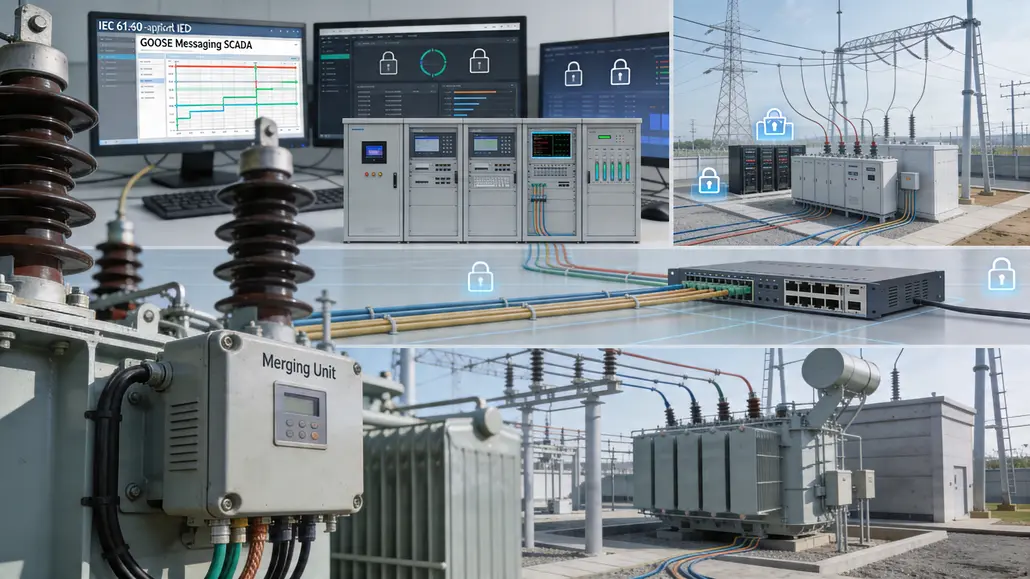
Furthermore, the IEC 61850 standard introduces the concept of GOOSE (Generic Object Oriented Substation Event) messaging. GOOSE messages are high-priority, multicast communications that allow for the instantaneous transmission of critical events, such as a circuit breaker trip command or a lockout signal. By utilizing a high-speed Ethernet backbone, these digital signals can reach their destination significantly faster than traditional hardwired signals. This reduction in latency is vital for maintaining the stability of the grid, especially during transient events where every millisecond of response time can prevent a localized fault from cascading into a regional blackout. The efficiency gained through these standardized communication paths is a primary driver for the adoption of digital technologies in the power sector.
Process Bus and Station Bus Architectures
The internal structure of a digital substation is typically divided into two main layers: the process bus and the station bus. The process bus is responsible for the communication between the primary equipment, such as transformers, circuit breakers, and switchgear, and the secondary equipment, like protection relays and meters. By using merging units (MUs) to convert analog signals from current and voltage transformers into digital data streams (Sampled Values), the process bus allows for a more flexible and scalable design. If a new relay needs to be added to the system, it can simply be “subscribed” to the existing data stream on the fiber network rather than requiring a new, expensive run of copper cable. This flexibility is a significant advantage when it comes to upgrading legacy substations to meet modern grid requirements.
The station bus, on the other hand, facilitates the communication between the IEDs and the substation’s supervisory control and data acquisition (SCADA) system, as well as the Human-Machine Interface (HMI). This layer is essential for providing operators with a real-time view of the substation’s performance and allowing for remote control actions. Digital substations grid automation enhances this visibility by integrating advanced diagnostic data that was previously inaccessible or too difficult to collect. For example, a digital substation can monitor the gas pressure in a circuit breaker or the temperature of a transformer winding in real-time, providing early warnings of potential failures. This wealth of information allows for the transition from time-based maintenance to condition-based maintenance, where repairs are only performed when the data indicates they are necessary, thereby saving costs and extending asset life.
Merging Units and the Digital Interface
The Merging Unit (MU) acts as the bridge between the high-voltage world and the digital world. It is a ruggedized device placed in the substation yard that captures analog signals and converts them into time-stamped digital packets according to the IEC 61850-9-2 standard. This device is the unsung hero of digital substations grid automation, as it allows for the removal of high-energy signals from the control house. By digitizing the data at the source, the MU ensures that the signals are immune to the electromagnetic interference that typically plagues long runs of copper cabling in a high-voltage environment.
These units also facilitate the use of non-conventional instrument transformers (NCITs), such as optical sensors. NCITs offer superior accuracy and a wider dynamic range than traditional iron-core transformers, and they do not suffer from saturation issues during high-current faults. The combination of NCITs and Merging Units represents the peak of modern sensing technology, providing the ultra-precise data required for advanced protection and automation functions. This precision is essential for managing the sensitive electronics and power converters that are increasingly common in modern renewable energy systems.
Enhancing Operational Efficiency and Maintenance
One of the most immediate benefits of adopting digital substations is the dramatic reduction in commissioning and maintenance costs. Traditional substations require extensive point-to-point testing of every copper wire to ensure that the connections are correct and that the insulation is intact. This is a labor-intensive process that can take weeks or even months for a large installation. In a digital environment, the majority of the testing can be performed in a virtual setting before the equipment even arrives on-site. By using software-based configuration tools and virtual IEDs, engineers can simulate the entire substation’s behavior, identifying and resolving potential logic errors in a controlled, safe environment. This not only speeds up the construction process but also ensures a much higher level of reliability once the substation is energized.
In terms of ongoing maintenance, the self-diagnostic capabilities of digital IEDs are a game-changer for utility operations. A traditional electromechanical or static relay might sit silently for years, its internal health unknown until it is called upon to trip a breaker—at which point, if it fails, the consequences can be devastating. A digital relay, however, is constantly monitoring its own hardware, memory, and communication links. If a problem is detected, it can immediately send an alert to the control center, allowing for a rapid response. This proactive monitoring is a key component of digital substations grid automation, as it minimizes the risk of a relay failing to operate during a fault. The ability to perform remote firmware updates and configuration changes further reduces the need for costly site visits, contributing to the overall efficiency of the grid operations and reducing the carbon footprint of the maintenance fleet.
Scalability and Future-Proofing the Grid
As the demand for electricity continues to grow and the complexity of the grid increases due to the integration of electric vehicles and heat pumps, the ability to scale and adapt is becoming more important than ever. Digital substations are inherently more scalable than their analog counterparts. Because the primary communication medium is Ethernet, adding new sensors or control devices is often as simple as expanding the network capacity or adding a few more ports to a switch. This scalability is particularly important for integrating distributed energy resources (DERs), such as utility-scale solar farms and battery storage systems, which often require fast and reliable communication links to coordinate their output with the main grid.
Furthermore, the move toward digital architectures is a critical step in future-proofing the power network. As we move closer to the realization of the “Internet of Energy,” the ability to process and analyze vast amounts of data will be the defining characteristic of a successful utility. Digital substations grid automation provides the foundational data layer that will support future innovations, such as artificial intelligence-driven grid optimization, automated fault recovery, and transactive energy markets. By investing in digital technologies today, utilities are ensuring that their infrastructure will be able to handle the challenges of tomorrow, from the rise of electric vehicles to the increasing frequency of extreme weather events. The data-rich environment of a digital substation is the perfect laboratory for developing the next generation of grid management software.
Cybersecurity in a Digital Substation Environment
While the shift to digital brings many benefits, it also introduces new risks, particularly in the realm of cybersecurity. A digital substation is a networked environment, and as such, it must be protected against malicious actors who might seek to disrupt the power supply. Digital substations grid automation incorporates robust security measures from the ground up, following standards such as IEC 62351. This includes the use of encrypted communication, digitally signed firmware, and strict access control for all devices on the network.
Utilities are also implementing network monitoring tools that can detect unusual traffic patterns, which might indicate a cyber-attack in progress. By integrating cybersecurity into the overall automation strategy, utilities can ensure that their digital substations are as secure as they are efficient. This involves a continuous cycle of risk assessment, monitoring, and improvement, as the threat landscape is always evolving. A secure digital substation is not just about technology; it’s about having the right processes and people in place to defend the critical infrastructure that powers our society.
Environmental Impact and Sustainability
Beyond the technical and economic benefits, digital substations also offer a more sustainable approach to power delivery. The reduction in copper usage is a significant environmental advantage, as the mining and processing of copper are energy-intensive and environmentally damaging. Fiber-optic cables are made from silica, one of the most abundant materials on earth, and require much less energy to produce and transport. Additionally, the smaller physical footprint of a digital substation means that less land is required for construction, reducing the impact on local ecosystems and making it easier to site substations in urban areas where space is at a premium and land costs are high.
The increased efficiency of the grid itself also contributes to a more sustainable future. By optimizing the flow of power and reducing line losses through better automation and real-time monitoring, digital substations help to minimize the amount of energy that is wasted between the power plant and the end-user. This not only reduces the carbon footprint of the utility but also lowers energy costs for consumers. In a world where every kilowatt-hour counts, the role of digital substations grid automation in creating a more efficient and sustainable energy system cannot be overstated. As the industry continues to evolve, these digital hubs will remain the unsung heroes of the modern smart grid, providing the intelligence and flexibility needed to power a cleaner world.