




Taiwan and Wyoming have formalized new cooperation initiatives focused on carbon management and nuclear energy development, with institutions from both sides signing memorandums of understanding tied to carbon capture utilization (CCU) and sequestration technologies as well as small modular nuclear reactors (SMR). The announcement was made on 12th May 2026 by Wyoming Governor Mark Gordon during a meeting with Taiwan President Lai Ching-te at the Presidential Office in Taipei. The agreements place renewed attention on CCU and SMR technology as both sides seek to strengthen collaboration in energy and advanced industrial development.
Speaking during the meeting, Gordon emphasized the growing importance of energy supply for emerging technologies. “We can see that we can provide tremendous energy that will help power artificial intelligence, the AI revolution, which we know is very important to meet [demand],” Gordon said. He further stated that cooperation between Taiwan and Wyoming creates an opportunity to “lead the world” in carbon capture, utilization and sequestration while proving the feasibility of reaching net-zero emissions goals. Gordon also said his administration hopes to deepen economic cooperation that could support future infrastructure construction projects in Wyoming. The latest agreements further expand engagement in CCU and SMR technology, an area both parties view as strategically significant.
In remarks delivered during the same occasion, Lai said the MOUs were signed between the University of Wyoming, Taiwan’s National Central University and the National Atomic Research Institute. Lai added that a separate letter of intent covering cooperation on carbon capture, utilization and sequestration technologies had also been concluded between the university and the Industrial Technology Research Institute. The agreements reinforce expanding work surrounding CCU and SMR technology as Taiwan continues evaluating long-term energy security strategies amid increasing industrial electricity demand.
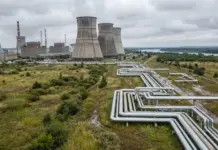
Lai also referred to comments he made in March, when he said the decommissioned Kuosheng Nuclear Power Plant in New Taipei and Maanshan Nuclear Power Plant in Pingtung County “meet the conditions for reactivation.” According to Lai, restarting the facilities would help address electricity requirements driven by the AI era and broader international energy challenges. The proposal prompted criticism from anti-nuclear activists and renewed scrutiny over the ruling Democratic Progressive Party’s nuclear-free homeland policy. Shortly afterward, the Executive Yuan said safety assessments for restarting the plants would be submitted to the Nuclear Safety Commission by the end of 2027, while reiterating that nuclear energy would only be readopted if safety standards are met, nuclear waste storage issues are resolved and sufficient public backing exists. During Tuesday’s meeting, Lai also highlighted an MOU signed last year between the Wyoming Energy Authority and Taiwan Association of Quantum Computing and Information Technology to jointly advance quantum technologies. He described Gordon’s second visit to Taiwan since April last year as evidence of strengthening relations, noting that cooperation has expanded from agriculture and education into trade, energy and technology, including growing collaboration in CCU and SMR technology.