



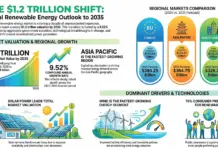
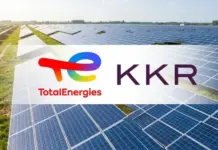





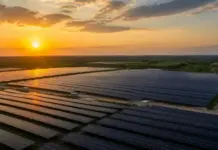



TotalEnergies and global investment firm KKR have announced an agreement to expand their U.S. solar energy partnership by adding 700 megawatts of capacity. This development involves three utility-scale solar projects located in Texas and Ohio, representing a combined enterprise value of approximately $1.2 billion.
Integration into Existing Portfolios
The newly acquired assets will be integrated into the existing 50/50 joint venture established by the companies in 2025. This venture currently manages approximately 1.4 gigawatts of renewable generation capacity. Once the transaction is finalized, the total portfolio size is expected to reach 2.1 gigawatts. Commercial operations for these sites are projected to commence by the first quarter of 2027.
Strategic Operational Goals
TotalEnergies plans to maintain operational control of the assets following the transaction close, which is anticipated before the end of 2026. The electricity produced will be sold to third-party customers or marketed by TotalEnergies. This expansion aligns with the company’s broader strategy to integrate an electricity business alongside its traditional oil and natural gas operations. By building a portfolio that combines power generation with flexible resources and energy storage, the company aims to meet the requirements of customers seeking reliable supply.
Market Context and Capital Allocation
The deal emphasizes the significant role that institutional investors play in financing large-scale energy infrastructure:
- Through this U.S. solar energy partnership, TotalEnergies shares capital requirements and project ownership while managing operations. This model provides financial flexibility for ongoing investments.
- For KKR, the transaction strengthens its presence in U.S. electricity infrastructure by adding assets nearing commercial operation, with project revenues potentially supported by existing power sales agreements.
For industry observers, the transaction highlights how integrated energy companies are evolving their capital allocation. Rather than focusing solely on upstream production, firms are increasingly treating electricity as a core revenue source.
Furthermore, the rising demand for electricity, driven by data centers and industrial facilities, necessitates a balance between renewable generation and dispatchable resources. While solar projects play a key role, the demand for reliability continues to create a functional intersection between renewable assets and natural gas-fired plants within the broader energy infrastructure landscape.