

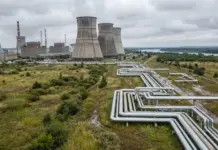
















The boiler is the most critical and vulnerable component of a Waste to Energy (WtE) facility. While its role in recovering energy from combustion gases is vital, it is constantly subjected to one of the most hostile industrial environments imaginable. The flue gas generated from municipal solid waste contains a potent mixture of hydrogen chloride, sulfur oxides, and heavy metal vapors, all of which are highly corrosive at high temperatures. Left unchecked, this corrosion can lead to thin boiler tubes, leaks, and catastrophic failures that result in costly unplanned outages. PowerGen Advancement highlights that boiler corrosion management in Waste to Energy facilities has become a specialized field of expertise, combining advanced material science with sophisticated operational protocols to ensure the long-term reliability of these essential plants.
The Mechanisms of High-Temperature Corrosion
To effectively combat corrosion, one must first understand the chemical reactions taking place inside the boiler. In a WtE environment, the primary culprit is often chlorine. As the waste burns, chlorides are released and can react with the metal surfaces of the boiler tubes to form volatile metal chlorides. This process is accelerated at higher steam temperatures, creating a catch-22 for plant designers: higher temperatures increase electrical efficiency but also drastically increase the rate of Waste to Energy boiler corrosion.
Another significant factor is the formation of sticky ash deposits. As the flue gas cools, certain compounds, such as alkali metal salts, can condense on the boiler tubes. These deposits act as a flux, dissolving the protective oxide layer on the metal and allowing the corrosive gases to reach the underlying surface. This under-deposit corrosion is particularly insidious because it can be uneven and difficult to detect through visual inspection alone. Understanding these mechanisms is the first step in developing a comprehensive management strategy that balances energy output with asset longevity.
Advanced Materials and Protective Cladding Solutions
For many years, the only way to manage corrosion was to operate at lower steam temperatures, but this severely limited the plant’s economic performance. Today, boiler corrosion management in Waste to Energy facilities involves the use of high-performance materials that can withstand more aggressive conditions. One of the most successful innovations is the use of Inconel cladding. Inconel, a nickel-chromium-based superalloy, is applied to the surface of carbon steel boiler tubes through a process called weld overlay.
The Inconel layer provides a robust barrier that is highly resistant to chloride attack and oxidation. While the initial cost of cladding is high, the return on investment is achieved through significantly longer tube life and fewer emergency shutdowns. In many modern facilities, the entire first pass of the boiler and the superheater sections are clad with Inconel as standard. This allows the plant to run at higher steam parameters, extracting more electricity from every ton of waste while maintaining a high level of confidence in the boiler’s integrity.
Precise Control of Combustion and Gas Temperatures
Technology can only do so much; operational excellence is equally important. A key strategy for boiler corrosion management in Waste to Energy facilities is the careful management of the combustion process. By maintaining a stable and uniform temperature profile in the furnace, operators can prevent hot spots where corrosion rates would be exponentially higher. Modern combustion control systems use infrared cameras and acoustic sensors to monitor the fire bed and the flue gas temperature in real time.
Furthermore, the design of the boiler’s first pass is critical. By ensuring that the flue gas has sufficient time to cool below the softening point of the ash particles before they reach the sensitive superheater tubes, the risk of sticky deposits is greatly reduced. This is often achieved through taller furnace designs and the use of refractory linings in the high-temperature zones. These linings act as both an insulator and a physical barrier, protecting the water walls from direct contact with the most corrosive elements of the combustion zone.
Optimizing Cleaning Systems and Soot Blowing
Keeping the boiler tubes clean is not just about heat transfer. It is a vital part of boiler corrosion management in Waste to Energy facilities. Accumulated ash provides the environment for under-deposit corrosion to thrive. Traditionally, plants used steam soot blowers to clean the tubes, but these can cause mechanical erosion if the steam jet is too powerful or improperly aimed.
Modern plants are increasingly turning to non-mechanical cleaning methods, such as shock pulse generators or acoustic cleaners. These systems use pressure waves or sound waves to vibrate the tubes and dislodge the ash without the abrasive impact of steam. Additionally, the timing of cleaning cycles is now being optimized using digital monitoring. By analyzing the draft loss and the heat transfer efficiency of each boiler pass, the system can trigger a cleaning cycle only when and where it is needed. This targeted approach minimizes the stress on the tubes and ensures that the boiler stays in its optimal operating window.
Water Chemistry and Internal Corrosion Management
While much attention is paid to the external surfaces, boiler corrosion management in Waste to Energy facilities also requires strict control of the internal water and steam chemistry. Even minor contaminants in the feedwater can lead to scale formation or pitting on the inside of the tubes. In a high-pressure WtE boiler, the water must be extremely pure, requiring advanced demineralization and polishing plants.
Continuous monitoring of pH, conductivity, and dissolved oxygen is mandatory. Any deviation from the target parameters can lead to the breakdown of the magnetite layer—the thin, protective film that forms naturally on the inside of the tubes. By maintaining precise chemical control, operators ensure that the boiler is as protected from the inside as it is from the outside. This holistic approach to corrosion management is what allows modern WtE plants to achieve availability rates of over 90 percent.
The Role of Non-Destructive Testing and Inspection
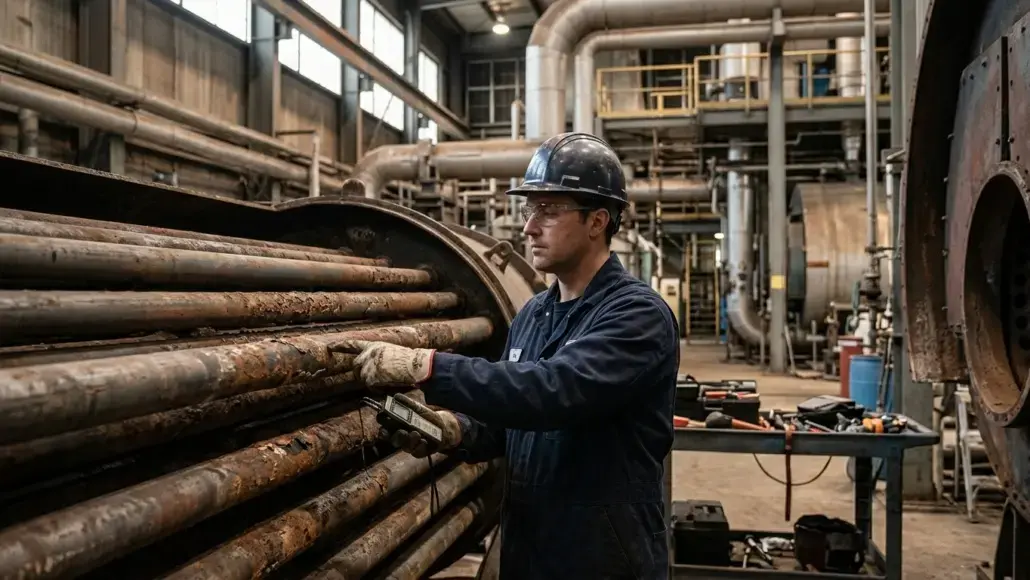
Effective corrosion management relies on accurate data about the current state of the boiler. During planned outages, the boiler undergoes a rigorous inspection regime using non-destructive testing (NDT) techniques. Ultrasonic thickness (UT) measurements are the most common, providing a map of the tube wall thickness across the entire boiler. By comparing this data with previous inspections, engineers can calculate the corrosion rate for each section and predict when replacement will be necessary.
Newer technologies, such as drone-based inspections and automated UT crawlers, are making this process faster and safer. Drones equipped with high-resolution cameras can identify areas of concern in the upper reaches of the boiler without the need for extensive scaffolding. This predictive approach to maintenance is a cornerstone of boiler corrosion management in Waste to Energy facilities, as it allows for the proactive replacement of tubes during scheduled outages rather than reacting to a failure mid-operation.
Innovations in Ceramic Coatings and Cold-End Protection
As we push for even higher efficiencies, researchers are looking beyond nickel alloys toward ceramic-based coatings. These coatings offer even higher resistance to chemical attack and can be applied to areas where cladding is not feasible. While still in the developmental phase for wide-scale boiler use, early results are promising and could represent the next leap in Waste to Energy Boiler corrosion management.
At the cold end of the plant, where the flue gas temperatures drop below the acid dew point, a different type of corrosion occurs. Here, acid condensation can eat through ductwork and stack linings. Managing this risk involves the use of specialized acid-resistant materials and, in some cases, heating the flue gas slightly before discharge. PowerGen Advancement notes that by addressing corrosion at every stage of the process, from the furnace to the stack, WtE operators protect the entire value chain of the facility.
Conclusion
Boiler corrosion management in Waste to Energy facilities is a never-ending battle against the laws of chemistry and thermodynamics. However, through the integration of advanced materials, precise combustion control, and data-driven maintenance, it is a battle that is being won. Modern WtE plants are proving that they can handle the world’s most challenging fuel sources with reliability and efficiency. As we continue to refine our corrosion management strategies, these facilities will play an even larger role in our sustainable energy future, providing a safe and effective way to turn our waste into a valuable resource for generations to come.