











Singapore and Indonesia have entered into a new agreement to expand cooperation on carbon credits, reinforcing their commitment to climate finance while pursuing their respective climate goals amid a more uncertain global landscape. The memorandum of understanding (MOU) was signed on 6th July 2026 during the annual Singapore-Indonesia Leaders’ Retreat in Jakarta, where Singapore’s Prime Minister Lawrence Wong met Indonesian President Prabowo Subianto.
As part of the agreement, both countries will collaborate on carbon credits by identifying high-integrity carbon credit projects, sharing technical knowledge and information on carbon markets, and advancing work towards an implementation agreement under Article 6 of the Paris Agreement, according to a statement from the Ministry of Trade and Industry (MTI).
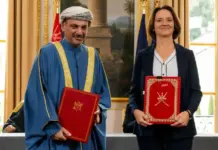
The MOU was signed by Singapore Deputy Prime Minister and Minister for Trade and Industry Gan Kim Yong and Indonesian Minister of Environment and head of the Environmental Control Agency, Mohammad Jumhur Hidayat.
Following the signing ceremony, Gan said Singapore remained committed to developing carbon markets that are credible, transparent and mutually beneficial.
He added, “This MOU signals Singapore’s and Indonesia’s intent to work towards creating a framework for channelling climate finance into high-integrity projects, from protecting forests and restoring coastal ecosystems, to deploying clean technology solutions that reduce emissions and create new economic opportunities.”
High-integrity carbon credits refer to verified, permanent and additional carbon reductions that avoid double counting and are designed to comply with the Paris Agreement.
Cross-Border Electricity Cooperation Expands
The agreement on carbon credits was among several economic initiatives introduced during the Singapore-Indonesia Leaders’ Retreat. At the gathering, President Prabowo announced that Danantara Indonesia, the country’s sovereign investment fund, would take the lead in cooperation with Singapore on cross-border electricity trade.
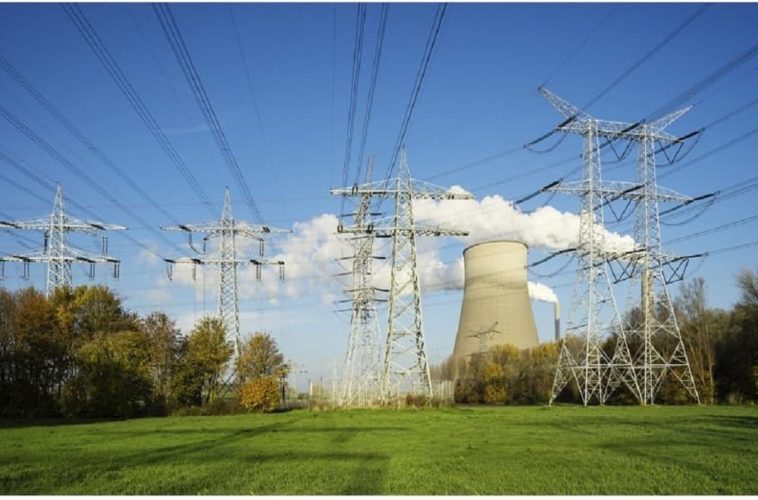
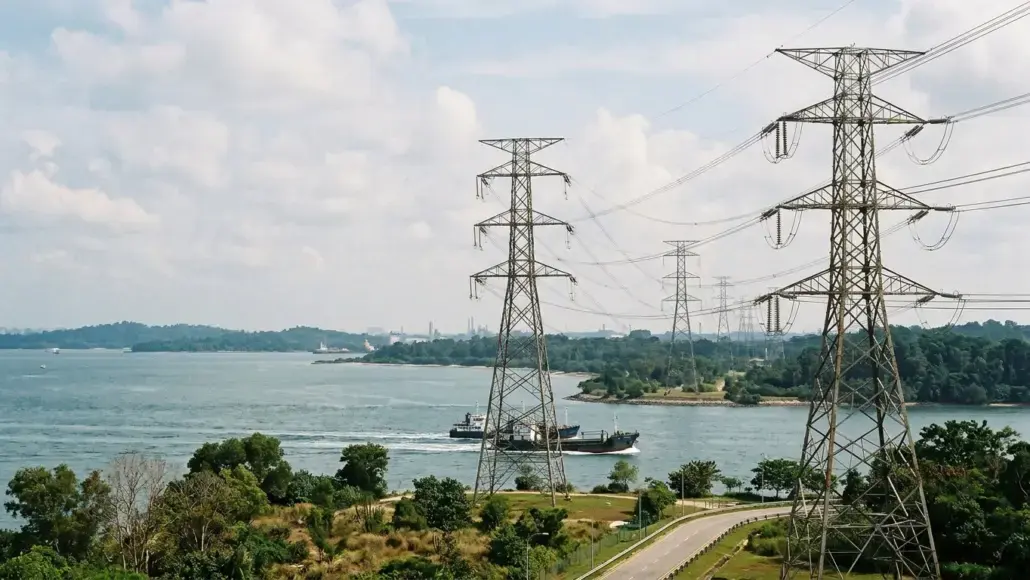
According to Singapore’s Ministry of Foreign Affairs, the two leaders also witnessed the exchange of memorandums of understanding covering cross-border electricity exports as well as the development of transmission assets needed to facilitate cross-border electricity trade.
Through its investment arm, Danantara Investment Management, Danantara Indonesia signed MOUs with Singapore companies Keppel Electric and Sembcorp Utilities to explore the purchase of imported low-carbon electricity.
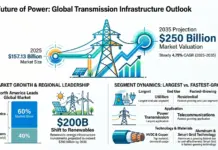
Separately, Danantara Indonesia signed an MOU with Singapore Energy Interconnections to support information sharing and examine opportunities for collaboration on cross-border transmission infrastructure. A joint statement issued by Singapore’s MTI and Danantara Indonesia said both governments are working towards the commercial development of 3.4 gigawatts or more of cross-border electricity projects by 2035.
The joint statement further stated that Singapore and Indonesia will cooperate in establishing the regulatory frameworks, policy measures and investment conditions necessary to enable cross-border electricity trade. It also noted that both governments will introduce a common framework for renewable energy certificates aligned with international standards to support the tracking and accounting of renewable electricity traded between the two countries.