








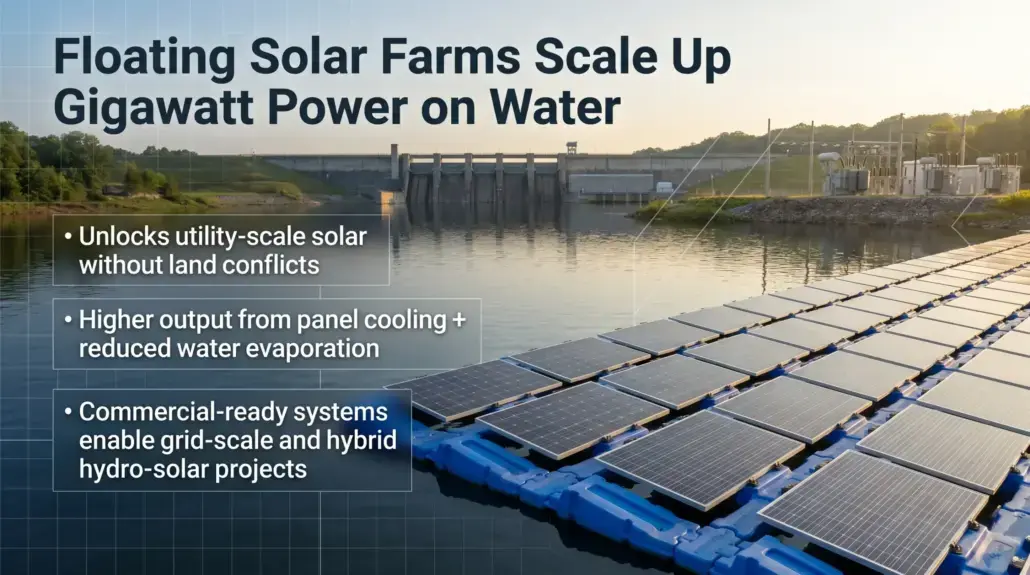
The global energy landscape is undergoing a profound transformation, driven by an urgent imperative to transition towards sustainable, clean energy sources. Amidst this shift, an innovative solution is rapidly gaining prominence, quite literally making waves across continents – floating solar farms. These pioneering installations, harnessing the vast surfaces of our planet’s water bodies, are not merely an alternative. They represent a strategic evolution in how we conceive and deploy solar energy. Indeed, the narrative around floating solar farms scale up gigawatt power on water is no longer a futuristic vision but a tangible reality reshaping the global renewable energy infrastructure. Power Gen Advancement notes that this burgeoning sector is swiftly overcoming initial skepticism, proving its efficacy, and positioning itself as a cornerstone of the coming energy revolution.
The Emerging Imperative for Solar Farms on Water
The conventional terrestrial solar farm, while undeniably effective, faces an inherent constraint, that is, land availability. As the demand for utility scale solar projects surges globally, prime land suitable for large-scale energy generation becomes increasingly scarce, expensive, and often contentious, competing with agriculture, urban development, and conservation efforts. It is this fundamental challenge that has propelled the innovative minds in the energy sector to look beyond terra firma, towards the expansive, often underutilized surfaces of reservoirs, lakes, quarry ponds, and even calm coastal waters.
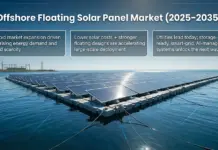
The strategic deployment of solar farms on water offers a compelling suite of advantages. One of the most significant is the liberation from land use competition, allowing for significant renewable energy growth without encroaching on valuable terrestrial ecosystems or agricultural lands. Beyond this primary benefit, the aquatic environment itself contributes to enhanced performance. The natural cooling effect of water on photovoltaic panels can significantly mitigate temperature-induced efficiency losses, which are common in land-based installations. Studies suggest that this inherent cooling can boost energy yield by 5-15%, making floating solar power not only space-efficient but also remarkably more productive under certain conditions. Furthermore, the extensive coverage of large water bodies by these floating photovoltaic systems can reduce water evaporation, a critical advantage in regions facing water scarcity and increasingly dry climates. This dual benefit of energy generation and water conservation underscores the multifaceted value proposition of this technology.
Overcoming the Challenges: Technological Innovation Paving the Way
The journey from concept to widespread deployment for floating solar farms has been underpinned by relentless innovation and engineering prowess. Early designs, while promising, faced considerable challenges related to durability, anchoring, and electrical integration in a marine environment. However, significant strides in material science, hydrodynamics, and electrical engineering have overcome these initial hurdles, enabling the construction of robust and reliable systems capable of withstanding diverse environmental conditions.
Modern floating photovoltaic systems are engineered with specialized floats made from high-density polyethylene (HDPE), known for its durability, UV resistance, and minimal environmental impact. These floats support the solar panels, creating a stable platform designed to withstand wind, waves, and varying water levels. Crucial to their stability are advanced anchoring and mooring systems that secure the entire array to the shore or seabed, ensuring resilience against extreme weather events. The electrical components, including inverters and cabling, are specially designed and protected for submerged or semi-submerged operation, adhering to stringent safety standards. The continuous development in these areas has significantly reduced installation costs and maintenance requirements, making floating solar power an increasingly attractive investment for clean energy infrastructure developers. This technological maturation is precisely what has allowed floating solar farms scale up gigawatt power on water projects globally, moving beyond pilot installations to commercial-scale ventures.
Unlocking Gigawatt Power Potential: The Rise of Large-Scale Projects
The true measure of floating solar’s impact lies in its ability to contribute meaningfully to national and regional energy grids, moving beyond niche applications to becoming a significant player in the floating solar market. The phrase gigawatt solar projects is no longer solely associated with vast desert installations. Increasingly, ambitious plans and completed projects are demonstrating the immense potential of water bodies solar farms to deliver power on an unprecedented scale.
From the expansive reservoirs of Asia to the hydro-dams of South America and the industrial ponds of Europe, the landscape of power generation is being redefined. Countries like China, India, Vietnam, and South Korea are leading the charge, with several multi-megawatt installations already operational, and plans for even larger, multi-hundred-megawatt and even gigawatt-scale projects actively underway. For instance, the sheer ambition behind some of these initiatives sees hundreds of thousands of solar panels meticulously arranged across vast stretches of water, collectively feeding gigawatts of clean electricity into the grid. These developments illustrate a clear trend. As technology matures and economies of scale are realized, the capacity for floating solar farms scale up gigawatt power on water is not just theoretical but demonstrably achievable, providing a viable pathway to meet escalating energy demands sustainably.
The economic viability of these large-scale deployments is also becoming more apparent. The reduced land acquisition costs, coupled with enhanced efficiency, can significantly improve project economics over the lifespan of the installation. Furthermore, the inherent stability of the floating solar market is attracting substantial investment from private equity, public utilities, and governmental bodies, all keen to capitalize on its potential for robust returns and environmental stewardship. The integration of floating solar power with existing hydropower infrastructure presents a particularly synergistic opportunity, creating hybrid hydro-solar plants that offer dispatchable power generation, leveraging the water body for both functions.
Environmental and Socio-Economic Ripple Effects
Beyond the immediate energy benefits, the widespread adoption of floating solar farms carries significant environmental and socio-economic implications. Environmentally, the primary advantage, as mentioned, is the reduced pressure on land resources, preserving terrestrial ecosystems for biodiversity, agriculture, or urban development. Additionally, by shading parts of reservoirs, these installations can lower water temperatures and reduce evaporation, which is especially beneficial in arid regions or during drought conditions. This contribution to water conservation adds another layer of value to these systems. There are also potential benefits related to mitigating algal blooms by reducing sunlight penetration, though thorough environmental impact assessments are crucial to understand specific local conditions.
From a socio-economic perspective, the development and deployment of floating solar farms stimulate local economies through job creation, from manufacturing and installation to maintenance and operations. These projects contribute directly to building robust clean energy infrastructure, enhancing energy security, and promoting local energy independence. For communities situated near these water bodies, access to reliable, clean, and potentially more affordable electricity can have a transformative impact on quality of life and economic development. The commitment to renewable energy growth through such innovative solutions also reinforces a nation’s position in the global fight against climate change, fostering international collaboration and investment in sustainable technologies.
The Future Horizon: Sustained Growth and Innovation in the Floating Solar Market
The trajectory for floating solar farms is unmistakably upwards. Experts predict exponential growth in the floating solar market over the next decade, with continued technological advancements further enhancing efficiency, reducing costs, and expanding the range of deployable water bodies. Innovations in flexible solar panels, advanced mooring systems for challenging environments (including offshore applications), and integrated energy storage solutions will further solidify floating solar’s role in the global energy mix.
The strategic importance of floating solar farms scale up gigawatt power on water will only intensify as countries worldwide strive to meet ambitious decarbonization targets. Their ability to deliver high-capacity, clean energy without consuming valuable land makes them an indispensable tool in achieving sustainable development goals. As research continues to refine their environmental integration and operational efficiencies, Power Gen Advancement believes floating photovoltaic systems are poised to become a defining feature of our future energy landscape, offering a resilient, versatile, and environmentally responsible pathway to a truly sustainable power future. The continued expansion of these water bodies solar farms will be a testament to human ingenuity in harnessing nature’s resources harmoniously, illuminating a brighter, cleaner future for generations to come.