













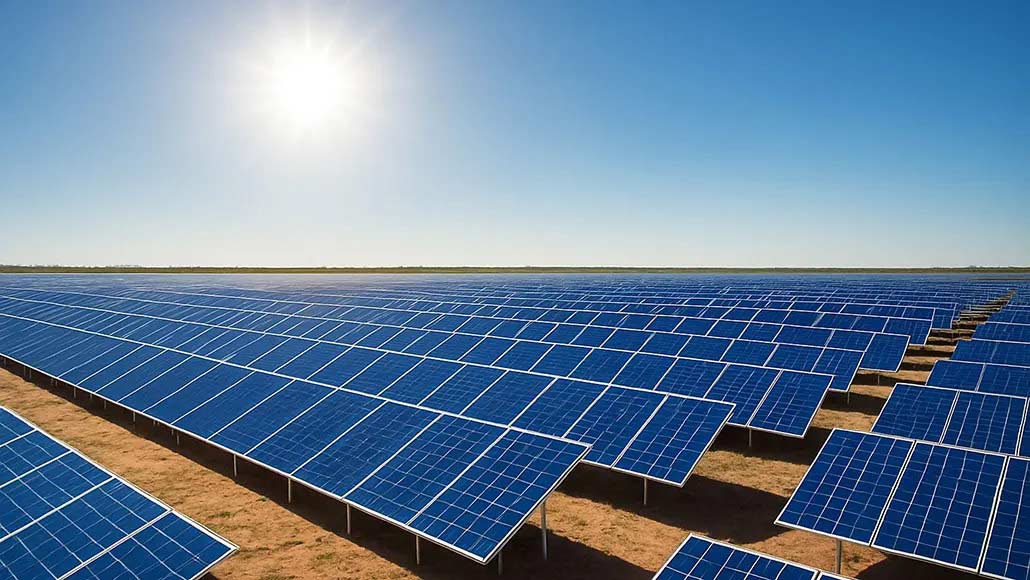
Greece is all set to formally initiate the rollout of the 130 MW agrivoltaics plan established under legislation adopted at the end of 2025. Its distribution grid operator will open the application process for agrivoltaic systems on March 4, 2026. The law sets a nationwide objective of 130 MW agrivoltaics distributed across the country’s 13 regional prefectures. Within that framework, each prefecture is permitted to deploy up to 10 MW, while individual agrivoltaic systems are restricted to a maximum capacity of 200 kW. This will ensure balanced regional allocation while preventing excessive concentration in any single area.
According to the distribution network operator, application windows will open during the first 10 days of each month and remain available until the 10 MW threshold in each prefecture is reached. Submissions will be reviewed on a first-come, first-served basis. The 130 MW agrivoltaics plan applies nationwide, including non-interconnected islands that are not linked to the mainland grid. All applicants must adhere strictly to the operator’s guidelines, which include the submission of bank guarantee letters or equivalent financial security.
Installation criteria are clearly defined: agrivoltaic systems must be positioned at least 2.1 meters above ground level and situated either on cultivated farmland or on greenhouse rooftops.
Regarding remuneration, approved projects under the 130 MW agrivoltaics plan will sign contracts with Greece’s Operator of Renewable Energy Sources (DAPEEP). For systems located on non-interconnected island grids, contracts will instead be concluded with the distribution grid operator. In both arrangements, producers will receive a fixed tariff for generated electricity. Although the tariff level has yet to be disclosed, the Ministry of Environment and Energy is expected to announce it in the coming weeks, with farmers widely anticipated to act swiftly to secure available capacity.
The scheme is tailored specifically to support farmers, who are the only parties eligible to own the new agrivoltaic plants. Under the rules, each farmer may hold up to two systems. Projects developed within the 130 MW agrivoltaics plan may incorporate battery storage, provided that storage offers at least one hour of duration and is capable of delivering the PV system’s maximum output for a minimum of one hour. However, batteries are not permitted to charge from the grid. These technical requirements form part of a broader regulatory design intended to maintain operational clarity and grid stability.