










The Minister of Electricity and Renewable Energy of Egypt, Mahmoud Esmat, has gone on to announce that the Egypt-Saudi electricity interconnection project has now entered the final testing stage, with pretty close coordination that is under way with its Saudi counterparts in order to complete trial operations and start grid connection in the coming weeks.
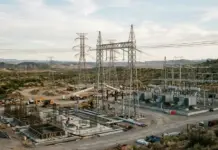
The announcement went on to come during a field visit to the 500 kV high-voltage direct current – HVDC converter station located in Badr City. The facility is known to be the first of its kind as far as the Middle East is concerned in terms of scale, manufacturing technology as well as operational capacity when it comes to cross-border power transmission.
Esmat, who was accompanied by senior officials from the Egyptian Electricity Transmission Company, went on to inspect the control and operations centre and also reviewed the progress made in terms of equipment testing and also overall system readiness before synchronizing the project with the unified electricity grids of both Egypt and Saudi Arabia.
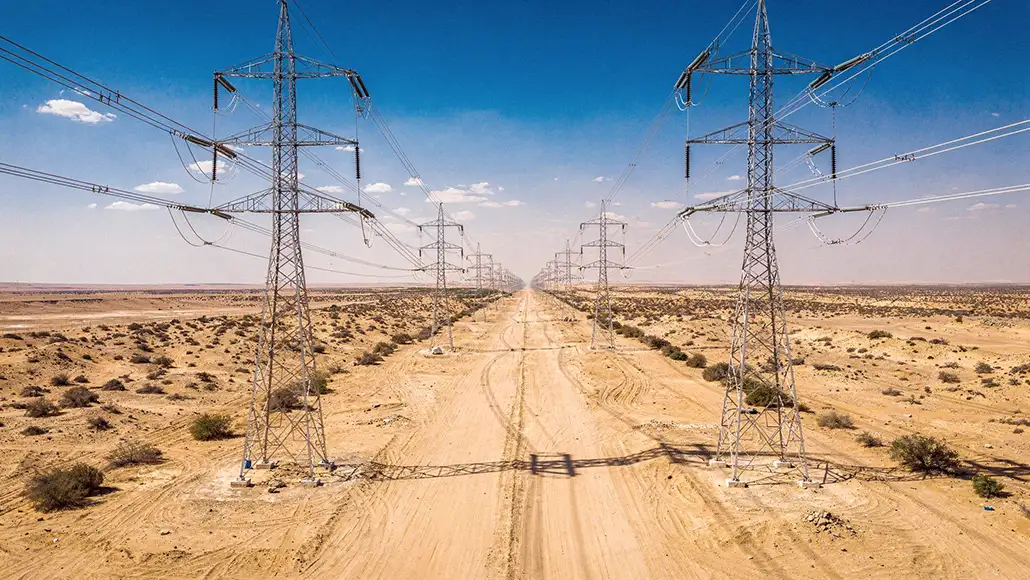
The minister evaluated the status pertaining to the operational trials at the Badr converter station and also the Sakakin-Taba 2 station, along with the 500 kV overhead transmission line that links Badr and Taba 2 and extends almost 320 kilometers. He also went ahead and reviewed works in connection to the submarine and underground cables, medium- and low-voltage connections, AC/DC supply systems, control panels, fibre optic networks – OPGW, and also associated infrastructure.
Esmat went on to describe the Egypt-Saudi electricity interconnection project as energy bridges, which actually elevate the strategic cooperation and also promote economic integration. He emphasized that the Egypt-Saudi link indeed is a significant step forward that establishes a completely integrated regional electricity network and, at the end of the day, a common Arab power market.
The project is most likely to strengthen the grid stability, enhance the quality of service, grow dependence on renewable energy sources, and also decrease fuel consumption via a more efficient generation along with load management. It is also expected to capitalize on differences within peak demand periods between both countries, helping with a more efficient use of generation capacity and also a grid operation that’s more cost-effective.
With an overall exchange capacity of around 3,000 megawatts, the project happens to connect three major high-voltage converter stations – two of which are in eastern as well as northwestern Saudi Arabia and one located in Badr City, which is east of Cairo by way of around 1,350 kilometers of overhead transmission lines as well as submarine cables throughout the Red Sea. The project, as a matter of fact, is widely viewed as a strategic milestone when it comes to linking electricity networks across Africa, Asia as well as Europe.