








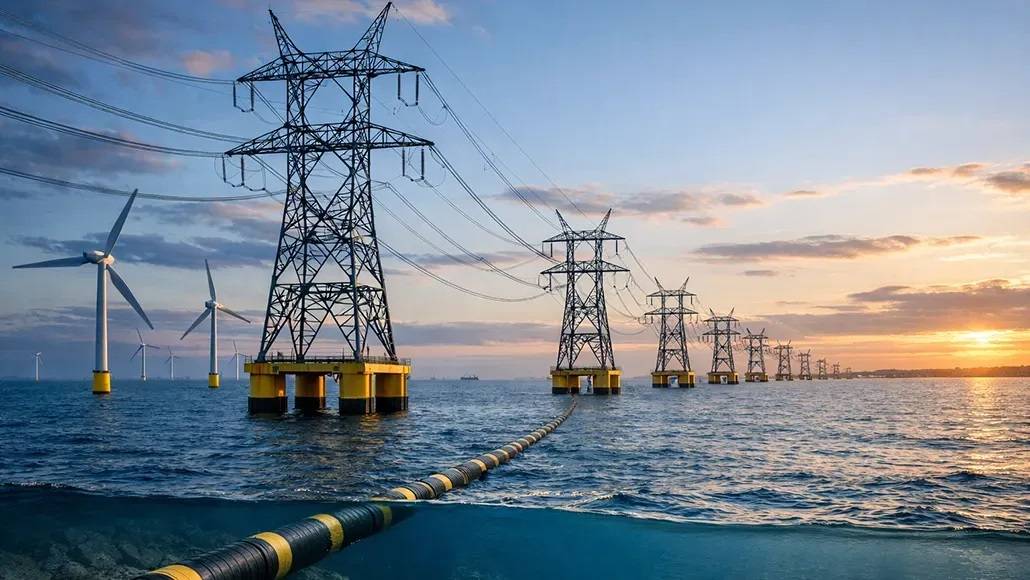
Energy ministers from Germany, Latvia, and Lithuania signed a joint declaration of intent in Paris focused on expanding cross border renewable electricity capacity and infrastructure across the Baltic sea. The Baltic-German PowerLink can boost greater renewable energy development, energy infrastructure and energy security in the region.
As part of this initiative, the trio’s electricity transmission system operators (Lithuania’s Litgrid, Latvia’s Augstsprieguma tīkls, and Germany’s 50Hertz) committed to evaluate the feasibility of a hybrid interconnection known as the Baltic-German PowerLink. The agreement signals closer regional coordination on energy, complementing existing cooperation frameworks.
Germany, Lithuania and Latvia agreed to continue backing studies conducted by the transmission operators and other institutions, along with cost-benefit analyses, financing structures, and technical assessments. Following preliminary results, the countries will consider seeking Project of Common Interest status within the European Union and applying for EU funding for the implementation of the studies. Furthermore, additional EU countries in the Baltic Sea region could potentially join the Baltic-German PowerLink at a later stage.
The proposed Baltic-German PowerLink would establish an electricity cable connection between Germany and the Baltic countries while also facilitating the expansion of renewable generation capacity. According to the declaration, hybrid electricity links in the Baltic Sea region could deliver multilateral benefits and positive socio-economic effects for participating countries. They are also expected to reduce dependence on fossil fuels and support competitive electricity prices.
Further decisions on the Baltic-German PowerLink are scheduled by the end of the third quarter of 2026. Previously, Litgrid, Augstsprieguma tīkls, and 50Hertz submitted a joint application to include the hybrid offshore interconnection in the 2026 Ten-Year Network Development Plan (TYNDP) of the European Network of Transmission System Operators for Electricity (ENTSO-E). The current project concept outlines a 2 GW, approximately 600 km hybrid offshore connection, with a planned connection point on the Lithuania–Latvia border, subject to technical studies. With a possible completion date of 2037, the Baltic-German PowerLink would enable electricity trading between the Baltic countries and Germany, integrate up to 2 GW of offshore wind capacity in Lithuania and Latvia, expand onshore renewable capacity, and strengthen security of supply across all three nations.