

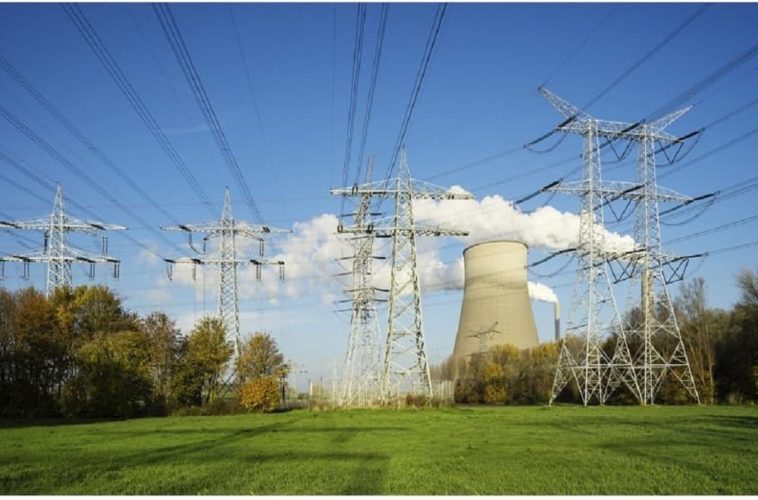


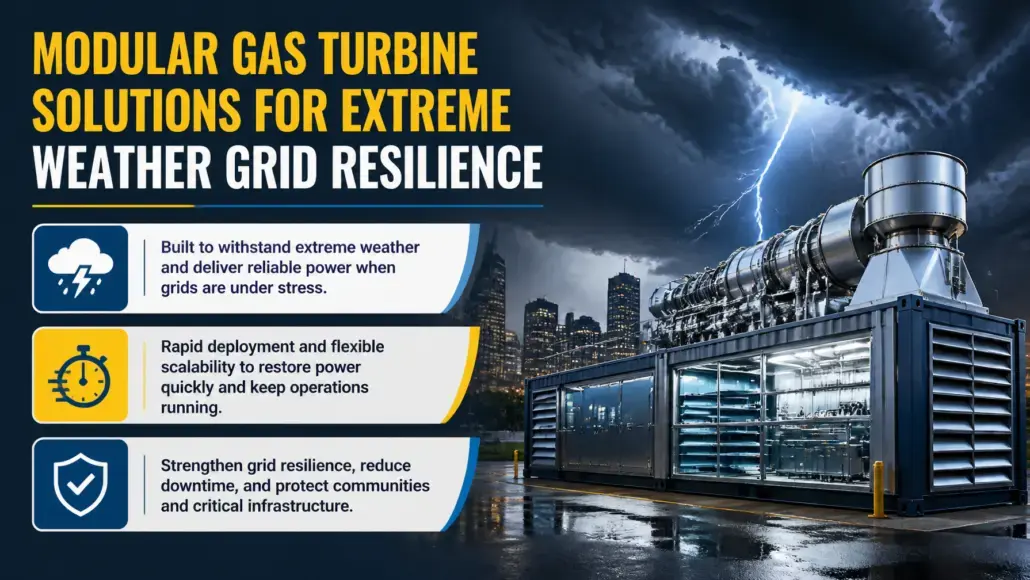
The increasing frequency and severity of extreme weather events, from intense heatwaves and deep freezes to devastating hurricanes, have placed unprecedented stress on global energy grids. Traditional centralized power systems are often vulnerable to widespread failures during these events, leading to prolonged blackouts and significant economic disruption. Modular gas turbines have emerged as a vital strategy for utilities and industrial operators, providing a flexible and rapidly deployable defense against climate related outages. These compact, pre engineered units can be positioned strategically across the grid to provide local stability and emergency backup power when it is needed most.
Unlike large scale power plants that can take years to build and are difficult to move, modular gas turbines are designed for mobility and speed of installation. They can be transported by truck or rail and brought online in a matter of days or weeks. This agility is becoming essential as grid operators face the dual challenge of aging infrastructure and a rapidly changing climate. PowerGen Advancement observes that by incorporating modular units into their long term planning, utilities can build a more resilient and adaptable energy system that is better equipped to handle the unexpected.
Technical Innovations in Modular Design
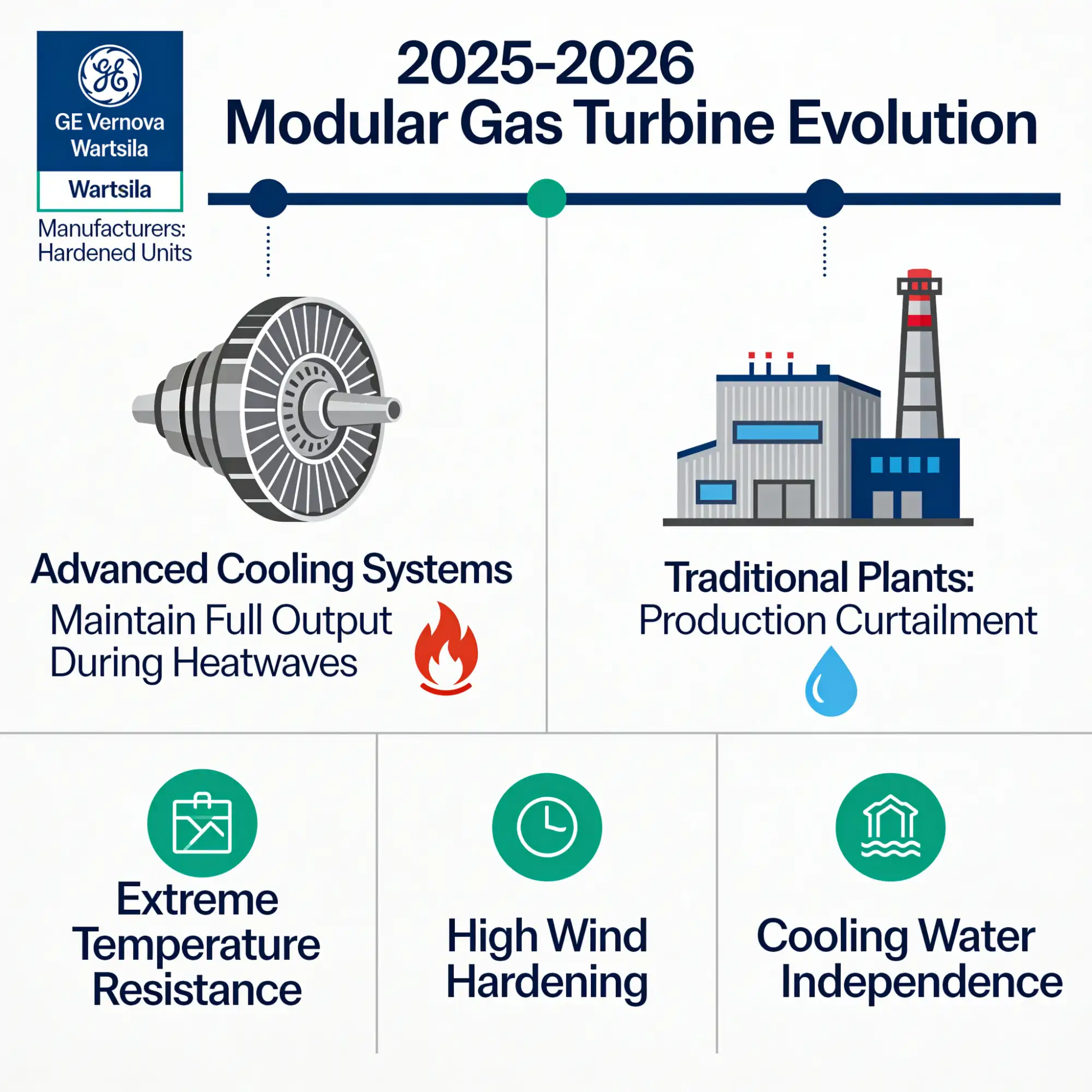
The design of modular gas turbines has evolved significantly in 2025 and 2026, with a focus on durability and performance in harsh environments. Manufacturers like GE Vernova and Wartsila have introduced units that are specifically hardened against extreme temperatures and high winds. These turbines feature advanced cooling systems that allow them to maintain full output even during record breaking heatwaves, when traditional plants often have to curtail production due to cooling water limitations.
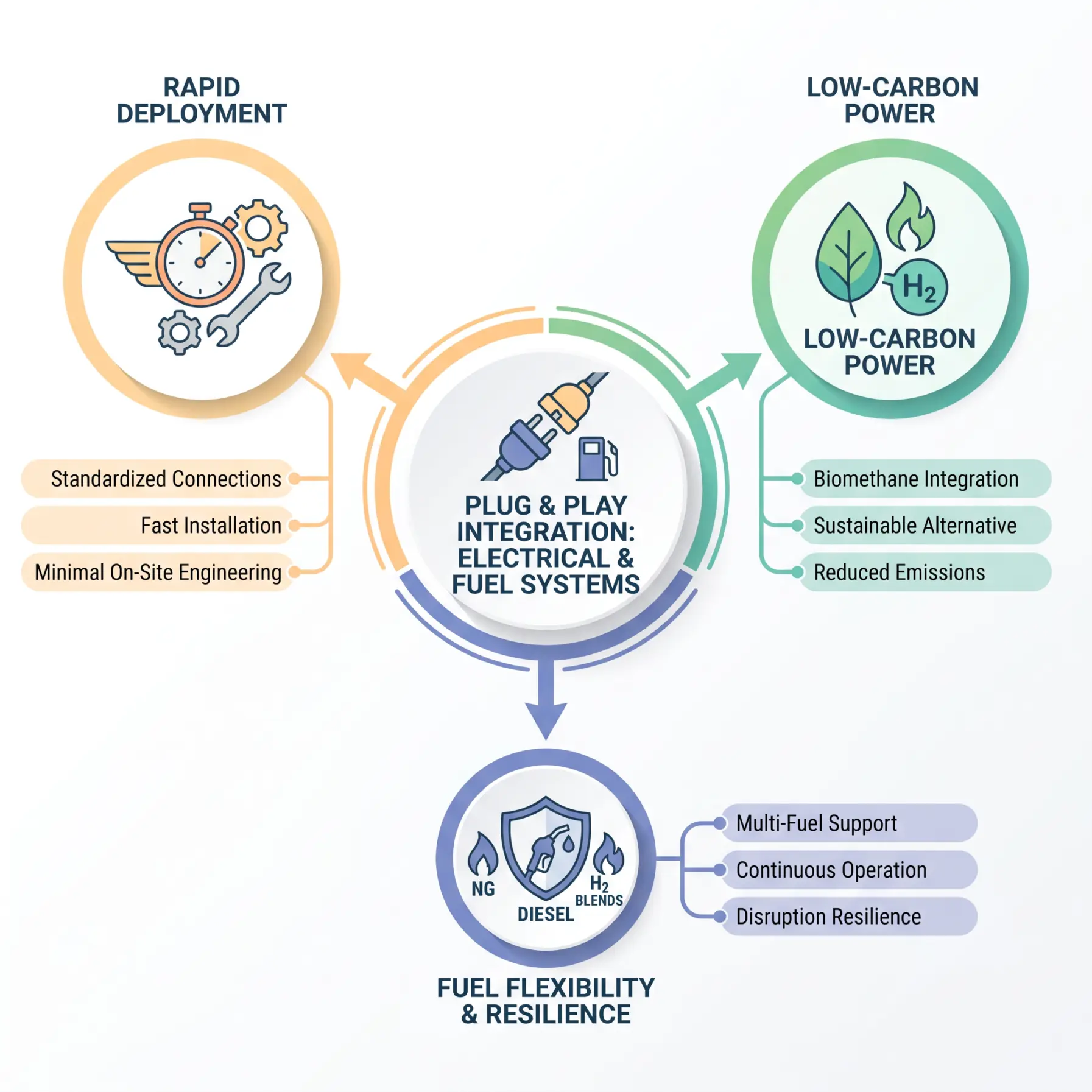
Another key technical development is the integration of plug and play electrical connections and fuel systems:
- Rapid deployment: Standardization enables fast installation and minimizes the need for complex on-site engineering.
- Low-carbon power: Growing integration of biomethane provides a sustainable, low-carbon alternative for emergency generation.
- Fuel flexibility & resilience: Support for multiple fuels, including natural gas, diesel, and hydrogen blends, ensures continuous operation during primary fuel disruptions.
Enhancing Grid Stability during Peak Demand
Beyond emergency backup, modular gas turbines are increasingly used to manage peak demand during extreme weather. During heatwaves, the surge in air conditioning use can push the grid to its limits, requiring every available megawatt of capacity. Modular units can be deployed to known congestion points, providing localized support that prevents transformer overloads and voltage drops. This decentralized approach to grid firming is often more cost effective than upgrading long distance transmission lines.
In regions with high concentrations of renewable energy, modular gas turbines provide the necessary inertia and frequency response to balance variable supply. When a storm system suddenly reduces wind or solar output, these units can ramp up in minutes to fill the gap. This symbiotic relationship between renewables and flexible gas generation is a cornerstone of the modern resilient grid. According to data from the International Energy Agency in early 2026, the deployment of modular flexible assets has increased by over 20 percent globally since 2024.
Leading Corporate Developments and Resilience Projects
The market for modular power solutions is highly competitive, with several global leaders expanding their product lines and securing major contracts in 2025 and 2026. These projects highlight the diverse applications of modular gas turbine grid resilience in both developed and emerging markets.
- GE Vernova announced the successful deployment of its TM2500 mobile aeroderivative turbines in multiple locations across the Gulf Coast of the United States in late 2025, providing critical backup power following a major hurricane season.
- Wartsila secured a contract in 2026 to supply a series of its modular 31SG engine units to a utility in Western Australia. These units are designed to operate in extreme desert heat and provide fast starting support for a large solar farm.
- Siemens Energy launched its new SGT-A05 modular power package in early 2026, featuring a compact design that fits within a standard shipping container, making it ideal for rapid international deployment.
- TotalEnergies and Equinor have both invested in modular power solutions for their offshore operations in 2025, ensuring that critical infrastructure remains powered during severe North Sea storms.
- Mitsubishi Power expanded its mobile power fleet in 2026, offering comprehensive power as a service agreements that allow utilities to lease modular capacity during high risk weather seasons.
The Role of Digital Twins and Predictive Analytics
Modern modular gas turbine grid resilience is supported by a sophisticated digital infrastructure. Sensors on each unit provide real time data on performance, fuel consumption, and component health. By using digital twin technology, operators can simulate the performance of the turbines under various extreme weather scenarios, allowing them to optimize their deployment and maintenance schedules.
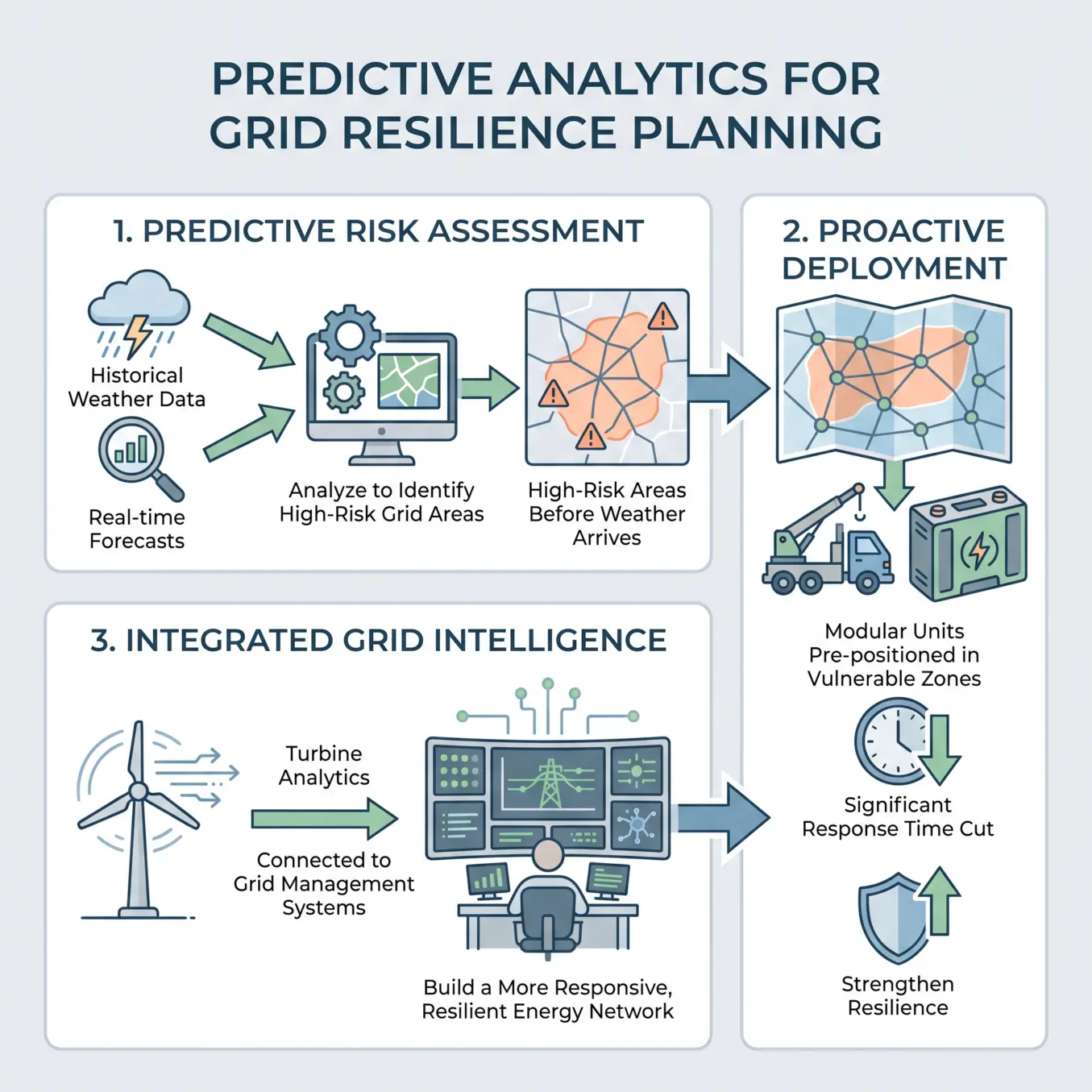
Predictive analytics also play a crucial role in resilience planning:
- Predictive Risk Assessment: Utilities analyze historical weather data and real-time forecasts to identify high-risk grid areas before severe weather arrives.
- Proactive Deployment: Modular units are pre-positioned in vulnerable zones ahead of storms, significantly cutting response times and strengthening resilience.
- Integrated Grid Intelligence: Grid operators are connecting turbine analytics directly into broader grid management systems to build a more responsive, resilient energy network.
Strategic Planning for Climate Adaptation
Investing in grid resilience requires a long term perspective and a willingness to adapt to new realities. Utilities are increasingly incorporating climate risk assessments into their capital allocation processes, prioritizing projects that enhance the flexibility and robustness of the system. Modular gas turbines are a key part of this strategy, providing a cost effective and scalable solution for climate adaptation.
The deployment of these units also requires close coordination with local communities and emergency responders. By integrating modular power into regional resilience hubs, utilities can ensure that critical services like hospitals, water treatment plants, and emergency shelters remain operational during a disaster. This focus on community resilience is becoming a major priority for both regulators and the public, driving further investment in modular energy solutions.
The Future of Resilient Energy Systems
As the impacts of climate change continue to intensify, the demand for modular gas turbine grid resilience will only grow. The continuous innovation in turbine technology, fuel flexibility, and digital controls will make these units even more effective and sustainable in the years to come. The goal is to move beyond simple emergency response toward a truly resilient and proactive energy system that can thrive in a volatile world.
PowerGen Advancement believes that the integration of modular turbines with other emerging technologies, such as long duration energy storage and green hydrogen, will provide even greater layers of protection. By building a diverse and flexible energy mix, we can ensure that our grids remain reliable and secure, no matter what the weather brings. The commitment of global energy leaders to this vision ensures that the resilient grid of the future is already being built today.
This long term investment in modular technology provides the necessary flexibility to adapt to a rapidly changing climate while maintaining the high standards of reliability that modern society demands. As utilities continue to deploy these units, the global energy system will become increasingly robust and capable of withstanding even the most severe weather challenges in the decades to come.
References
- “Climate Change and Energy Security Report 2026” – International Energy Agency
- “Global Grid Resilience Outlook 2025” – World Energy Council
- “TM2500 Product Performance and Deployment Update” – GE Vernova
- “Wartsila 31SG Technical Specification” – Wartsila
- “Siemens Energy Annual Progress Report 2026” – Siemens Energy