














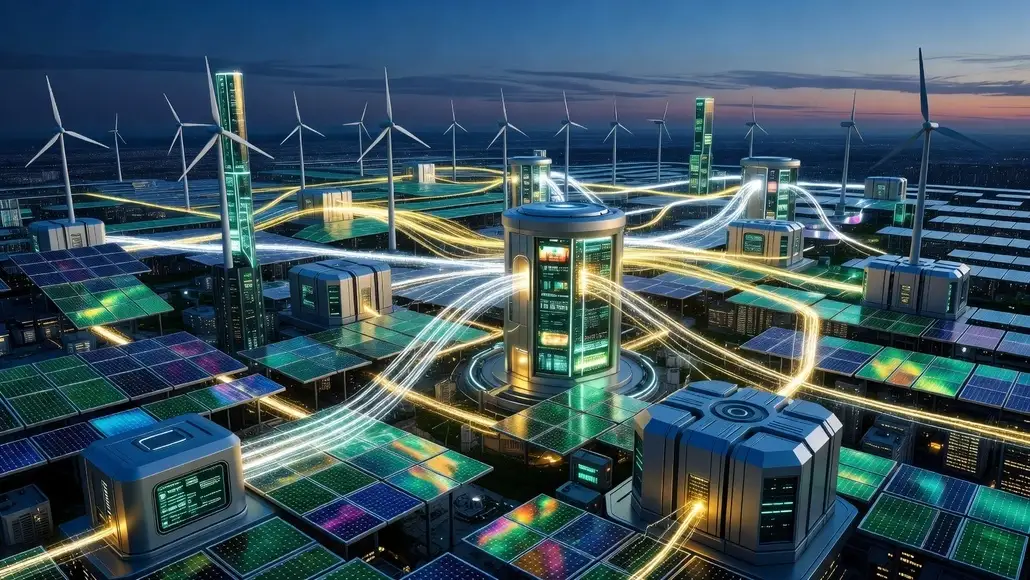
The traditional model of the electrical grid, characterized by massive centralized power plants and a one-way flow of energy, is rapidly being replaced by a more complex and democratic architecture. Decentralized energy systems, comprising rooftop solar panels, local wind turbines, and community battery storage, are turning “consumers” into “prosumers.” While this transition is essential for a sustainable future, it presents a significant challenge for the systems that protect the grid. Legacy protection schemes were designed for a simple, radial world, but today’s decentralized energy grid protection needs require a fundamental rethink of how we detect faults, coordinate devices, and maintain stability across a bidirectional network.
As we integrate millions of distributed energy resources (DERs), the grid’s behavior becomes more dynamic and unpredictable. Fault currents can now come from multiple directions, and the traditional “time-overcurrent” coordination that utilities have relied on for a century is becoming increasingly difficult to maintain. To manage this complexity, we must move toward more intelligent, communication-assisted protection schemes that can adapt in real-time to the current state of the network. The evolution of decentralized energy grid protection is a critical enabler for the energy transition, ensuring that we can harness the power of local generation without compromising the safety and reliability of the overall system.
The Challenge of Bidirectional Power Flows
The most immediate impact of decentralized energy systems is the introduction of bidirectional power flows. In a traditional distribution feeder, power always flowed from the substation to the customer. Protective devices like fuses and reclosers were set to trip based on this assumption. However, when a feeder has a high concentration of solar panels, power can flow back toward the substation during sunny periods. This “reverse power flow” can cause traditional protection devices to trip unnecessarily, a phenomenon known as “nuisance tripping,” or it can prevent them from seeing a genuine fault altogether.
Decentralized energy grid protection must be “directional” to handle these scenarios. This means that protective relays must be able to distinguish between power flowing toward a load and power flowing toward a fault. Directional overcurrent relays use voltage measurements as a reference to determine the direction of the current, ensuring that they only trip when a fault occurs in their specific zone of protection. This level of sophistication is becoming a standard requirement for distribution networks as they become more active and generation-rich. Without directional capabilities, the grid would be plagued by constant and unnecessary outages, undermining the public’s confidence in renewable energy.
Protection Coordination and the “Blinding” Effect
Another significant hurdle in decentralized energy grid protection is the “blinding” of overcurrent protection. When a large distributed generator is located between the substation and a fault, the current it contributes can reduce the amount of current seen by the main substation relay. This “blinds” the relay, causing it to trip much later than it should, or not at all. This can lead to equipment damage and increased fire risk. To solve this, utilities are moving away from simple current-based coordination toward communication-assisted schemes like Permissive Overreaching Transfer Trip (POTT) or Directional Comparison Blocking (DCB).
These schemes allow devices to “talk” to each other, sharing information about whether they see a fault. If both the substation relay and a downstream recloser see a fault, they can coordinate their actions to isolate the faulted section instantly. This coordination is essential for maintaining the “selectivity” of the protection system, ensuring that only the minimum number of customers are affected by a disturbance. The need for high-speed communication between distant protective devices is a primary driver for the deployment of fiber-optic and private wireless networks across the distribution system.
Microgrids and the Stability of Islanded Systems
One of the most exciting aspects of decentralized energy systems is the ability to form microgrids. A microgrid is a local energy system that can disconnect from the main utility and operate independently during a blackout. However, protecting an islanded microgrid is a massive technical challenge. When disconnected from the main grid, the available fault current drops significantly because inverter-based resources (like solar and batteries) do not provide the same “kick” as a large power plant. Traditional fuses and relays often fail to trip under these low-fault conditions.
Decentralized energy grid protection for microgrids often relies on “differential protection” or “adaptive settings.” Differential protection compares the current entering and leaving a zone; if there is a mismatch, a fault is detected, regardless of the current magnitude. Adaptive protection, on the other hand, automatically changes the relay’s settings when the microgrid switches from grid-connected to islanded mode. This ensures that the protection remains sensitive and fast in both scenarios. The relay must be intelligent enough to recognize the “islanded” state and switch its logic in milliseconds to prevent a fire or equipment failure within the microgrid.
Inverter Control and Fault Response
In a decentralized system, the way inverters respond to a fault is governed by software rather than physical inertia. This “inverter-based” fault response can be highly variable and non-linear. To ensure stability, modern “smart inverters” are being programmed with specific grid-support functions, such as “Low Voltage Ride Through” (LVRT), which requires them to stay connected during a brief disturbance rather than tripping off immediately. Tripping off too early can lead to a cascading failure where the loss of one generator causes others to trip due to a sudden voltage drop.
The integration of decentralized energy grid protection with these inverter control functions is a major area of innovation. Engineers are developing “grid-forming” inverters that can actively set the voltage and frequency of the microgrid, providing a more stable reference for protection devices. This move toward “virtual synchronous machines” is helping to solve some of the most persistent stability issues in 100% renewable energy systems. The protection system is no longer just a passive observer; it is an active participant in the control and stability of the decentralized grid.
The Role of Edge Computing and Local Intelligence
The sheer number of devices in a decentralized energy system makes centralized control nearly impossible. Therefore, decentralized energy grid protection is moving toward “edge intelligence,” where decisions are made locally at the substation or even at the individual generator level. This reduces the reliance on a central control center and ensures that the system can react to a fault in milliseconds. Edge computing platforms can process data from thousands of sensors in real-time, identifying complex fault patterns and executing protection actions autonomously.
These “smart” edge devices can also perform advanced analytics, such as identifying a failing transformer or predicting a solar panel’s output based on cloud patterns. By combining protection with analytics, utilities can improve the overall health and efficiency of the decentralized grid. This move toward “distributed intelligence” is a core characteristic of the future energy network, where every node is capable of sensing, thinking, and acting to maintain the stability of the system. decentralized energy grid protection is the foundation of this intelligent network, providing the safety layer that allows innovation to thrive.
Cybersecurity and Secure Decentralized Operations
As the grid becomes more decentralized and software-dependent, the risk of cyber-attacks increases. A hacker who gains access to the control system of a large-scale battery storage site or a community microgrid could cause significant disruption. Therefore, decentralized energy grid protection must include robust cybersecurity measures. This involves encrypting all communication between DERs and the utility, using secure boot and firmware signatures for all IEDs, and implementing continuous network monitoring to detect unauthorized activity.
The decentralized nature of the grid actually provides some resilience against cyber-attacks; a breach in one microgrid is less likely to spread to the entire utility if the networks are properly segmented. However, the large number of entry points requires a “defense-in-depth” strategy that starts at the device level. Utilities are also exploring the use of blockchain technology to create a secure and transparent record of all control actions and energy transactions in decentralized systems. Ensuring that the “democratized” grid is also a “secure” grid is a top priority for researchers and policymakers alike.
Future Outlook and the Energy Transition
The transition to decentralized energy systems is not just a technical change; it is a social and economic shift toward a more sustainable and resilient future. By addressing the decentralized energy grid protection needs today, we are paving the way for a grid that is cleaner, more reliable, and more equitable. This requires a collaborative effort between utilities, technology providers, and regulators to develop new standards, pilot new technologies, and update the rules of the energy market.
The grid of the future will be a vast and intelligent ecosystem of millions of interacting parts, all working together to provide safe and reliable power. Decentralized energy grid protection will be the “glue” that holds this system together, ensuring that it remains stable in the face of uncertainty. As we look ahead, the continued evolution of these protection systems will be one of the most important stories in the energy industry, marking the transition from the “analog” grid of the 20th century to the “digital” energy web of the 21st. The journey is complex, but the destination a sustainable energy future for all is well worth the effort.