

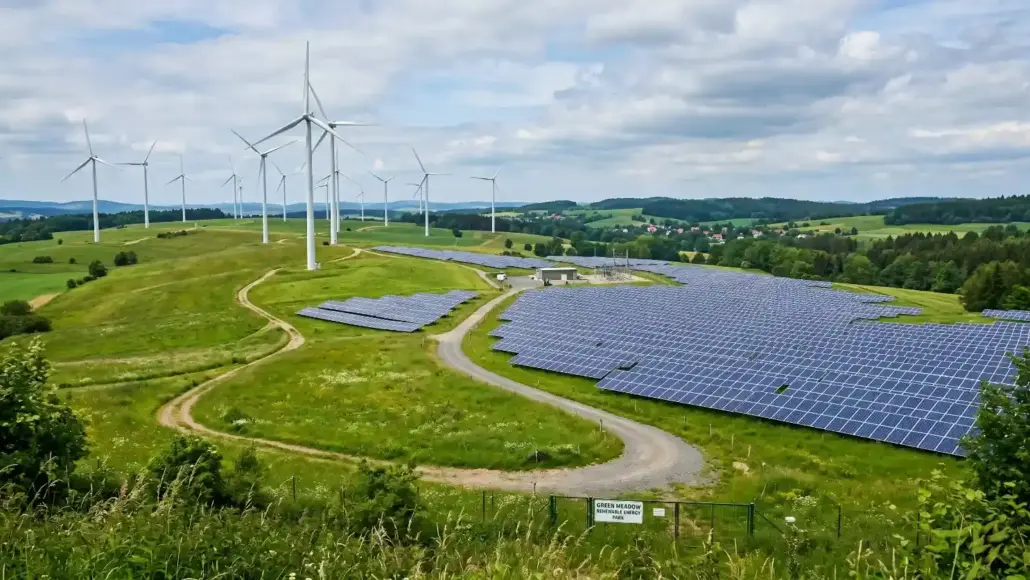
Austria is pursuing some of the world’s most far-reaching climate and energy ambitions, with targets that include achieving 100% renewable electricity by 2030 and climate neutrality by 2040. However, a new report from the International Energy Agency (IEA) warns that stronger coordination between policy ambitions, implementation mechanisms and financial support will be necessary if the country is to fulfil its energy transition goals. Austria has already established itself as a leader in renewable energy within the European Union, supported by a hydropower fleet responsible for around 60% of electricity generation, alongside 5.6 gigawatts (GW) of pumped hydro storage and a nationwide smart meter rollout. The report noted that Austria became the first European country to introduce an integrated energy system planning approach. Despite these advances, the gap between ambition and execution is growing. Economy-wide greenhouse gas emissions have declined by 16% since 1990, yet emissions including land use, land-use change and forestry (LULUCF) have risen by 13%, reflecting weakening carbon absorption capacity in forests. According to the report, Austria must better align delivery frameworks and available financial resources to remain on track with its energy transition goals and broader climate agenda.
Industrial competitiveness and energy affordability remain major concerns as Austria attempts to balance decarbonisation with economic growth. Industries contributed 22% of gross domestic product (GDP) and employed 26% of the workforce in 2024, while also facing high energy costs and increasing competitive pressure. During the 2021-2022 energy crisis, the government introduced tax relief, direct grants and targeted support programmes aimed at both industry and households, although several of these measures have since been reduced or withdrawn. The Electricity Market Act (ElWG), adopted in December 2025, seeks to redesign the electricity market by lowering energy costs, increasing flexibility and protecting vulnerable consumers. The report highlighted the need for further measures, particularly to improve competition in the electricity market, where fewer than 5% of consumers change suppliers, while also strengthening oversight of district heating systems. Austria’s Industrial Strategy 2035 outlines additional funding support for innovation, low-carbon technologies and subsidised electricity prices for energy-intensive sectors. More than 11 000 energy communities were operational by the end of 2025, offering consumers new opportunities to improve affordability and contribute to the country’s energy transition goals.
The report also stressed that legislative reform and faster regulatory implementation are essential to accelerate renewable deployment and create a lower-cost, flexible energy system. Delays surrounding the Renewable Energy Expansion Acceleration Act (EABG) and other legislation have slowed momentum and created uncertainty for investors. Renewables supplied 90% of Austria’s electricity demand in 2024, while solar photovoltaic (PV) accounted for 11.3% of supply. However, Austria remains behind schedule in reaching its target of adding around 10 terawatt hours (TWh) of annual wind generation by 2030 because of permitting barriers and governance challenges. The report recommended streamlined permitting, co-ordinated spatial planning and stronger stakeholder engagement to support wind development. Austria’s Integrated Network Infrastructure Plan (ÖNIP) was identified as a positive step toward integrated planning across electricity, gas and hydrogen systems, though additional co-ordination is needed regarding gas network decommissioning and district heating expansion. Flexibility will also become increasingly important as electricity demand is projected to rise by 26% by 2030 and more than 75% by 2040 from 2024 levels. The ElWG has already introduced reforms including dynamic time-of-use tariffs, local flexibility markets and the removal of double network fees for electricity storage.
Austria’s research and innovation ecosystem continues to play a critical role in advancing industrial decarbonisation and supporting long-term energy transition goals. Public spending on research and development exceeded 3.3% of GDP in 2024, while public spending on energy R&D reached EUR 401 million. Investment is focused on hydrogen, carbon capture, utilisation and storage (CCUS), electrification and energy efficiency technologies. Austria’s hydrogen strategy targets 1 GW of electrolysis capacity and aims to replace at least 80% of fossil-based hydrogen used in industry by 2030. At the same time, the country is seeking to accelerate the decarbonisation of buildings and transport, sectors which remain major contributors to emissions. Although oil use in buildings declined from 23% to 8% between 2005 and 2024, approximately 850 000 gas boilers and 450 000 oil boilers are still operating nationwide. Austria’s transport sector remains responsible for 38% of energy-related emissions, reinforcing the importance of electric vehicle deployment, charging infrastructure expansion and shifting freight transport from road to rail. The report concluded that Austria’s largely decarbonised electricity system, extensive pumped hydro capacity and cross-border interconnections provide a strong foundation for future progress. However, achieving the country’s climate-neutrality target by 2040 will require timely legislation, accelerated infrastructure deployment, sustained investment and stronger co-ordination across all sectors to fully realise its energy transition goals.