







As the global community navigates the complex pathways towards a sustainable future, the imperative for reliable, clean energy has never been more pronounced. The intermittency of some renewable sources and the environmental impact of fossil fuels underscore a critical need for power generation that can offer both unwavering consistency and ecological responsibility. In this evolving landscape, a transformative solution is steadily gaining prominence: enhanced geothermal energy. This innovative approach is not merely an incremental improvement. It represents a paradigm shift in how we harness the Earth’s boundless internal heat, promising to unlock a truly next-generation energy source capable of delivering reliable clean electricity around the clock.
For decades, conventional geothermal power has been a quiet workhorse in specific geological hotspots, utilizing naturally occurring hydrothermal reservoirs to generate electricity. Its inherent ability to provide continuous power, independent of weather or time of day, has always made it an attractive candidate for baseload power source status. However, the geographical limitations imposed by the requirement for specific geological conditions permeable rock, a heat source, and water have historically restricted its widespread deployment. This is precisely where enhanced geothermal energy system (EGS) steps in, poised to dismantle these traditional barriers and emerge as a truly global player in the clean energy transition. Power Gen Advancement notes that by leveraging advanced engineering to create artificial reservoirs in hot, dry rock formations, EGS is transforming the potential of geothermal, promising a future where 24/7 renewable power can be a cornerstone of grid stability almost anywhere on Earth.
Understanding Enhanced Geothermal Energy (EGS): A Paradigm Shift in Geothermal Power
At its core, enhanced geothermal energy seeks to replicate the natural conditions required for conventional geothermal power in locations where they don’t naturally exist. Imagine the vast, untapped heat deep within the Earth’s crust, accessible almost everywhere but often locked away in impermeable rock. EGS is the key to unlocking this immense potential.
The process typically involves several sophisticated steps. First, deep wells are drilled into hot rock formations that lack sufficient natural permeability or fluid. These formations, often granite or other crystalline rocks, possess abundant heat but are too tight for water to flow through freely. Once the desired depth and temperature are reached, engineers then undertake a meticulous process of hydraulic stimulation. This involves carefully injecting water under controlled pressure to create a network of minute fractures or enhance existing ones within the hot rock. This is not the same as fracking for oil and gas, which often uses higher pressures and different fluid compositions. EGS stimulation is designed to create a diffuse, permeable reservoir rather than a large, discrete fracture.
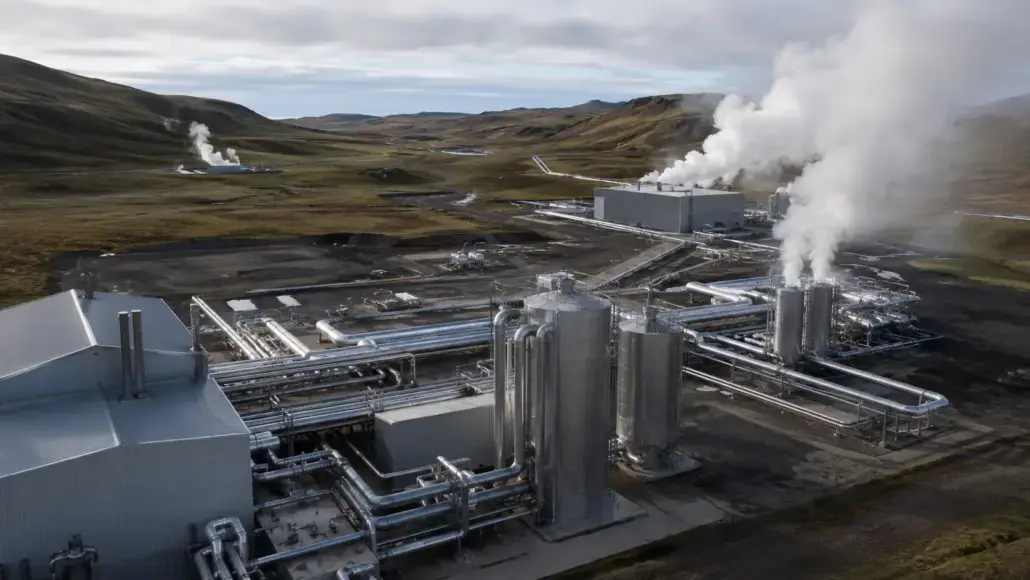
Following the creation of this engineered reservoir, a second well (or multiple wells) is drilled into the stimulated rock, creating a closed-loop circulation system. Cold water is injected into the injection well, circulates through the newly created hot rock reservoir where it absorbs heat, and then returns to the surface as hot fluid (often superheated water or steam) via the production well. At the surface, this hot fluid is used to drive a turbine, generating reliable clean electricity. The cooled fluid is then reinjected into the Earth to repeat the cycle, creating a sustainable and environmentally benign power generation process. This elegant engineering solution effectively transforms vast tracts of hot, dry rock into viable geothermal power resources, extending the reach of this baseload power source far beyond its traditional confines.
The Unrivaled Advantages of EGS: Why it’s the Next Baseload Power Source
The promise of enhanced geothermal energy lies in its unique combination of attributes, positioning it as an indispensable asset in the future energy mix. Its capacity to address some of the most pressing challenges of modern electricity grids makes it a standout next-generation energy solution.
24/7 Reliability and Baseload Capacity: The Unsung Hero of Grid Stability
Perhaps the most compelling argument for EGS is its inherent ability to provide continuous, 24/7 renewable power. Unlike solar and wind, which are dependent on intermittent natural phenomena, EGS taps into the Earth’s constantly radiating internal heat. This means it can generate power around the clock, regardless of weather conditions, time of day, or seasonal variations. This constant output is the defining characteristic of a baseload power source the minimum amount of power required to be supplied to the electrical grid at any given time. EGS doesn’t just contribute to the grid. It provides the fundamental, unwavering power supply that enables the integration of other, more variable renewables. This consistent, dispatchable power is absolutely critical for maintaining grid stability, preventing blackouts, and ensuring a resilient energy infrastructure. As nations increasingly rely on variable renewable sources, the need for a constant, flexible counterweight grows, and EGS is perfectly suited to fill this role.
Environmental Benevolence and a Small Footprint
In an era defined by climate consciousness, EGS stands out for its exceptional environmental credentials. Unlike fossil fuel power plants, EGS plants produce virtually no greenhouse gas emissions during operation. The closed-loop system ensures that fluids are continuously recycled, minimizing water consumption and preventing the release of harmful substances into the atmosphere. The carbon footprint associated with EGS is primarily limited to the construction phase, which can be further mitigated through sustainable practices. Furthermore, EGS plants have a remarkably small land footprint per unit of energy generated compared to many other renewable sources, preserving natural habitats and agricultural land. This makes enhanced geothermal energy a powerful ally in the global fight against climate change and a vital component of any meaningful clean energy transition.
Bolstering Energy Security and Economic Resilience
The widespread availability of hot dry rock formations means that enhanced geothermal energy resources are not concentrated in a few politically volatile regions. This decentralization significantly enhances national and regional energy security by reducing reliance on imported fuels and diversifying energy portfolios. Countries can tap into their own subterranean resources, fostering energy independence and insulating their economies from geopolitical tensions and commodity price fluctuations. Moreover, the development and operation of EGS projects create local jobs, stimulate technological innovation, and contribute to regional economic development, driving prosperity in the communities where they are located.
Vast, Untapped Resource Potential and Scalability
The potential for enhanced geothermal energy is truly immense. Scientists estimate that the heat contained within the Earth’s crust at depths accessible with current and emerging drilling technologies is staggering far exceeding humanity’s total energy demand for centuries. With EGS, the constraint is no longer the geographical availability of specific hydrothermal systems, but rather the technological capability to drill deep and create engineered reservoirs. As drilling techniques advance and costs decrease, EGS could become viable in countless locations worldwide, transforming what was once a niche energy source into a globally scalable baseload power source. This vast, largely untapped resource makes EGS a compelling next-generation energy solution capable of sustaining our energy needs for generations to come.
Overcoming Hurdles: The Path to Widespread EGS Deployment
While the promise of enhanced geothermal energy is undeniable, its widespread deployment is not without its challenges. Like any groundbreaking technology, Power Gen Advancement acknowledges that EGS faces hurdles that require sustained innovation, strategic investment, and supportive policy frameworks.
Technological Advancements and Engineering Complexities
One of the primary challenges lies in the sheer engineering complexity of creating and managing underground reservoirs at extreme depths and temperatures. Drilling deep wells into hard, crystalline rock is expensive and technically demanding. Furthermore, precisely controlling the hydraulic stimulation process to create optimal fracture networks without inducing significant seismic events requires sophisticated modeling and monitoring capabilities. While minor micro-seismicity is a known byproduct of reservoir creation, ensuring it remains within acceptable limits and does not impact surface communities is paramount. Ongoing research in advanced drilling technologies, real-time reservoir monitoring, and stimulation techniques is continuously pushing the boundaries of what is possible, steadily reducing costs and improving efficiency.
Economic Viability and Investment Landscape
The initial capital costs for developing an EGS plant can be substantial, primarily due to the deep drilling and complex subsurface engineering. While the operational costs are relatively low once the plant is online, the upfront investment can be a barrier for developers. To accelerate the commercialization of enhanced geothermal energy, robust public and private investment is essential. This includes funding for R&D, demonstration projects to prove scalability and cost-effectiveness, and financial incentives that level the playing field with more mature energy technologies. As experience grows and technologies mature, the learning curve will drive down costs, making EGS increasingly competitive as a baseload power source.
Regulatory Frameworks and Public Perception
Establishing clear and consistent regulatory frameworks for EGS development is crucial. These frameworks must address environmental considerations, subsurface rights, and community engagement effectively. Public perception also plays a vital role. Transparent communication about the technology, its benefits, and the measures taken to mitigate potential risks (such as induced seismicity) is essential to build trust and ensure community acceptance. Proactive engagement with stakeholders can pave the way for smoother project development and foster broad support for this next-generation energy solution.
The Broader Impact: EGS in the Clean Energy Transition
The role of enhanced geothermal energy extends beyond simply generating reliable clean electricity. Its unique characteristics position it as a critical enabler of a holistic clean energy transition. By providing stable, constant power, EGS can act as the reliable backbone that complements intermittent renewables like solar and wind, ensuring overall grid stability. This synergy is vital for deeply decarbonizing electricity grids, allowing higher penetrations of variable renewable energy without compromising reliability.
Furthermore, the heat generated by EGS is not limited to electricity production. It can also be directly utilized for industrial processes, district heating and cooling, and even hydrogen production, offering pathways to decarbonize sectors beyond electricity generation. Imagine industrial plants powered by constant geothermal heat, or entire communities warmed and cooled by subterranean energy. This multifaceted utility underscores the potential of enhanced geothermal energy to become a cornerstone of a truly sustainable and decarbonized global energy system. Its emergence is not just about adding another power source. It’s about fundamentally reshaping our energy infrastructure for a cleaner, more secure future.
Conclusion
The quest for a sustainable and secure energy future is paramount, and enhanced geothermal energy is unequivocally emerging as a frontrunner among next-generation energy solutions. By overcoming the geographical constraints of conventional geothermal power, EGS promises to unleash the vast, continuous heat of the Earth’s interior, making it accessible as a ubiquitous baseload power source. Its ability to deliver 24/7 renewable power makes it an invaluable asset for grid stability, ensuring a constant supply of reliable clean electricity regardless of external factors.
While challenges in technology and economics persist, the rapid pace of innovation and growing global investment signal a turning point. As we continue to refine drilling techniques, optimize reservoir engineering, and scale up demonstration projects, the inherent advantages of enhanced geothermal energy will become increasingly apparent and economically competitive. This powerful, environmentally benign technology is not just an option. It is fast becoming an essential component of a successful clean energy transition, offering a pathway to energy independence, economic resilience, and a truly decarbonized world. Power Gen Advancement believes that the Earth’s silent heat is ready to power our future, and enhanced geothermal energy is the key to unlocking its boundless potential.