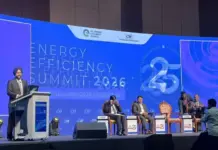
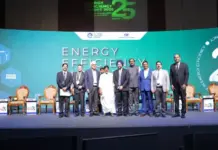
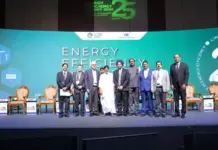




A growing global interest in small modular reactors (SMRs) is positioning them as a significant solution for enhancing energy security and fostering industrial development. Projects valued in the billions of dollars across various nations underscore the increasing attention this technology is garnering, as discussed at a conference in Hà Nội on 11th May 2026.
Officials, diplomats, and industry leaders at the event highlighted the potential role of small modular reactors in assisting Vietnam to diversify its energy sources. This focus aligns with the country’s ambitious target of achieving net-zero emissions by 2050.
Đào Quang Bính, General Director of VnEconomy, a co-organizer of the conference, noted in his opening remarks that the global energy sector is at a critical juncture. He emphasized that in the face of climate change and supply chain vulnerabilities, the commitment to net-zero is now a driving force behind investment trends.
Within Vietnam, energy security is identified as a paramount concern, fueling the demand for clean, reliable, and self-sufficient power generation. The exploration of SMR models is intrinsically linked to the development of new energy strategies under the revised Power Development Plan VIII, providing a foundational basis for a sustainable national energy strategy.
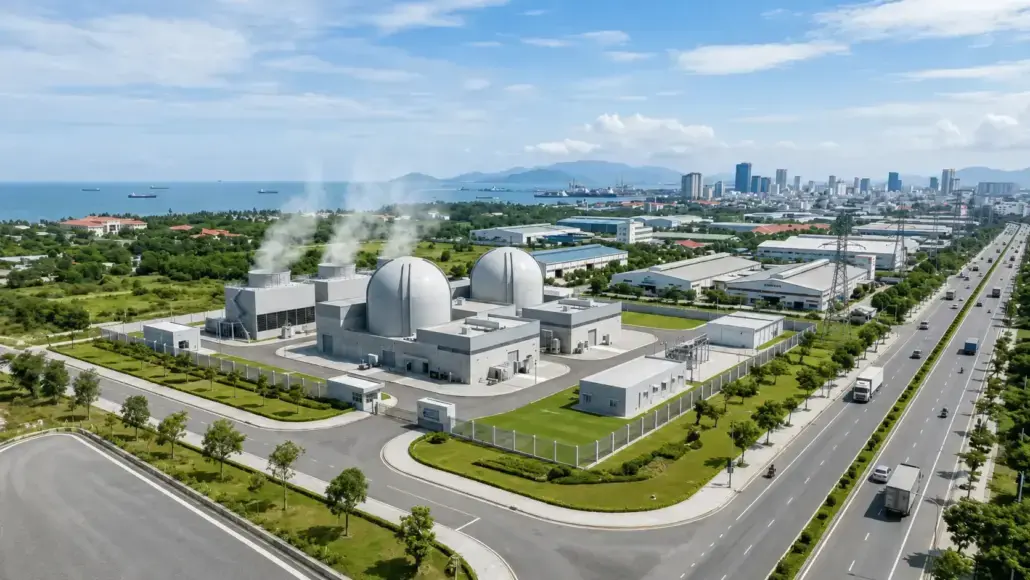
Dmitry Aleksandrovich Raspopin, a representative from Rosatom in Vietnam, elaborated on the advantages offered by SMRs in meeting contemporary energy demands. He described the technology as adaptable, with applications extending beyond electricity generation to include district heating and cooling, powering data centers, and replacing conventional power plants. The compact nature of SMRs and their reduced emergency planning zones are seen as facilitators for integration into existing urban environments. Furthermore, these reactors are considered well-suited for smaller power grids and remote locations that present logistical challenges. SMRs provide efficient land utilization and near-zero emissions, while ensuring a stable and continuous power supply irrespective of weather patterns. Rosatom is currently involved in a substantial number of global nuclear power plant projects.
Susie Ho, Director of New Nuclear at Laurentis Energy Partners, observed that the international nuclear sector has entered a new phase of deployment, with countries transitioning from making pledges to actively commencing construction. She identified 2024 as a pivotal year for the industry, citing commitments made at COP28 by over 20 nations to triple global nuclear capacity by 2050. The key question, she stated, is the practical realization of these ambitious targets.
Ho further indicated that progress in nuclear development hinges on expedited licensing processes, robust supply chains, and dedicated workforce development. She anticipates the next five years will be crucial for shifting focus from planning to implementation, driven by decarbonization imperatives, energy security concerns, and the escalating power demands of artificial intelligence. Laurentis Energy Partners projects that by 2030, between 20 and 30 SMR projects could be in construction or advanced licensing stages globally, representing a market value of $100-150 billion.
However, she also cautioned about significant structural challenges facing the industry. These include a shortage of skilled labor, diminished deployment capacity following years of project stagnation, and an underdeveloped supply chain for nuclear-grade components. Many suppliers are unable to meet stringent nuclear quality standards, and certification processes, such as ISO 9001, entail considerable upfront investment. A primary obstacle lies in the reluctance of suppliers to invest without secured contracts, while projects remain stalled without certified suppliers. The nuclear sector also competes with the rapidly expanding artificial intelligence industry for critical materials like copper and high-voltage electrical equipment, as AI-driven data center expansion drives prices to multi-decade highs.
Beyond technical hurdles and workforce deficits, financing remains a principal challenge for nuclear power, given the substantial initial capital investment required and extended payback periods. To address this, several countries have implemented innovative financing mechanisms designed to mitigate investor risk and enhance the bankability of nuclear projects.
Ho suggested that Vietnam need not bear the entire financial burden of nuclear power development independently. Appropriately structured financing could effectively align the interests of the state, electricity consumers, and international investors. She affirmed Vietnam’s capacity and ambition to participate, emphasizing a shift in focus from feasibility studies to the construction of the necessary infrastructure to support long-term nuclear advancement and solidify the nation’s position as a clean energy industrial hub. The era of nuclear power deployment, she concluded, presents a significant opportunity for Vietnam to embrace.
Previously, the Ministry of Industry and Trade put forward a proposal to permit private enterprises to engage in the research and development of small modular reactors. This proposal is part of a draft resolution aimed at dismantling barriers to national energy development between 2026 and 2030. Article 10, Chapter III of the draft, would allow private companies to conduct research and invest in SMR projects. The draft resolution encourages private sector participation in SMR development to provide electricity for industrial ventures, including steel plants, petrochemical complexes, and data centers. Private entities may also partake in joint research, technology development, and technology transfer initiatives. For the public sector, state-owned corporations and research institutes will be authorized to collaborate with private investors throughout the entire process, from initial research and technological development to construction and operation.