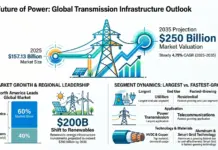







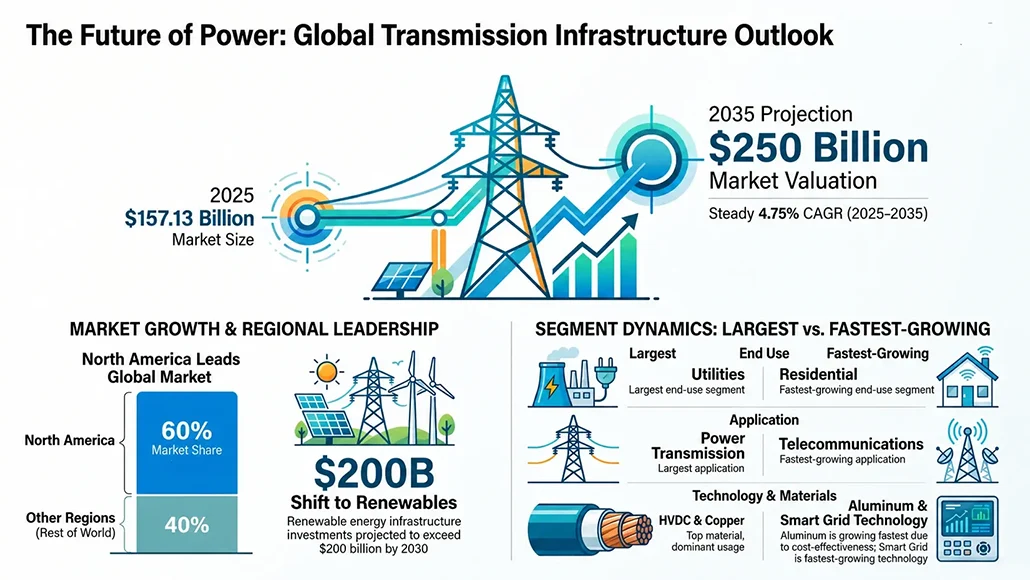
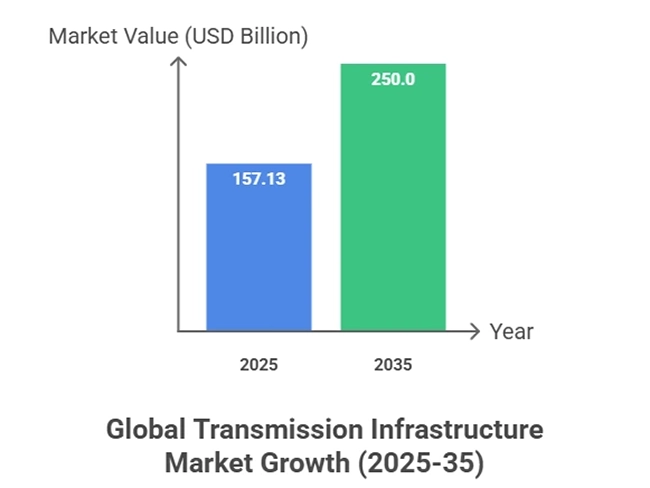
The global energy landscape is currently undergoing an unprecedented period of transformation, heavily defined by the modernization of foundational grid systems and the aggressive pivot toward sustainable, decentralized power generation. At the very center of this transition is the global transmission infrastructure market. Within the forecast period, the market is projected to expand to USD 157.13 Billion in 2025, ultimately surging to a valuation of USD 250.0 Billion by the year 2035. This impressive trajectory represents a steady compound annual growth rate (CAGR) of 4.75% between 2025 and 2035. Power Gen Advancement sheds light on the core growth drivers, emerging technological trends, strategic shifts, and deep segment analysis defining the industry’s future.
Market Dynamics and Primary Growth Drivers
The expansion of the transmission infrastructure market is fueled by several intersecting macroeconomic and technological catalysts. The foremost driver is the continuous and rapidly escalating global demand for electricity. Driven by unabated global urbanization and aggressive industrial development, communities worldwide require highly reliable power distribution mechanisms. Statistical projections indicate that global electricity consumption will increase by approximately 2.5 percent annually over the coming decade. To safely accommodate this soaring consumption rate, stakeholders are actively compelled to invest vast resources into expanding existing network capacities, specifically focusing on building new, robust transmission lines and upgrading essential substations.
Simultaneously, the global mandate to transition toward green energy has made the integration of renewable energy sources a pivotal driver for foundational infrastructure upgrades. As international coalitions commit strictly to reducing overall carbon footprints, incorporating variable power sources like wind and solar into legacy grids has become absolutely essential. A massive geographical challenge exists in transporting electricity from remote, resource-rich renewable energy farms directly to densely populated urban centers. To bridge this gap, proactive projections suggest that capital investments allocated toward renewable energy transmission capabilities could easily exceed 200 billion dollars by the year 2030.
Supporting this shift are powerful government initiatives and stringent regulatory frameworks. Regulatory bodies globally are enforcing rigorous guidelines that mandate vital upgrades to aging grid components to guarantee public safety, efficiency, and enhanced resilience against severe natural disasters. Consequently, governmental bodies are prioritizing unprecedented financial packages. Some estimates indicate that state-backed infrastructure modernization investments could reach well over 100 billion dollars within the next five years. These public investments frequently feature lucrative incentives for private sector collaboration, fostering highly effective public-private partnerships that accelerate rapid technological deployment.
Furthermore, the integration of intelligent, automated technologies is radically reshaping the sector’s economic viability. The mass adoption of smart grid technologies, which leverage advanced real-time communication protocols and digital automation, drastically enhances energy management capabilities and dramatically reduces transmission losses. Recent studies clearly indicate that integrating these sophisticated smart grid solutions can lead to a direct reduction in utility operational costs by up to 20 percent.
Transformative Industry Trends and Shifts
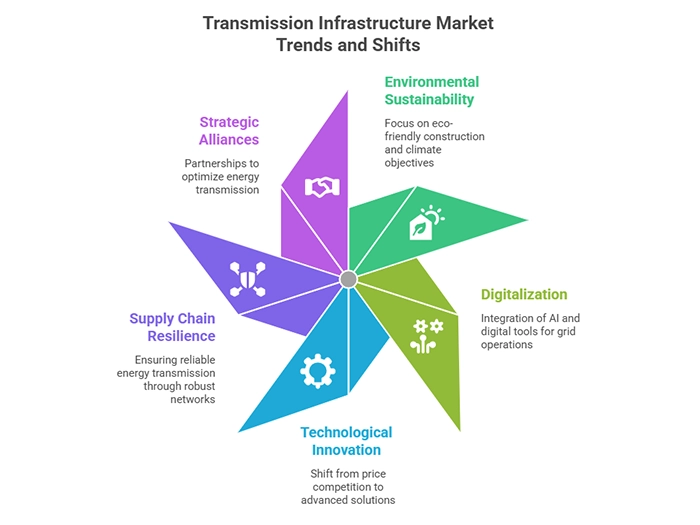
The contemporary transmission infrastructure market is deeply influenced by a paradigm shift toward environmental sustainability and advanced digitalization. Current construction trends illustrate that stakeholders are highly aware of the environmental footprint left by massive infrastructure projects. Consequently, there is a pronounced industry-wide shift toward eco-friendly deployment practices, focusing on novel construction methods and advanced materials that actively minimize local ecological disruption while aligning seamlessly with broader, global climate objectives.
In tandem with sustainable practices, rapid digitalization and the integration of artificial intelligence (AI) into grid operational processes represent a massive evolutionary leap. As market complexities increase, competitive differentiation is shifting definitively away from standard price-based competition and toward profound technological innovation and supply chain resilience. The future landscape will be heavily defined by strategic alliances designed to optimize energy transmission through sophisticated digital tools, ensuring grids can autonomously respond to rapidly changing energy demands with maximum efficiency.
Comprehensive Market Segment Insights
By Application
The market displays a highly diversified application ecosystem, with standard power transmission firmly commanding the largest overall share. This cornerstone segment is vital for delivering electricity over vast regional distances efficiently. Conversely, the telecommunications application is rapidly emerging as the fastest-growing sector within the broader market. This explosive growth is heavily propelled by the exponential worldwide surge in mobile data utilization and the capital-intensive rollout of high-speed 5G networks. Electric vehicle (EV) charging and data center support are also emerging as vital, high-potential applications requiring expansive, localized network expansions.
By End Use
Analyzing the end-use ecosystem reveals that the utilities sector maintains unquestioned dominance, driven entirely by their foundational responsibility to guarantee reliable mass energy delivery and resource management. Heavy industrial applications closely follow utilities in market footprint. However, the residential segment is actively emerging as the fastest-growing end-use category. This rapid acceleration is a direct result of consumers aggressively adopting localized energy efficiency tools, decentralized renewable energy solutions like rooftop solar, and sophisticated home automation systems that demand hyper-localized, highly reliable energy delivery.
By Technology
From a technological standpoint, High Voltage Direct Current (HVDC) systems possess the dominant market share. HVDC’s dominance is secured by its unparalleled efficiency in executing long-distance electricity transmission with extraordinarily minimal power losses, a capability vital for connecting remote renewable sources to core urban grids. Meanwhile, Smart Grid Technology represents the fastest-growing and most highly disruptive technological segment. The urgent need for automated, real-time grid monitoring and highly responsive energy management has pushed smart grid innovations to the absolute forefront of the industry. Traditional Alternating Current (AC) networks maintain a notable, albeit challenged, presence, while wireless transmission solutions remain in a highly experimental, initial adoption phase.
By Infrastructure Type
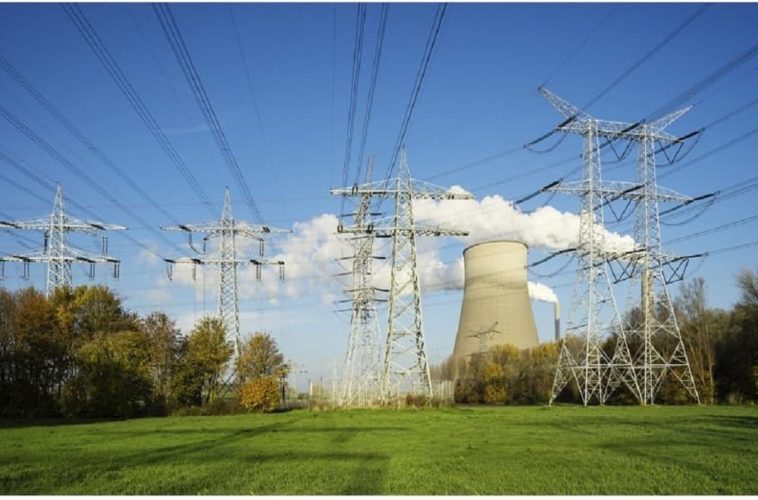
Physical transmission lines undeniably represent the largest share of the infrastructure type segment, serving as the essential, physical backbone for transporting generated electricity across vast geographical expanses. However, power substations are rapidly emerging as the fastest-growing infrastructure component. Substations serve as the highly complex, vital interfaces between primary transmission lines and localized distribution networks, constantly transforming and regulating voltage levels. Additionally, the broader infrastructure matrix relies heavily on specialized transformers and critical switchgear mechanisms to maintain ultimate grid integrity.
By Material Type
Material selection is undergoing a strategic evolution, though copper remains the historically dominant and universally preferred material. Copper’s established supremacy is built upon its unmatched electrical conductivity and long-term performance durability in traditional setups. Conversely, aluminum is rapidly gaining significant traction as the fastest-growing material segment. Driven by an urgent industry need for highly cost-effective, lightweight solutions in newly commissioned projects, aluminum presents a highly compelling economic and physical advantage for modern grid expansions. Furthermore, highly advanced composite materials are gradually entering the market, offering specialized solutions where unique combinations of structural strength, reduced weight, and extreme environmental resilience are explicitly required.
Global Regional Outlook
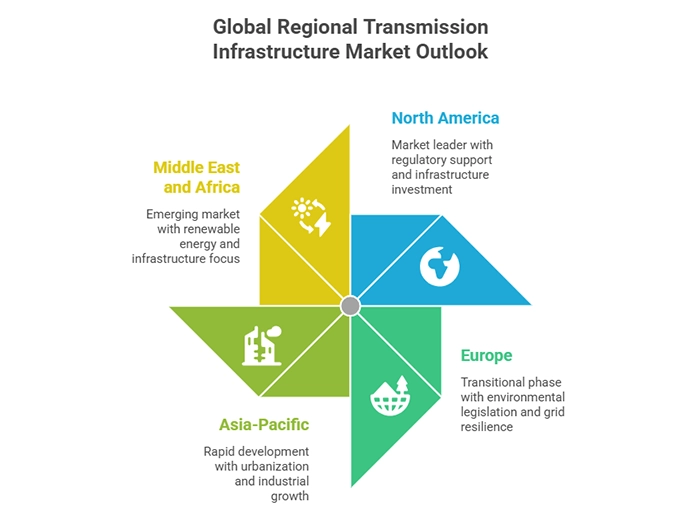
The regional breakdown of the market highlights diverse, geographically specific growth trajectories driven by local governmental policies and distinct economic priorities.
- North America: Remaining the absolute global market leader, North America held a commanding 60.0% share as of 2024. Growth in this territory is catalyzed by intense federal regulatory support aimed directly at energy efficiency, massive capital infusions into aging infrastructure modernization, and a deep commitment to smart grid deployment across the United States and Canada.
- Europe: Europe is navigating a profound transitional phase heavily dictated by strict environmental legislation. Sweeping regulatory frameworks, most notably the comprehensive European Green Deal, are pivotal in forcing rapid cross-border interconnections, enhancing regional grid resilience, and strictly promoting sustainable, renewable-centric energy practices.
- Asia-Pacific (APAC): The APAC region is characterized by explosive, rapid development. Driven by massive, unprecedented urbanization, skyrocketing industrial growth, and vastly increasing baseline energy demands, regional governments are aggressively funding smart grid technologies to secure long-term economic stability and foundational energy security.
- Middle East and Africa (MEA): The MEA region presents vast emerging market opportunities. Focused investments in entirely new renewable energy projects and foundational infrastructure modernization are deemed hyper-critical to supporting rapid urban population growth and meeting escalating baseline energy requirements.
Future Market Outlook
As the market advances toward the 2035 horizon, the industry is unequivocally expected to maintain a robust, dynamic posture defined by its 4.75% CAGR. Power Gen Advancement is of the opinion that the future of the transmission infrastructure market relies entirely on aggressive technological adoption and strategic agility. Stakeholders will unlock massive new revenue opportunities by aggressively investing in the development of highly modular transmission solutions designed specifically for rapid deployment within volatile emerging markets. Furthermore, cultivating deep, integrated partnerships with renewable energy developers will be essential to successfully designing the next-generation, highly resilient grids required to power a rapidly modernizing, eco-conscious global economy.