Dubravka Đedović Handanović, the Serbian Energy Minister, opines that the country, which is already cooperating with EDF of France on the preparations for a nuclear energy programme is also ready to go ahead and establish cooperation with other tech providers from whom they can learn.
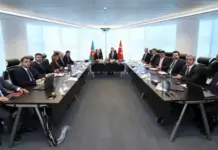
Notably, the minister was speaking after talks with the Director General of the Russian state nuclear corporation Rosatom, Alexei Likhachev, on cooperation between both countries in the nuclear energy spectrum.
As per the inferences made by the Serbian government of the meeting, Đedović Handanović remarked that the government of Serbia should approve the formation when it comes to the National Nuclear Programme Implementation Organisation by the end of February 2026. She added that Serbia plans to accomplish both the first as well as second phases of the nuclear programme by 2032, and when it comes to the preparatory phase, they are going ahead and cooperating with EDF, the French company.
The government further reports that Đedović Handanović confirmed that by 2032 the technology related to the small modular reactors is going to be much more developed vis-a-vis today, and they will then be able to consider them as a choice. Once they are institutionally and regulatorily as well as staff-wise equipped, they will be able to opt for a partner, a technology carrier, and also enter the construction process, which will lead to them having a nuclear power plant on the grid after 2040.
Rosario later went on to report that in meetings that were held on February 23, 2026, Likhachev also went ahead and had talks with Aleksandar Vučić, the Serbian president, in which they had a discussion on expanding cooperation when it comes to nuclear energy programme, ensuring to attract Serbian companies to international projects by Rosatom, and also training Serbian applicants as far as the nuclear domains at Russian universities are concerned.
It went on to quote Likhachev as saying that the Serbian leadership at present is considering the option of constructing the first nuclear power plant of the country. Rosatom State Corporation is providing its Serbian partners absolute cooperation. Nuclear energy does offer Serbia an opportunity to make sure that both energy sovereignty and security for decades to come are intact. Rosatom, apparently, happens to be the largest player in the foreign nuclear power plant construction market, holding more than 90% of the international market share. They are ready to provide Serbia their complete array of nuclear energy projects, be it both, small or large-scale.
What’s the background?
It is worth noting that Serbia has had a longstanding law that bans the construction of nuclear power plants, however in December 2024, the National Assembly voted by way of amendments to the energy law, hence ending that prohibition, which lasted for 35 years.
It was in October 2024 that EDF and Egis, the French engineering consultancy, got a contract from the Ministry of Mining & Energy of Serbia to get a preliminary technical study done on the probable usage of nuclear power in the country. The country in the past had held talks with Rosatom of Russia on non-energy applications of nuclear technologies. Aleksandar Vučić, the President of Serbia, has also discussed the alternative of Serbia acquiring around 5 to 10% of the Paks nuclear power plant from Hungary.
Vučić went on to state at the multinational Nuclear Energy Summit in 2024 in Brussels that the country was looking for support from other nations related to the know-how as well as financing so as to attain its objective of achieving 1,200 MW of capacity coming from small modular reactors.
Earlier in February 2026, Đedović Handanović had a discussion with the Agence Française de Développement on cooperation pertaining to the energy transition, specifically on the development of nuclear energy applications within Serbia.