







While much of the public discourse on decarbonization focuses on renewable energy and hydrogen, the role of Carbon Capture, Utilization, and Storage (CCUS) remains a critical pillar for achieving global climate targets. For the existing fleet of natural gas and coal plants, CCUS offers a pathway to continue providing essential grid services without the associated atmospheric emissions. However, the viability of these capture systems depends entirely on the existence of robust midstream infrastructure. The development of carbon transport networks power decarbonization is the vital link that connects individual power plants to secure, long-term geological storage sites. Without these networks, the carbon captured at the stack remains a liability rather than a mitigated risk.
The Engineering Requirements for CO2 Transport
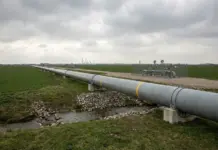
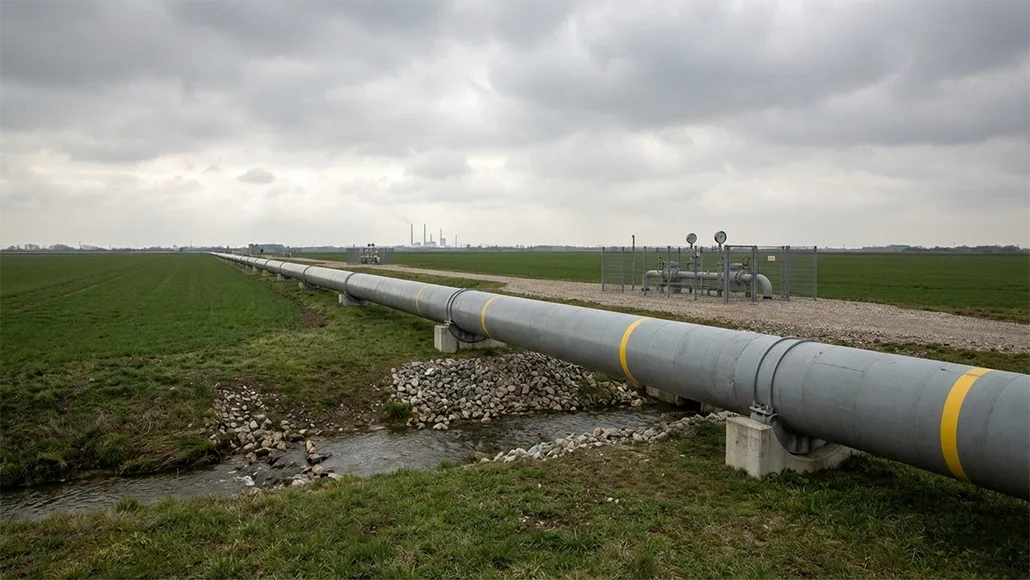
Transporting carbon dioxide is a sophisticated engineering challenge that requires the gas to be maintained in a supercritical or “dense phase” state. In this state, CO2 behaves like a liquid but flows like a gas, allowing for much higher transport volumes and lower pumping costs. Developing carbon transport networks power decarbonization necessitates the construction of specialized high-pressure pipelines that can withstand the unique properties of dense-phase CO2. These pipelines must be designed with advanced material coatings and monitoring systems to prevent corrosion, particularly if the captured gas contains trace amounts of moisture or other impurities that can form acidic compounds.
Pipeline Integrity and Fracture Management
One of the most critical aspects of carbon transport engineering is the management of “ductile fractures.” Unlike natural gas, which dissipates quickly upon a leak, supercritical CO2 undergoes a rapid phase change that can lead to a sudden drop in temperature and pressure, potentially causing a crack to propagate along a pipeline. Consequently, carbon transport networks power decarbonization require the installation of specialized fracture arrestors and the use of high-toughness steel. These safety measures are essential not only for operational integrity but also for maintaining the public trust necessary to secure the permits for cross-country pipeline corridors.
The Hub and Cluster Model for Efficiency
The most economically efficient way to deploy CCUS at scale is through the “Hub and Cluster” model. In this configuration, multiple power plants and industrial facilities in a single region share a common carbon transport network. This approach significantly reduces the “per-ton” cost of transport and storage by distributing the infrastructure expenditure across multiple participants. Carbon transport networks power decarbonization is most advanced in regions where such clusters are emerging, such as the North Sea in Europe and the Gulf Coast in the United States. These hubs allow for the development of massive, centralized storage facilities that can handle tens of millions of tons of CO2 annually.
Cross-Sector Integration and Shared Infrastructure
A major benefit of these regional hubs is the ability to integrate power plant emissions with those from other hard-to-abate sectors like cement and chemical manufacturing. By creating a unified carbon transport networks power decarbonization, utilities can participate in a broader industrial ecosystem. This cross-sector collaboration not only improves the project’s financial feasibility but also accelerates the development of regulatory standards and commercial contracts. For a utility, being part of a shared cluster reduces the risk of being left with a “stranded asset” if a single capture project fails, as the shared pipeline remains a valuable resource for other regional emitters.
Maritime Logistics and Global Carbon Trade
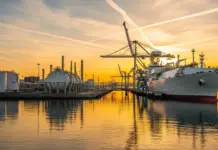
In regions where pipeline construction is logistically difficult or politically sensitive, maritime transport is emerging as a viable alternative. Specialized CO2 carriers, similar to LPG tankers, can transport liquefied carbon from coastal power plants to offshore storage sites. This “virtual pipeline” approach is a critical component of carbon transport networks power decarbonization in island nations or mountainous regions. It also paves the way for a global market in carbon sequestration, where countries with limited storage capacity can export their captured CO2 to nations with abundant geological reserves, such as Norway or Iceland.
Liquefaction and Terminal Infrastructure Requirements
Developing a maritime carbon network requires significant investment in port-side infrastructure. Captured CO2 must be cooled and compressed into a liquid state before being loaded onto a vessel. This liquefaction process is energy-intensive and requires the integration of advanced cryogenic technologies. Furthermore, the receiving terminals must be equipped with specialized unloading systems and subsea pipelines to inject the CO2 into offshore reservoirs. As these maritime links are established, carbon transport networks power decarbonization will become more flexible, allowing for the creation of a truly global network of carbon management solutions.
Regulatory Frameworks and Liability Management
The long-term success of carbon transport depends as much on legal frameworks as it does on engineering. Clear regulations must be established to define the ownership and liability of the CO2 as it moves through the network. In many jurisdictions, the entity that captures the carbon remains responsible for it until it is safely injected into a certified storage site. Navigating these multi-jurisdictional rules is a core part of developing carbon transport networks power decarbonization. Governments are currently working to harmonize these standards, providing the legal certainty that investors need to commit capital to these multi-decade infrastructure projects.
The Role of Monitoring, Verification, and Reporting (MRV)
To qualify for carbon credits or tax incentives, every ton of CO2 must be tracked and accounted for with high precision. Carbon transport networks power decarbonization must therefore include a comprehensive MRV system. This involves a dense network of flow meters and sensors along the pipeline, as well as satellite monitoring of the sequestration sites. This data-driven approach ensures that the captured emissions are permanently removed from the atmosphere, providing the transparency required by regulators, investors, and the general public. As MRV technology becomes more standardized, the “carbon value chain” will become a mature and transparent part of the global energy market.
The Strategic Future of Carbon Management
As we look toward 2050, the role of carbon transport will shift from a specialized utility service to a foundational part of our industrial civilization. The networks we build today to support power plant decarbonization will eventually serve as the circulatory system for a global economy that captures more carbon than it emits. Carbon transport networks power decarbonization is the first phase of this transformation. By solving the midstream challenges of CO2 logistics today, we are building the infrastructure required for the large-scale atmospheric removal projects of tomorrow, ensuring that the legacy of our fossil fuel era is safely managed for generations to come.
Key Takeaways
- The feasibility of CCUS for the power sector is inextricably linked to the development of shared midstream infrastructure that can move captured CO2 from generation sites to secure geological storage.
- By utilizing the “Hub and Cluster” model, utilities can benefit from economies of scale, reducing individual project risks and fostering cross-sector collaboration in regional decarbonization efforts.
The build-out of carbon transport infrastructure is a critical prerequisite for the successful decarbonization of the thermal power sector. Carbon transport networks power decarbonization provide the essential midstream link that transforms carbon capture from an experimental concept into a scalable industrial reality. By moving toward a shared infrastructure model, the industry can overcome the high capital costs that have historically hindered CCUS deployment. These networks are not just pipelines; they are the backbone of a new carbon management industry that will play a vital role in balancing the global energy mix. As maritime CO2 transport routes begin to connect continents, we will see the emergence of a global carbon economy where emissions are managed with the same level of sophistication as any other industrial commodity. The investment in these networks today is a commitment to a net-zero future where even our most challenging energy assets can be operated sustainably.