





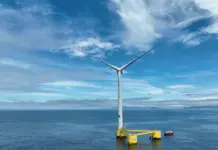




Pralhad Joshi, the Indian Union minister for new and renewable energy, and David Lammy, the deputy prime minister of the UK, brought to the fore a taskforce for the development of offshore wind energy in India on February 18, 2026.
The taskforce is going to have representatives from both India and the UK, as well as a representative from Denmark, which is clearly at the forefront when it comes to the offshore wind sector since the early 1990s. It is worth noting that the taskforce is going to hold its first meeting in the coming week, Joshi told the reporters.
At the launch event, Joshi remarked that “The United Kingdom has demonstrated global leadership in scaling offshore wind, from early-stage deployment to large commercial markets with mature supply chains. India brings scale, long-term demand, and a rapidly growing clean energy ecosystem.”
Joshi further said that the India-UK Offshore Wind Taskforce has come to the fore as per the India-UK Vision 2035 when it comes to coordination on the offshore wind ecosystem in India.
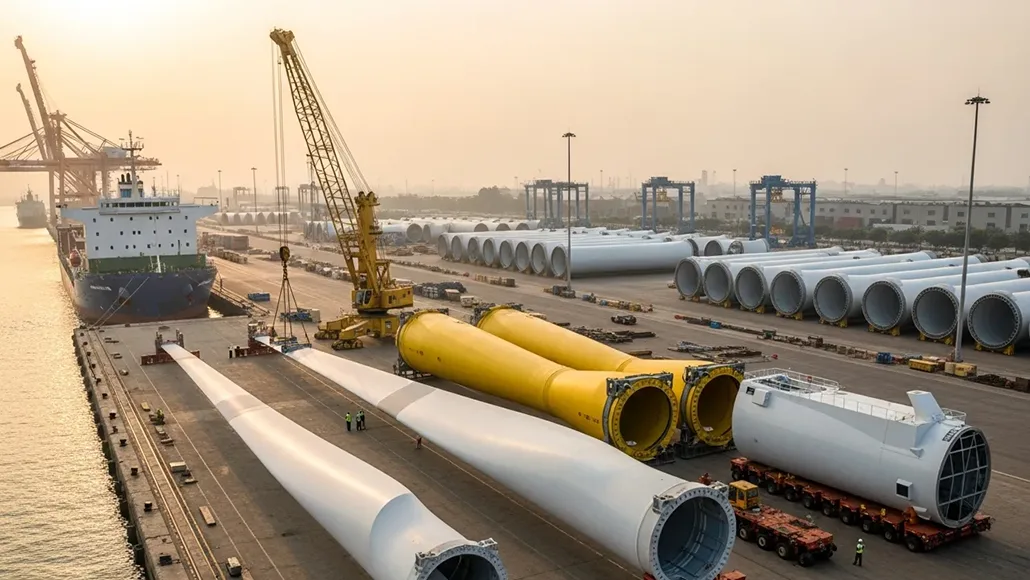
He said that both the countries can together stress three pillars – first, ecosystem planning and market design, which will have in it refining the seabed leasing frameworks, syncing the bidding trajectories along with grid readiness, and making sure of revenue certainty mechanisms that are credible and transparent; second, infrastructure and supply chains that would have in them port modernization along with local manufacturing of foundations, blades, towers, and cables, in addition to specialized vessels as well as skilling when it comes to marine operations, and third, financing as well as a decrease of risk involved.
It goes without saying that the measures in order to boost financing and reduce the risk involved would include mixed finance structures and also early-stage de-risking instruments as well as mobilization of long-term institutional capital, Joshi confirmed.
Joshi added that “Offshore wind must also be integrated with transmission planning, storage solutions, and emerging coastal green hydrogen clusters.”
Lammy opined that “We already have in the UK the second-largest market for offshore wind in the world, and recently we held Europe’s biggest auction of offshore wind, securing 8.4 GW of new capacity. This taskforce is important. It’s important in catalyzing these initial offshore wind projects.”
It was in January 2026 that the UK went on to complete its Allocation Round 7 – AR7 tender, by way of awarding 8.4 GW of new offshore wind capacity, which, by the way, happens to be the largest ever in Europe’s history.
Bilateral trade
This move also in a way upgrades the bilateral ties between both the countries as far as energy is concerned. All this comes after India signed a free trade agreement with the UK in 2025, which apparently has improved access to the British market when it comes to the India-made solar modules and wind turbines. The FTA, which ended on 6 May, promised to unleash certain prominent economic gains for India through getting rid of tariffs on 99% of the Indian exports, hence covering around 100% of trade value, since both the countries are looking to double the bilateral trade to $100 billion by the end of this decade.
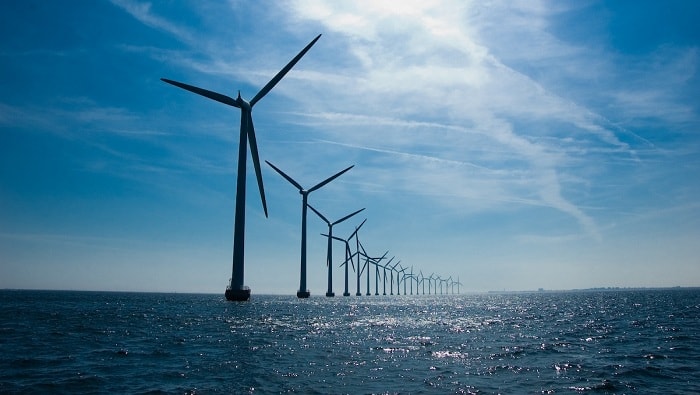
It is well to be noted that offshore wind projects go on to get higher quality wind and help with more efficient energy conversion because of the fact that there are no obstructions at sea. But the fact remains that it is indeed way more capital intensive as compared to onshore wind projects. Even the cost of power coming from these projects is much higher vis-à-vis other renewable power sources, all of which have portrayed the sector as non-viable and also a non-starter in India thus far.
As offshore wind farms need to be set up on the seabed, technology along with the infrastructure involved is much more intricate, with such projects needing much longer gestation periods.
The Centre had notified the ‘National Offshore Wind Energy Policy’ in October 2015, however, the projects under this failed to take shape because of high investments and also a dearth of economic readiness. Notably, in the budget for FY25, the Indian government went on to announce viability funding so as to set up 1 GW of offshore wind capacity. Initially, the government is seeking to develop offshore wind projects off the coasts of the Indian states of Gujarat as well as Tamil Nadu.
It goes without saying that offshore wind energy in India is likely going to be one of the major drivers so as to meet net zero emission objectives with also an ambitious goal of installing 500 GW of non-fossil power capacity by the end of this decade. As per the Indian Ministry of New and Renewable Energy, the country does have the potential of 70 GW when it comes to offshore wind generation.
Apparently, India ranks 4th when we talk of onshore wind installed capacity, behind China, the US, and Germany. But offshore wind has not seen the light of day in the country as yet.
As per a November 2025 report by Ember, a UK-based think tank focused on energy transition, in order to truly kickstart offshore wind in India, the approach of the government has to evolve. There is a need to build on early groundwork via a mix of domestic innovation along with global best practices. The point here is that the priorities are indeed pretty clear – to go ahead and craft targeted incentives when it comes to first-of-a-kind projects, marshal the domestic supply chains, and also translate them into bankable projects that actually come to life.