









Key Takeaways
- Stabilizing the Modern Grid
The primary function of energy storage systems is to provide the flexibility needed to balance a grid with high levels of intermittent renewable energy. Through fast-acting services like frequency regulation and synthetic inertia, these systems ensure that the grid remains stable and reliable, even as we move away from traditional fossil fuel-powered generation. - Optimizing Renewable Energy Use
Energy storage allows us to capture excess solar and wind energy and use it when it is needed most. By “smoothing out” the variability of renewable sources and flattening the “duck curve,” storage systems make clean energy more valuable and easier for utilities to integrate into the national power supply. - Resilience through Distributed Storage
The deployment of distributed storage systems and microgrids is enhancing the resilience of the electrical infrastructure. By providing localized support and the ability to operate independently of the main grid during outages, energy storage is protecting critical services and building a more robust energy network for the future.
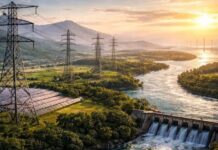
The electrical grid is perhaps the most complex machine ever built, requiring an instantaneous balance between the electricity generated and the electricity consumed. Traditionally, this balance was maintained by adjusting the output of large, fossil fuel-powered generators. However, as the world transitions toward renewable energy sources like wind and solar, the grid is becoming increasingly variable and decentralized. Unlike coal or gas plants, which provide a steady and controllable output, solar and wind generation are dependent on weather conditions. This is where energy storage systems enhancing grid stability become the indispensable “missing link.” By capturing excess energy when it is abundant and releasing it when it is needed, these systems provide the flexibility and resilience required to operate a reliable, high-renewables grid.
Energy storage is no longer just a niche solution for remote areas; it has become a central pillar of global energy policy. From massive lithium-ion battery arrays in Australia to local home-based storage units in Europe, the deployment of energy storage systems is accelerating. Beyond simple “energy shifting,” these systems provide several critical services to the grid, including frequency regulation, voltage support, and peak shaving. As we move toward a carbon-neutral future, the scale and sophistication of these energy storage systems will continue to grow, making them the cornerstone of a stable and sustainable power network.
The Core Technologies of Grid-Scale Storage
While there are many different ways to store energy including pumped hydro, compressed air, and flywheels the current revolution in energy storage systems enhancing grid stability is driven primarily by advanced battery technology. Lithium-ion batteries, in particular, have seen a dramatic reduction in cost and an increase in performance over the past decade, making them the preferred choice for most new grid storage projects.
Lithium-Ion Batteries and High-Energy Density
Lithium-ion batteries are favored for grid storage because of their high energy density, fast response times, and high round-trip efficiency. In a grid application, “response time” is critical. When a large load is suddenly added or a renewable source drops off, the grid’s frequency can fluctuate. A lithium-ion battery system can respond in milliseconds, injecting or absorbing power to stabilize the frequency. This capability is much faster than traditional generators, which can take minutes to adjust their output. Furthermore, the modular nature of lithium-ion systems allows them to be easily scaled from a few kilowatts to hundreds of megawatts, providing a flexible solution for any grid size.
Beyond Lithium: Flow Batteries and Long-Duration Storage
While lithium-ion is dominant for short-duration storage (typically 2 to 4 hours), the grid also needs “long-duration” storage that can provide power for 8 to 12 hours or even days. This is where flow batteries such as vanadium redox flow batteries (VRFBs) are becoming increasingly attractive. In a flow battery, energy is stored in liquid electrolytes that are pumped through a cell stack to generate electricity. This design allows for the power and energy components of the system to be scaled independently, making it a cost-effective choice for long-duration applications. Energy storage systems enhancing grid stability will increasingly rely on a mix of battery technologies to provide both fast-acting and long-lasting support.
Thermal and Mechanical Storage Systems
Beyond electrochemical batteries, other energy storage systems enhancing grid stability include thermal storage (using molten salt or phase-change materials) and mechanical storage (such as pumped hydroelectricity). Pumped hydro remains the largest source of grid storage worldwide, accounting for more than 90% of global capacity. However, new pumped hydro projects are limited by geography and environmental concerns. As a result, the industry is looking toward “closed-loop” pumped hydro and new mechanical technologies like gravity-based storage, where heavy blocks are raised and lowered to store and release energy. These diverse storage solutions provide the grid with multiple layers of redundancy and stability.
Enhancing Grid Stability through Power Management
The true value of energy storage systems enhancing grid stability is not just the energy they store, but the “grid services” they provide. These services are essential for maintaining the quality and reliability of the electrical supply.
Frequency Regulation and Synthetic Inertia
The frequency of the grid typically 50Hz or 60Hz is a measure of the balance between generation and load. If generation exceeds load, the frequency rises; if load exceeds generation, the frequency falls. Traditionally, the rotating mass of large turbines provided “inertia” that naturally resisted these frequency changes. As we replace these turbines with solar and wind power, which have no rotating mass, the grid loses this natural inertia. Energy storage systems can provide “synthetic inertia” by rapidly adjusting their output in response to frequency deviations. This ultra-fast power management is crucial for preventing cascading failures and blackouts in high-renewables grids.
Voltage Support and Reactive Power
In addition to frequency, the grid’s voltage must also be maintained within narrow limits. Long transmission lines and inductive loads like motors can cause the voltage to drop or fluctuate. Energy storage systems, through their power electronic inverters, can provide “reactive power” to support the voltage at localized points in the grid. This capability is particularly important for integrating distributed energy resources (DERs) like rooftop solar, which can cause voltage spikes on the local distribution network. By providing localized voltage support, energy storage systems enhancing grid stability reduce the need for expensive upgrades to the traditional electrical infrastructure.
Peak Shaving and Load Leveling
One of the most common applications for energy storage is “peak shaving” the process of reducing the peak demand on the grid. Peak demand often occurs on hot summer afternoons when air conditioning use is at its highest. Utilities must build enough generation and transmission capacity to meet this peak, even if it only occurs for a few hours a year. By using energy storage systems to supply power during these peak periods, we can reduce the need for “peaker” plants which are often the most expensive and polluting units in the fleet. This “load leveling” leads to a more efficient use of the grid and lower overall energy costs for consumers.
The Role of Storage in Renewable Energy Integration
The primary driver for the deployment of energy storage systems enhancing grid stability is the need to integrate more wind and solar power. Without storage, the grid can only handle a certain percentage of intermittent renewables before the risk of instability becomes too great.
Overcoming the “Duck Curve”
The “duck curve” is a graphical representation of the mismatch between solar production and energy demand throughout the day. In areas with high solar penetration, there is often a surplus of energy in the middle of the day, followed by a rapid ramp-up in demand as the sun sets and people return home. This rapid ramp-up is difficult for traditional power plants to handle. Energy storage systems can “flatten” the duck curve by absorbing the excess solar energy during the day and discharging it during the evening peak. This makes the renewable energy more valuable and easier for the utility to manage.
Enabling 100% Renewable Energy Microgrids
For remote communities and critical facilities like hospitals, energy storage systems are enabling the creation of microgrids that can operate entirely on renewable energy. A typical 100% renewable microgrid might include a combination of solar panels, wind turbines, and a large battery storage system. The storage system acts as the “controller” for the microgrid, balancing the fluctuations in renewable generation and providing a stable voltage and frequency for the local users. These microgrids are not only more sustainable but also more resilient to disruptions in the main national grid.
The Future of Energy Storage Systems
The future of energy storage systems enhancing grid stability is focused on “intelligence and integration.” We are seeing the rise of “Virtual Power Plants” (VPPs), where thousands of small, distributed battery storage units including those in electric vehicles are coordinated as a single, large-scale storage resource. This “vehicle-to-grid” (V2G) technology has the potential to turn millions of EVs into a massive energy storage asset that can support the grid during times of high demand.
Advancements in Solid-State Batteries
The next generation of battery technology, such as solid-state batteries, promises even higher energy densities and improved safety compared to current lithium-ion systems. By replacing the liquid electrolyte with a solid material, these batteries can operate at higher temperatures and are much less likely to catch fire. This increased safety is a major advantage for large-scale grid storage projects located in urban areas. As solid-state technology matures and costs come down, it will play a major role in the next wave of energy storage systems.
Building a Truly Resilient Energy Future
In conclusion, energy storage systems are the key enabling technology for the 21st-century grid. By providing the flexibility, stability, and reliability required to manage a high-renewables energy system, these systems are making a decarbonized future possible. Energy storage systems enhancing grid stability are not just an add-on to the electrical network; they are the foundation upon which a sustainable and resilient energy infrastructure will be built. As we continue to innovate in battery chemistry, power electronics, and digital control, the role of energy storage will only become more central to our global energy transition.