
















Key Takeaways
- Efficiency as a Core Driver
The primary mission of advanced power electronics is to reduce the energy lost during the conversion and control of electric power. By utilizing high-performance semiconductor materials and sophisticated circuit designs, these systems can achieve efficiencies that were previously thought impossible, driving significant energy savings in industrial and commercial sectors. - Integration of Hardware and Intelligence
The true power of modern electronics lies in the combination of robust hardware and intelligent software. Digital control systems and smart energy solutions allow power electronics to adapt in real-time to load fluctuations, optimizing energy use and enhancing the overall stability of the electrical grid. - Sustainability and System Reliability
By generating less waste heat, advanced power electronics reduce the need for extensive cooling systems and improve the lifespan of the equipment. This reliability, coupled with the ability to seamlessly integrate renewable energy sources, makes power electronics an indispensable tool for building a sustainable and resilient global energy infrastructure.
Modern industrial society is defined by its ability to manage and convert electrical energy with increasing precision and less waste. As we move deeper into the era of Industry 4.0, the demand for sophisticated energy management solutions has surged, placing advanced power electronics driving energy efficiency at the very center of technological innovation. Power electronics is the branch of electrical engineering that deals with the conversion and control of electric power using solid-state electronics. While it may seem like a behind-the-scenes technology, its impact is felt in every facet of our daily lives from the variable-speed drives in high-rise elevators to the massive inverters that feed renewable energy into the national grid.
The pursuit of energy efficiency is no longer just an environmental goal; it is a fundamental economic necessity. In industrial settings, where electricity can account for a significant portion of operating costs, even marginal improvements in power conversion efficiency can lead to millions of dollars in savings. Advanced power electronics provide the means to achieve these improvements by minimizing the energy lost as heat during the conversion process. Whether it is converting AC to DC, DC to AC, or changing the voltage level, modern power electronic systems use intelligent switching and high-performance semiconductors to ensure that the maximum amount of energy reaches its intended destination.
The Core Components of Energy-Efficient Power Electronics
To understand how advanced power electronics driving energy efficiency operate, one must look at the key components that make up these systems. At the core are the power semiconductor devices the transistors and diodes that act as switches. In an ideal world, these switches would have zero resistance when closed and infinite resistance when open, resulting in no energy loss. While real-world components are not perfect, the latest generation of power MOSFETs (Metal-Oxide-Semiconductor Field-Effect Transistors) and IGBTs (Insulated-Gate Bipolar Transistors) are closer to this ideal than ever before.
High-Efficiency Power Conversion Systems
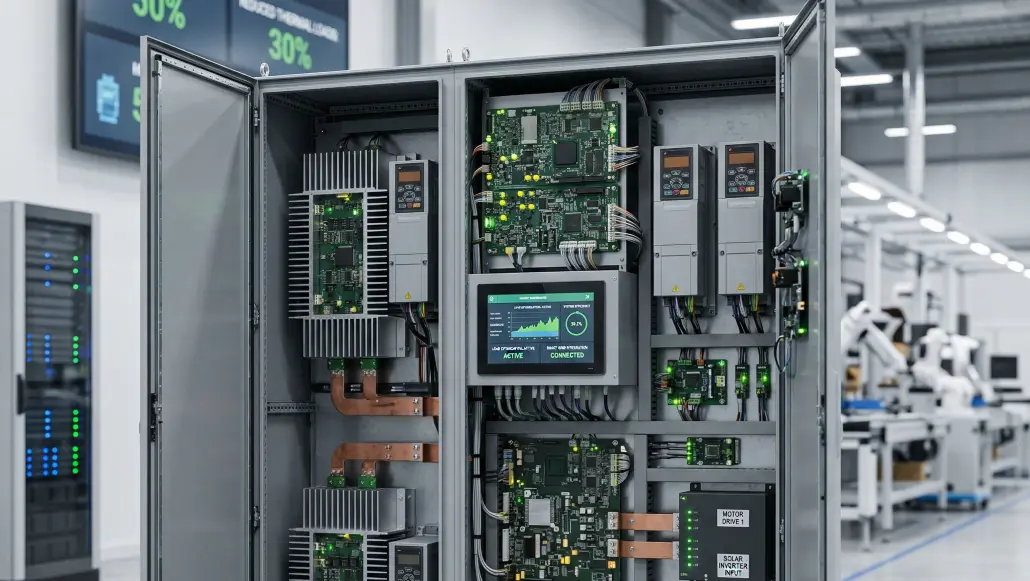
Power conversion systems are the assemblies that use these semiconductor switches to change the characteristics of electric power. The efficiency of these systems is determined by two main factors: conduction losses and switching losses. Conduction losses occur when the switch is “on” and current flows through its internal resistance. Switching losses occur during the transition between the “on” and “off” states. Advanced power electronics use sophisticated circuit topologies, such as resonant converters and multilevel inverters, to minimize both types of losses. By carefully controlling the timing and duration of the switching events, these systems can achieve conversion efficiencies exceeding 98% or 99%.
Intelligent Control and Smart Energy Solutions
The “advanced” in advanced power electronics refers not just to the hardware, but also to the control logic that governs its operation. Modern power systems are increasingly software-defined, using digital signal processors (DSPs) and field-programmable gate arrays (FPGAs) to execute complex control algorithms in real-time. This intelligence allows the power electronics to adapt to changing load conditions, optimize the energy flow, and even predict potential failures before they occur. Smart energy solutions leverage this data-driven approach to coordinate the energy consumption of entire factories, balancing the load and reducing the strain on the power grid during peak hours.
Impact on Industrial Electronics and Motor Drives
Industrial motor drives are one of the most significant applications for advanced power electronics driving energy efficiency. It is estimated that more than half of the world’s electricity is consumed by electric motors in industrial and commercial buildings. Traditionally, many of these motors were operated at a constant speed, with the output controlled by mechanical means such as valves or dampers a highly inefficient process. Variable Frequency Drives (VFDs), powered by advanced power electronics, allow motors to run at precisely the speed required for the task. This transition from mechanical to electronic control can reduce a motor’s energy consumption by as much as 30% to 50% in many applications.
Reducing Heat Generation in Industrial Systems
A direct consequence of high-efficiency power conversion is reduced heat generation. In large-scale industrial electronics, the management of waste heat is a major challenge, requiring expensive cooling systems such as fans, heat sinks, or even liquid cooling. When power electronics are designed for maximum efficiency, less energy is wasted as heat, which in turn reduces the burden on the cooling infrastructure. This creates a virtuous cycle of efficiency: the power electronics themselves use less energy, and the systems required to cool them also use less energy. This synergy is a key driver for the adoption of high-performance power modules in everything from server farms to heavy manufacturing plants.
Enhancing Reliability and Longevity
Efficiency and reliability are closely linked in the world of power electronics. Heat is the primary enemy of electronic components, causing thermal stress that can lead to premature failure. By operating more efficiently and generating less heat, advanced power electronics inherently experience less thermal cycling and lower operating temperatures. This translates to a longer lifecycle for the devices and reduced maintenance costs for the end-user. For industries that operate 24/7, such as chemical processing or data centers, the reliability provided by advanced power electronics is just as valuable as the energy savings.
The Role of Power Electronics in Grid Optimization
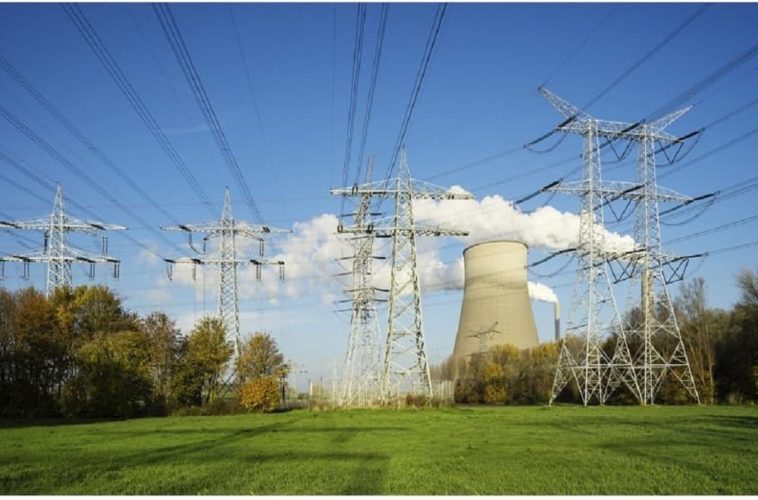
The transformation of the electrical grid into a “smart grid” is entirely dependent on the deployment of advanced power electronics driving energy efficiency. As we integrate more intermittent renewable energy sources, the grid must become more flexible and responsive. Power electronics enable this by providing the “muscles” for power flow control. Solid-state transformers, static VAR compensators, and high-voltage DC (HVDC) transmission systems all rely on high-performance power electronics to maintain the stability and efficiency of the grid. These technologies allow for the long-distance transmission of power with minimal losses, making it feasible to transport wind or solar energy from remote areas to urban centers.
Energy Optimization in Sustainable Infrastructure
In the broader context of sustainable infrastructure, power electronics act as the interface between different energy systems. For example, in a microgrid that includes solar panels, wind turbines, and battery storage, power electronics coordinate the flow of energy between these sources and the local load. By optimizing the conversion process at every stage, from the DC output of a solar panel to the AC required by a home appliance, advanced power electronics ensure that we get the maximum utility from every watt of energy generated. This level of optimization is crucial for achieving carbon neutrality and building a truly resilient energy future.
Future Developments and Innovation
The field of power electronics is constantly evolving, with new materials and architectures on the horizon. Beyond silicon, wide bandgap semiconductors like SiC and GaN are enabling even higher levels of efficiency and power density. At the same time, the integration of artificial intelligence and machine learning into power control systems is opening up new possibilities for autonomous energy management. We are moving toward a future where power electronics are not just passive converters, but active, intelligent nodes in a global energy network.