



















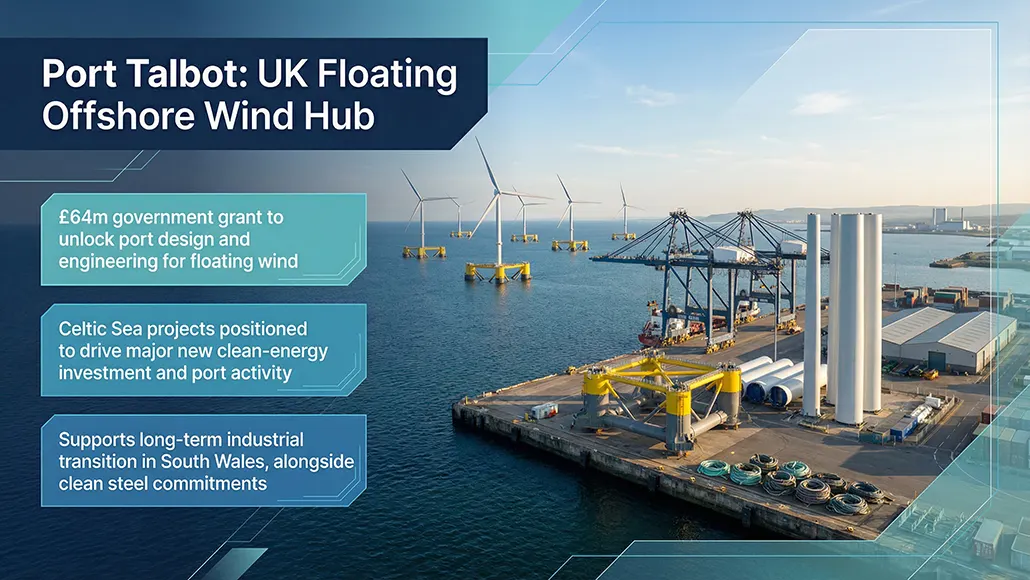
Port Talbot is set to play a central role in the UK’s emerging clean energy sector, with a £64 million grant from the UK government paving the way for the development of a major offshore wind hub. The funding will allow Associated British Ports (ABP) to carry out the critical design and engineering work required to establish one of the country’s first floating offshore wind ports at Port Talbot. Positioned to become a leading offshore wind hub, the project is expected to anchor a new phase of industrial growth in South Wales while also supporting thousands of jobs.
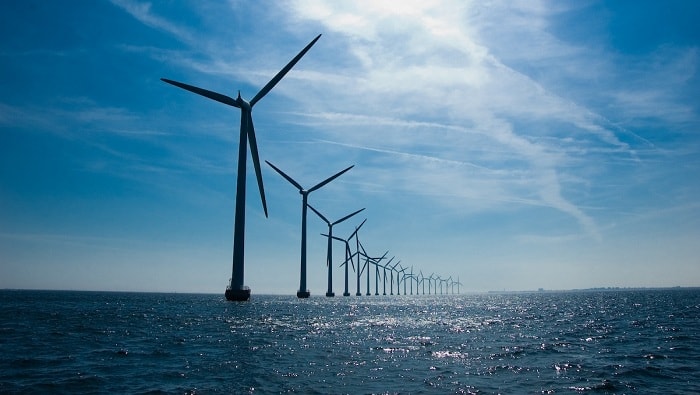
The Celtic Sea, widely regarded as offering some of the most favourable conditions in Europe for floating offshore wind, is central to this initiative. Unlike conventional offshore wind installations, floating turbines operate in deeper waters, enabling access to stronger and more consistent wind resources. The proposed offshore wind hub at Port Talbot is expected to unlock an initial 4.5 GW of floating offshore wind capacity in the Celtic Sea, enough to power 6.5 million homes, following The Crown Estate’s successful seabed leasing round last year. ABP estimates that once the port is fully developed, it could attract more than £500 million in investment while reinforcing Port Talbot’s role as a strategic energy and logistics center.
The UK government highlighted that recent conflict in the Middle East has underscored the risks associated with reliance on global fossil fuel markets, emphasizing the importance of domestically generated clean energy. Investment in the offshore wind hub is positioned as part of a broader effort to strengthen energy independence while reducing long-term costs. Alongside this initiative, the government has committed £100 million in direct support to steelworkers and the wider Port Talbot community, as well as £500 million for the development of a new Electric Arc Furnace to ensure the continued production of clean steel.
Further measures include grant agreements with ABP, subject to the outcome of the mandatory Subsidy Advice Unit referral and final government approvals. The funding aligns with a wider industrial strategy, including support for Tata Steel with £500 million to deliver a state-of-the-art Electric Arc Furnace, and the recently launched Steel Strategy backed by up to £2.5 billion. Additional support has been provided through the £122 million Port Talbot Transition Board allocation, aimed at assisting workers, businesses, and communities affected by industrial change. The development of the Celtic Freeport and expansion of floating offshore wind jointly cement Port Talbot’s position at the center of South Wales’s evolving clean energy economy.