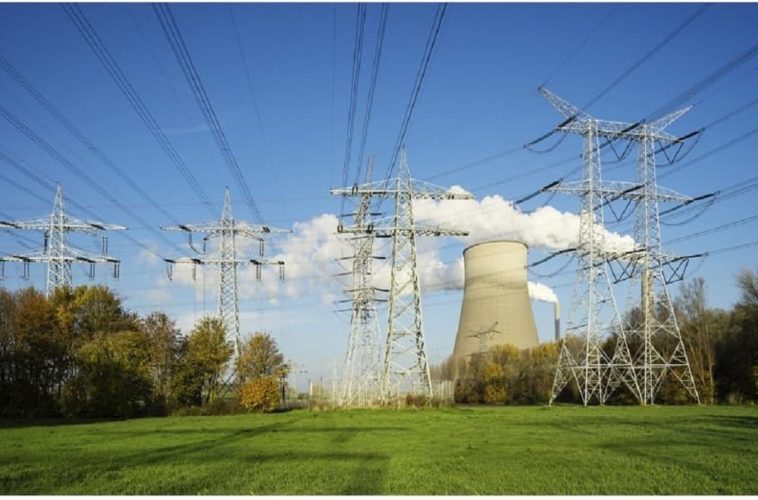

The global energy landscape is undergoing a tectonic shift. Faced with the inherent volatility of international fossil fuel markets and the strategic imperative to reduce dependence on external imports, the European Union has accelerated its transition toward a net-zero economy. At the heart of this transformation lies a robust framework for Europe Energy Security, designed to ensure that the continent’s economy remains powered by secure, affordable, and clean energy. From massive capital mobilization to the resurgence of next-generation nuclear technology and targeted national industrial support, the multifaceted strategies currently being deployed by the EU can also help it navigate the current global oil and gas crisis.
The Financial Architecture: Mobilizing €660 Billion Annually
The scale of the challenge ahead is monumental. To deliver a successful energy transition and ensure long-term stability, Europe requires an estimated €660 billion in annual investment until 2030. This figure is projected to rise to approximately €695 billion per year between 2031 and 2040. Public funding, while essential, cannot bridge this gap alone. It must act as a catalyst to revitalize the investment of private capital into such projects.
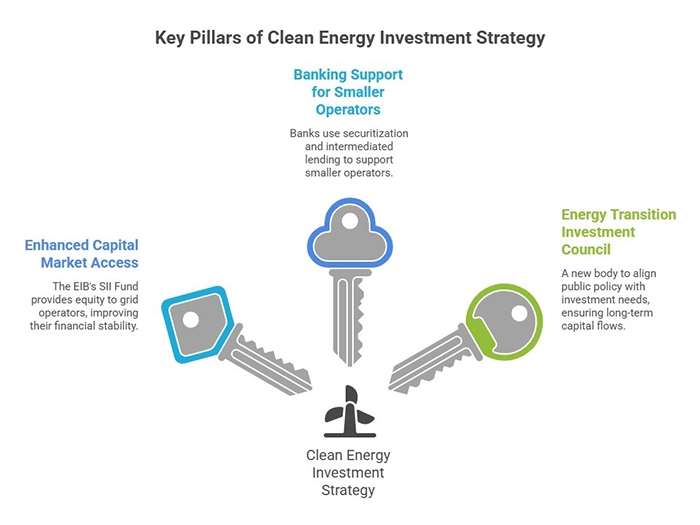
To address this, the European Commission recently adopted the Clean Energy Investment Strategy (COM/2026/116), a pivotal movement for Europe Energy Security. This strategy aims to de-risk projects and spread financing costs to attract large-scale institutional investors. Dan Jørgensen, the European Commissioner for Energy and Housing, has emphasized that this strategy represents the “step change” required to enhance competitiveness and decarbonization. Key pillars of this initiative include:
- Enhanced Capital Market Access for Grids: The European Investment Bank (EIB) is establishing a Strategic Infrastructure Investment Fund (SII Fund) with an initial commitment of €500 million to provide equity to grid operators.
- Banking Support for Smaller Operators: By increasing the use of banks’ loan securitization and intermediated lending, the strategy ensures that even small-scale operators can access the liquidity needed for modernization.
- The Energy Transition Investment Council: A new body will be convened to align public policy directly with the needs of the investment community, ensuring long-term capital flows.
The Nuclear Renaissance: SMRs and Industrial Leadership
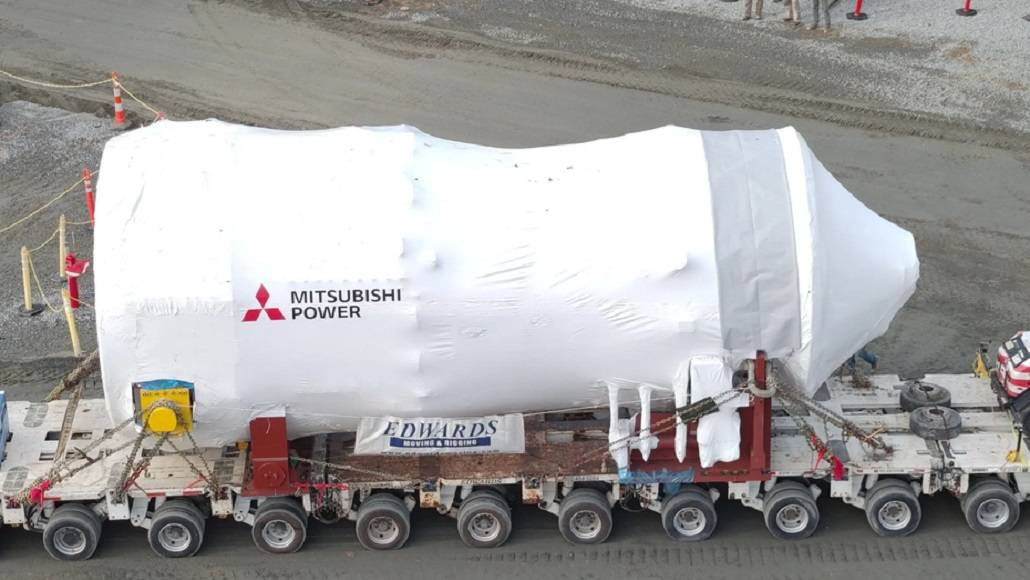
A significant component of the strategy to bolster Europe Energy Security is the renewed focus on nuclear innovation. Small Modular Reactors (SMRs) and Advanced Modular Reactors (AMRs) are now recognized as critical tools for achieving climate neutrality and industrial competitiveness. Unlike traditional large-scale plants, SMRs offer a modular design that allows for factory manufacturing and rapid on-site assembly, significantly reducing the complexity and cost of deployment.
The potential for these reactors is vast. According to the Nuclear Illustrative Programme (PINC), total SMR capacity in the EU could reach between 17 GW and 53 GW by 2050. These reactors will provide stable, low-carbon power for high-demand users such as data centers and chemical industries, while also offering solutions for district heating and hydrogen production. To realize this vision, the EU is fostering a “fleet-based” industrial approach to avoid fragmentation and leverage synergies across member states.
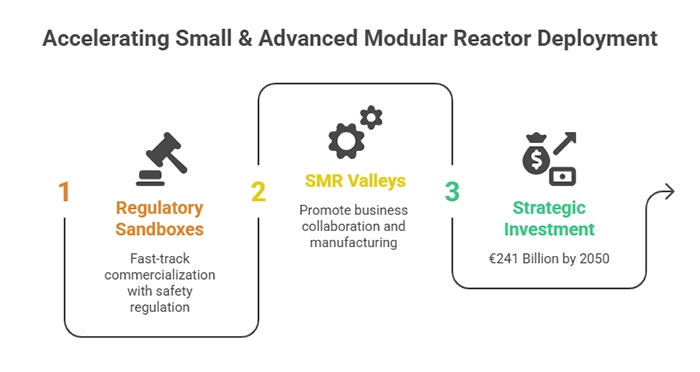
To support this roll-out, the strategy proposes:
- Regulatory Sandboxes: Under the Net-Zero Industry Act, these will fast-track commercialization while maintaining the highest safety standards.
- SMR Valleys: Regional hubs designed to promote business collaboration and manufacturing.
- Strategic Investment: PINC estimates that approximately €241 billion in total nuclear investment will be required by 2050 to cover both the lifetime extension of existing plants and the construction of new facilities.
National Sovereignty and Cleantech Manufacturing
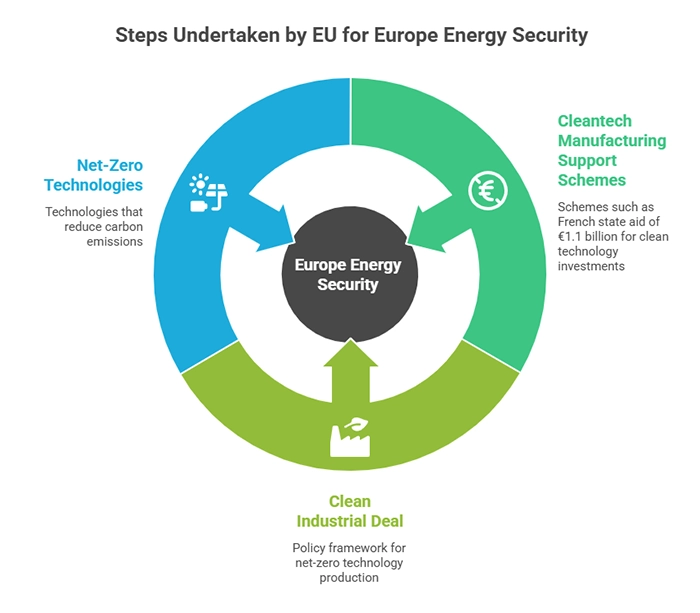
The pursuit of Europe Energy Security is also playing out at the national level, with France emerging as a major player in strategic state aid for clean technology. The European Commission recently approved a €1.1 billion French scheme under the Clean Industrial Deal State Aid Framework (CISAF). This measure is designed to incentivize investments in the production of net-zero technologies, including solar panels, wind turbines, heat pumps, and batteries.
This scheme, which takes the form of a tax credit available until late 2028, also covers the critical raw materials necessary for these technologies. By localizing the manufacturing of these essential components, Europe reduces its vulnerability to global supply chain disruptions and ensures that its green transition is built on homegrown industrial capacity. This is a clear demonstration of how national initiatives can align with broader continental goals to de-risk private investment and decarbonize industrial processes.
De-risking Innovation and Energy Efficiency
The International Energy Agency (IEA) estimates that roughly 35% of the emission reductions required by 2050 will rely on technologies that are not yet available on the market. Consequently, a vital facet of Europe Energy Security involves providing targeted public funds to de-risk these innovative solutions. This includes stepping up support for research into small modular nuclear reactors and launching a €500 million pilot scheme to accelerate “energy efficiency as a service” models.
Furthermore, the CISAF allows Member States to grant aid until 2030 to accelerate the green transition through various measures:
- Renewable Energy Rollout: Support for all renewable sources and energy storage with simplified tender procedures.
- Industrial Decarbonization: Reducing dependency on imported fossil fuels through electrification and renewable hydrogen.
- Electricity Price Relief: Temporary measures for energy-intensive users to avoid industrial relocation while the system decarbonizes.
The Role of the European Investment Bank (EIB)
The EIB Group is set to play a transformative role, intending to deliver over €75 billion of financing over the next three years to support the Clean Energy Investment Strategy. Nadia Calviño, President of the EIB Group, has noted that these investments are supporting an “energy revolution” that lowers bills for businesses and households while cementing the EU’s energy sovereignty. By providing immediate liquidity through the securitization of future revenue streams, the EIB and the Commission are ensuring that infrastructure projects do not stall due to capital constraints.
Global Cooperation and Strategic Autonomy
While the focus is internal, the EU continues to engage in international cooperation on SMRs with partner countries. This dialogue is aimed at mutual learning while maintaining strategic autonomy and avoiding new dependencies on external actors. The protection of European intellectual property developed in the context of SMRs is a high priority, as is the simplification of administrative procedures for export controls between EU countries for these projects.
Conclusion: A Sovereign Energy Future
The strategies outlined, from the multi-billion-euro investment mobilization to the pioneering deployment of SMRs and robust national cleantech support, form a cohesive shield for Europe Energy Security. By strategically leveraging private capital and fostering technological leadership, Europe is not merely reacting to the global oil and gas crisis but is proactively building a sovereign energy future. The road to 2050 requires sustained commitment, but the framework for a resilient, competitive, and carbon-neutral industrial base is now firmly in place. Through these coordinated efforts, the European Union is ensuring that its economic engine remains powered by homegrown, stable, and clean energy for decades to come.