






Key takeaways:
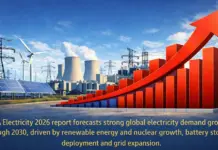
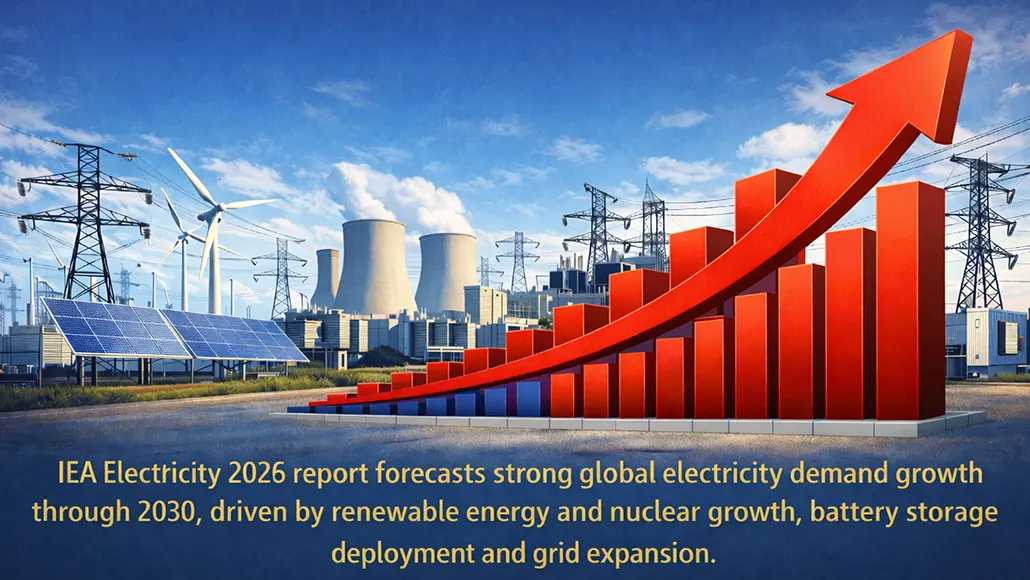
- According to IEA’s latest report, global electricity demand is forecast to increase at a rapid average annual rate of 3.6% over the 2026-2030 period.
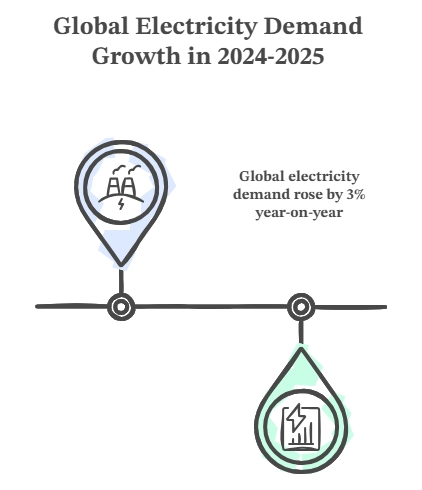
- Meanwhile, global electricity demand rose by 4.4% in 2024, and by 3% year-on-year in 2025.
- Key factors are extreme heat, a sudden boom in AI data centres, and the electrification of industries and transports.
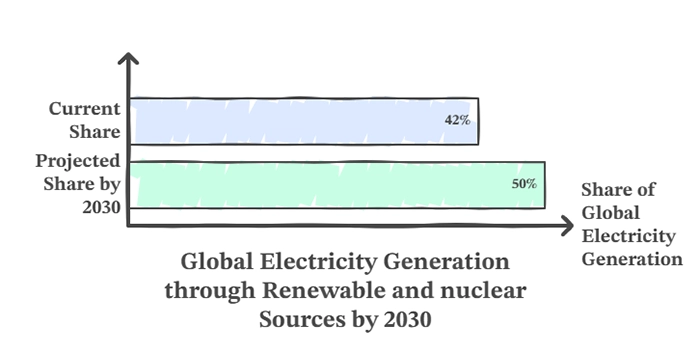
- Renewables and nuclear will together account for around 50% of global electricity generation by 2030, much above the current share of 42%.
As the Age of Electricity unfolds, the global dependence on energy is expected to increase. And dependence and demand work in a tight tandem. The current decade is witnessing the emergence of technologies such as AI and growth in space connectivity, which in turn demand increasing amounts of energy. In its latest flagship report – Electricity 2026, published on February 6, 2026, the International Energy Agency (IEA) has forecasted global power demand to have an upward trend. The report also suggested that the primary factors behind this boost will be a growing use of renewable and nuclear energy. Coal usage for power generation is expected to take a backseat, while natural gas might witness an increase. With the pressing demand for energy surging around the world, the energy sector needs innovations and actions that make it more flexible, accessible, and resilient to threats and existing as well as emerging challenges.
The rising trends of global electricity demand
2024 saw a well-above-average jump in the global energy demand. The growth was around 2.2%, almost twice the average rate of 1.3% between 2013 and 2023. Global electricity demand rose by 4.4% in 2024, and by 3% year-on-year in 2025. Key factors in this huge jump included extreme heat, a sudden boom in AI data centres, and the electrification of industries and transports.
According to IEA’s latest report, global electricity demand is forecast to increase at a rapid average annual rate of 3.6% over the 2026-2030 period. The annual demand growth over the next five years is set to be 50% higher on average compared with the average across the previous decade. Main contributors to this increase in demand are growing usage in industries, air conditioners, electric vehicles, and data centres globally.
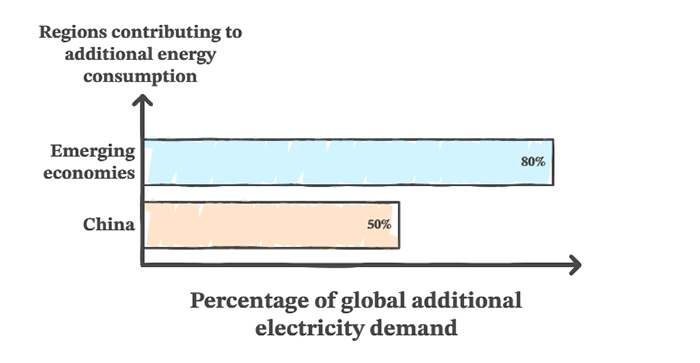
Emerging economies are going to take up a major share of the growing demand in electricity throughout 2030, consuming nearly 80% of the additional electricity. While India and Southeast Asian countries will be leading in the growing energy consumption by 2030, China will be the largest contributor in this demand, accounting for about 50% of the energy demand.
Meanwhile, the developed countries are also witnessing a spike in energy demand after 15 years of inactivity. 2025 saw developed nations take up about 20% of global energy demand growth, up from 17% in 2024. These trends highlight the central role of energy in the emerging developments in the advanced technology race based in the global north. Energy demand in both the United States and the European Union is expected to follow a growth of 2% annually through 2030. Other members such as Australia, Canada, Japan and Korea will also see a rise in the need for energy.
Nuclear and renewable sources to power 50% of global electricity generation
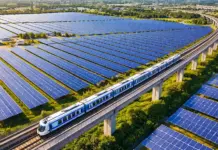
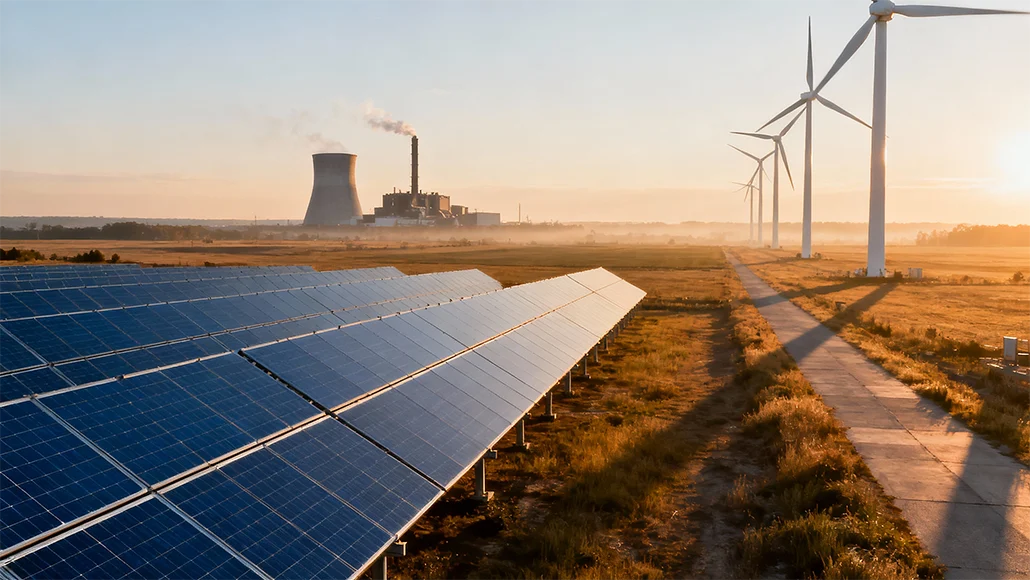
2025 data shows renewable output rose rapidly in 2025, virtually matching the level of coal-generated electricity, with solar PV emerging as a gamechanger in global generation outputs.
Global electricity generation through nuclear sources also saw an uptick in 2025, strengthened by restarted reactors in Japan, and further capacity increase in developing nations. Developed nations also are making a return to nuclear generation through supportive policies.
By 2030, renewable generation is expected to climb at an annual rate of 8% per year. Renewables and nuclear will together account for around 50% of global electricity generation by 2030, much above the current share of 42%.
Coal & natural gas to be major generators, but CO2 emissions to flatten
Coal-fired generation saw no rise in 2025, although regional trends varied. While India and China saw a decline due to lower energy demands and renewable energy growth, the U.S. and Europe saw a growth due to delay in retirement of coal plants and renewable sources falling short on output.
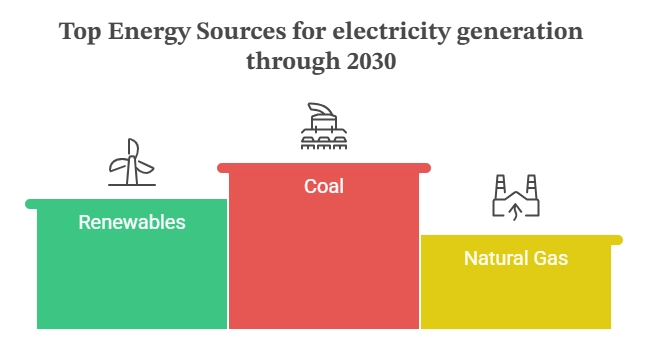
However, over the 2026-2030 period natural gas will rise as an energy generator fuel, with gas-powered generation to rise by average of 2.6% per year through 2030, complementing renewable and nuclear generation. While renewables are set to contribute the highest share of global electricity generation by 2030, coal will still remain the single largest source for energy generation. Global CO2 emissions from electricity generation are thus expected to remain roughly flat between 2026 and 2030.
Reshuffle of electricity grids and battery storage deployment
While the source of generation marks a shift, the primary challenge in meeting the growing demand lies in supply and storage of the energy. While investment in energy generation capacity has gone up over time, the same is not so similar in the case of electricity grids. With exponential growth in the global energy generation output, more than 2,500 gigawatts (GW) worth of projects await grid connection. Grid expansion, thus, has to be a key part in redefining global energy policies. The estimated electricity demand can be met only through annual increase in grid investment by roughly 50% from today’s USD 400 billion.
Besides grid expansion, advancement in grid technologies such as dynamic line rating, advance power-flow control, reconductoring and voltage uprating are necessary to overcome the supply-chain bottleneck. Furthermore, adapting older power regulations to meet current requirements may free up more stalled projects, leading to fluidity in the energy supply process.
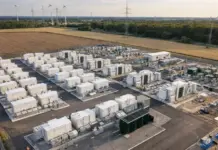
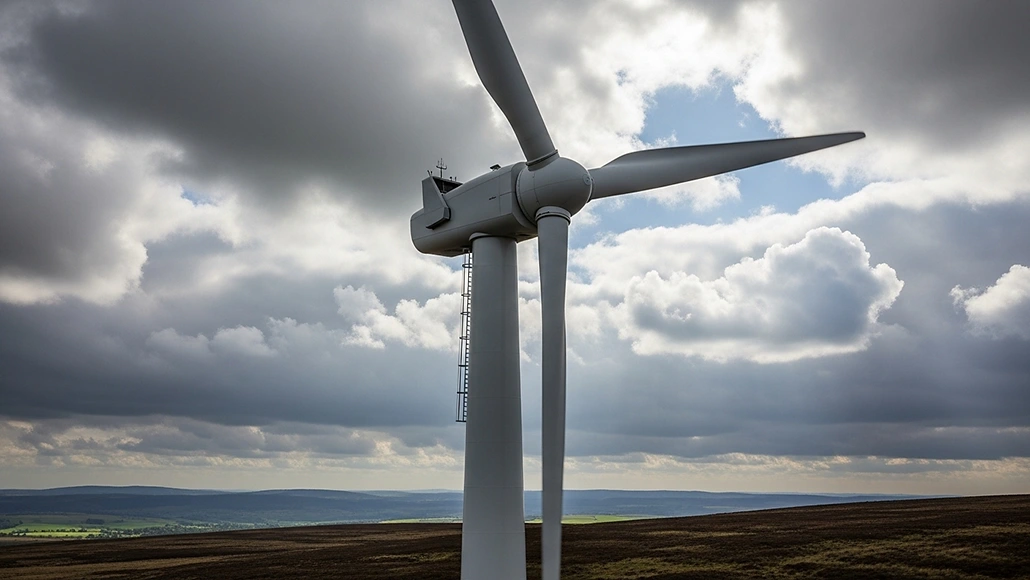
Furthermore, advancement in utility-scale battery storage deployment is a key factor in increasing power supply throughout the world. Rapidly growing energy generation through solar PV and wind is an indicator of the success of this market in regions such as California, Germany, South Australia, Texas and the United Kingdom.
More challenges remain
A plethora of challenges remain in countering the mounting pressure in energy demand. From existing problems such as aging infrastructure and skill force shortages to global tensions, and emerging threats such as intensifying cyber attacks and climate change, global stakeholders must ensure the security and resilience of the energy industry. Policies need to address the accessibility gap between different sections of society and strive to equalize affordability.
At the same time, the scale of investment required to modernize grids, expand transmission networks, and integrate variable renewable energy sources is unprecedented. Rapid electrification of transport, heating, and industrial processes is adding new layers of complexity to system planning. This demands smarter grids, advanced storage solutions, and flexible demand-response mechanisms. Supply chains for critical minerals essential to clean energy technologies remain vulnerable to geopolitical disruptions, potentially slowing deployment. In many developing economies, financing constraints and regulatory uncertainty further complicate the transition. Bridging these gaps will require coordinated public-private partnerships, stable policy frameworks, and accelerated innovation to ensure that rising electricity demand does not outpace the world’s capacity to deliver reliable, sustainable power.
The road ahead: Potential must meet actions
Beyond traditional consumption patterns, electricity demand is being reshaped by data centers, artificial intelligence, electric mobility, and the electrification of heavy industry. As economies digitize and populations grow, grids will need to accommodate sharper load peaks and more decentralized generation. Climate will also play a big factor in shaping the technology of the upcoming decades. With extreme weather patterns becoming more frequent with each passing year, the need for climate-resilient systems is becoming more apparent with passing time. The transition to low-carbon systems must therefore move in tandem with investments in storage, grid interconnections, and flexible backup capacity. Policymakers and utilities will also need to prioritize efficiency measures, smarter urban planning, and consumer awareness to moderate unchecked growth. Without coordinated global action, the widening gap between soaring electricity demand and available clean supply could strain markets, elevate costs, and test the resilience of energy systems worldwide. This makes long-term planning, regulatory clarity, and sustained capital inflows indispensable for maintaining stability while accelerating the global energy transition.
With rising technologies and shifting market interests, the world is pacing towards superior goals of the upcoming decade. It is a fact that energy is a must commodity to achieve those goals. While emerging technologies show this world a new horizon, they also require an ever-flowing supply of energy. To bridge this gap between demand and supply, humans must ensure their actions meet their expectations. Ensuring energy security will be a key factor in taking humans far into the future.