




The European Commission has introduced a Clean Energy Investment Strategy aimed at accelerating funding flows needed to support Europe’s energy transition. According to the Commission, achieving EU’s climate and energy goals will require investments of approximately €660 billion annually through 2030. That requirement is projected to rise further to €695 billion per year between 2031 and 2040. Although progress has already been made in expanding renewable energy and clean infrastructure, officials say the current pace of investment must increase significantly to ensure Europe’s economy is supplied with secure, affordable, and clean energy. Against this backdrop, the Commission formally adopted the Clean Energy Investment Strategy (COM/2026/116) to help mobilise additional private capital across the energy sector.
The Clean Energy Investment Strategy emphasizes the role of public funding as a catalyst rather than the primary source of financing for the energy transition. The Commission indicated that while government support remains essential, the transition will depend largely on unlocking much larger volumes of private investment. Public financing will therefore be used to de-risk projects, spread financing costs over longer periods, and attract a broader range of investors, including large-scale institutional capital. As part of these efforts, the European Investment Bank (EIB) Group plans to provide more than €75 billion in financing over the next three years to help advance the objectives of the energy transition and the Clean Energy Investment Strategy.
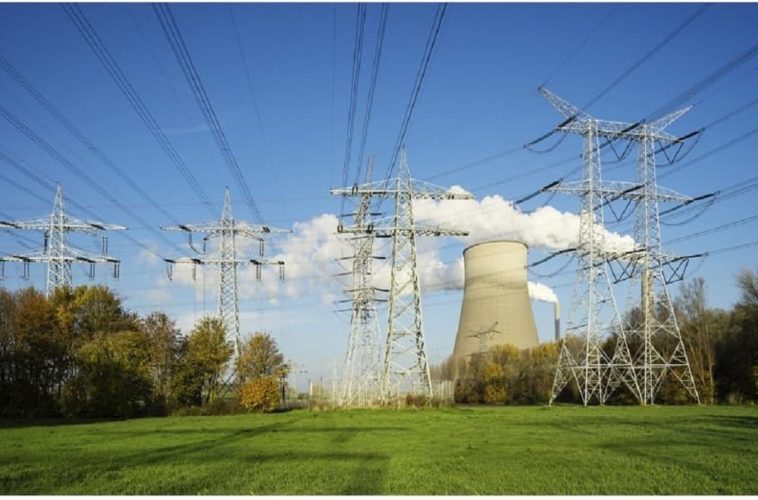
The plan outlines four key measures intended to strengthen financing mechanisms for clean energy infrastructure and technologies. One of the central proposals involves improving access to capital markets for electricity grid operators, including greater access to equity financing. To support this effort, the EIB will establish a strategic infrastructure investment fund (SII Fund) with an indicative commitment of up to €500 million. The Commission and the EIB will also explore the possibility of creating a facility allowing grid operators to securitise future revenue streams in exchange for immediate liquidity. Additional initiatives aim to strengthen banks’ ability to lend to grid operators by expanding loan securitisation and intermediated lending options for smaller operators.
Further components of the Clean Energy Investment Strategy focus on targeted public funding to reduce risks associated with innovative clean energy technologies and energy-efficiency projects. The International Energy Agency (IEA) estimates that roughly 35% of the emission reductions required by 2050 will rely on technologies not yet commercially available. In response, the Commission and the EIB will expand support for next-generation clean technologies and finance research on small modular nuclear reactors (SMRs) in Europe. These measures also include strengthening energy efficiency financing through InvestEU and launching a €500 million pilot scheme to promote “energy efficiency as a service” models. In addition, the Commission will establish an Energy Transition Investment Council bringing together members of the investment community. The Council, to be convened later this year by the Commissioner for Energy and Housing, aims to support long-term private investment while ensuring public policy remains aligned with investor requirements.
Looking ahead, the forthcoming energy and climate framework for the next decade is expected to provide additional clarity on both the scale and structure of the investments required to support Europe’s energy transition. At the same time, the EU’s 2028–2034 long-term budget, together with national support schemes across member states, will function as key instruments in strengthening investment conditions for clean energy projects. These mechanisms are designed to reduce financial risks associated with large-scale infrastructure and emerging technologies while helping to lower overall financing costs. In addition, such measures are intended to ensure that public funding plays a complementary role in encouraging and leveraging private capital rather than replacing it, thereby expanding the overall pool of available investment for Europe’s evolving energy landscape.