



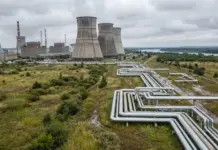





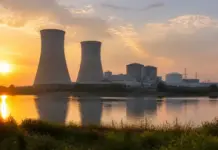






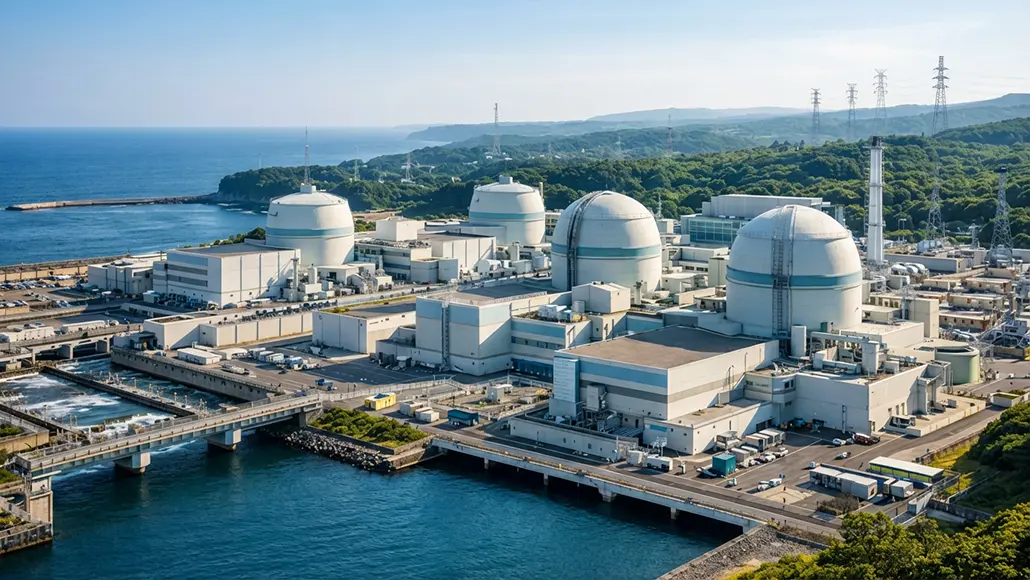
Japan is moving closer to the Kashiwazaki-Kariwa nuclear plant restart as authorities in Niigata prepare to endorse a decision that would return the world’s largest nuclear power station to operation after years offline following the Fukushima disaster. The restart marks a key step in Japan’s efforts to reinforce power generation capacity, strengthen energy security, and reduce dependence on imported fossil fuels. Located about 136 miles northwest of Tokyo, the seven-reactor facility is operated by Tokyo Electric Power Co., which has confirmed that all conditions required under the restart framework have now been met.
The Kashiwazaki-Kariwa nuclear plant restart follows Japan’s gradual reactivation of its nuclear fleet after the 2011 earthquake and tsunami led to the shutdown of 54 reactors nationwide. Since then, 14 of the 33 reactors that remain operable have been brought back online as part of a broader strategy to stabilize the electricity supply. Kashiwazaki-Kariwa would be the first nuclear facility restarted by Tokyo Electric Power Co. since Fukushima, underscoring its significance within the country’s power generation landscape. “We remain firmly committed to never repeating such an accident and ensuring Niigata residents never experience anything similar,” said company spokesman Masakatsu Takata. If final approval is secured, the operator is considering reactivating the first of the plant’s seven reactors, although Takata declined to comment on timing.
From a system-level perspective, the Kashiwazaki-Kariwa nuclear plant restart is expected to contribute meaningfully to electricity supply in eastern Japan. A confidence vote in the Niigata prefectural assembly is widely viewed as the final procedural step, after which the first reactor alone could increase power supply to the Tokyo region by around 2%, according to Japan’s trade ministry. Prime Minister Sanae Takaichi has supported nuclear restarts as part of a broader push to strengthen energy security and manage the cost of imported fuels, which currently account for between 60% and 70% of Japan’s electricity generation.
Looking ahead, Japan expects electricity demand to rise over the coming decade despite a shrinking population, driven in part by the expansion of power-intensive AI data centers. To meet these requirements while advancing decarbonization goals, the government has set a target of doubling nuclear power’s share of the electricity mix to 20% by 2040. Joshua Ngu, vice chairman for Asia Pacific at consultancy Wood Mackenzie, said public acceptance of the Kashiwazaki-Kariwa restart would represent “a critical milestone” toward reaching those objectives.